Hollande’s solution to France’s economic tragedy is more failed corporatism

THE UK is becoming a low-skilled, low pay economy, and ordinary workers aren’t sharing in the proceeds of growth.” How often do we hear this? Those who articulate these views, particularly on the left, argue that we need more state intervention in the economy: more “social investments” paid for by higher taxes, “worker representation”, industrial strategies, collective bargaining, more regulation of part-time and atypical work, and targeted tax incentives for more jobs or higher pay so that we can become a more productive country.
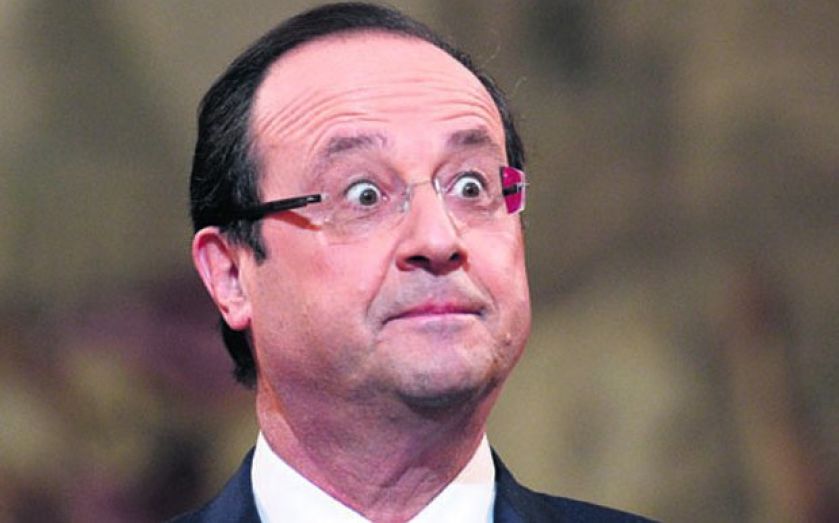
Well, this sort of agenda exists in France. And it’s just not working. Since Francois Hollande was elected President in 2012, French GDP per capita has fallen. Its economy is expected to grow by just 0.7 per cent this year. France has performed relatively poorly since the 1970s, and a lack of any boom prior to 2008 probably assisted in the relatively mild nature of its post-crisis recession compared with the UK. But the country now looks set for stagnation – with its unemployment rate entrenched above 10 per cent (and youth unemployment double that).
To those who believe in free markets, the problems are obvious. The French government accounts for a massive 57.1 per cent of the economy in state spending and transfers. The tax burden is so high at 57 per cent for French employees (the sum of income, payroll taxes, VAT, and social security contributions as a proportion of the gross employment cost) that ordinary workers in France only started earning for themselves (not the state) yesterday. According to the Institut économique Molinari, which calculated it, this compares to a UK Tax Liberation Day as far back as 12 May.
This means the average French employee faces a situation where his or her payroll tax bill is higher than disposable income. No wonder industrial relations are bad: what matters for employers is the high total cost of employment, while workers lament the measly post-tax reward for their labour.
It’s not just taxes on workers either. The World Economic Forum says that France is near the worst performer on a host of measures: positioned 130 out of 148 countries for its regulatory burden, 134 for the tax rates on profits, 135 on cooperation in labour-employer relations, and 144 on hiring and firing practices. Byzantine business regulations escalate as firms get bigger (including legal obligations for worker councils and annual collective bargaining for larger companies) – distorting behaviour such that small business groups estimate there are twice as many firms with 49 employees as there are with 50.
Hollande recognises the need for reform. But his proposed solutions come straight from the old corporatist copybook – underpinned by the idea that the state, employees and businesses are differing interests working together for the common good.
This ideology leads to lots of economically illiterate policies, in particular extortionate rates of tax (such as the 75 per cent top marginal tax rate) notionally imposed on business, without the realisation that businesses are just legal entities and the taxes are ultimately borne by people. Even Hollande’s so-called reform agenda is predicated on the interventionist idea that firms should create jobs or finance training in return for tax breaks. Meanwhile, the government has merely agreed to delay implementing a ridiculous plan to introduce a 24-hour minimum weekly part-time worker contract as standard.
No wonder investors have voted with their wallets. FDI into France is estimated to have fallen by 95 per cent in the last decade. They know what we all know – the karaoke corporatism playing out in France is disastrous economic policy. The most worrying thing is that, despite the French example, some still consider it the answer to the UK’s future economic challenges.