HS2 backers have completely failed to make a convincing case

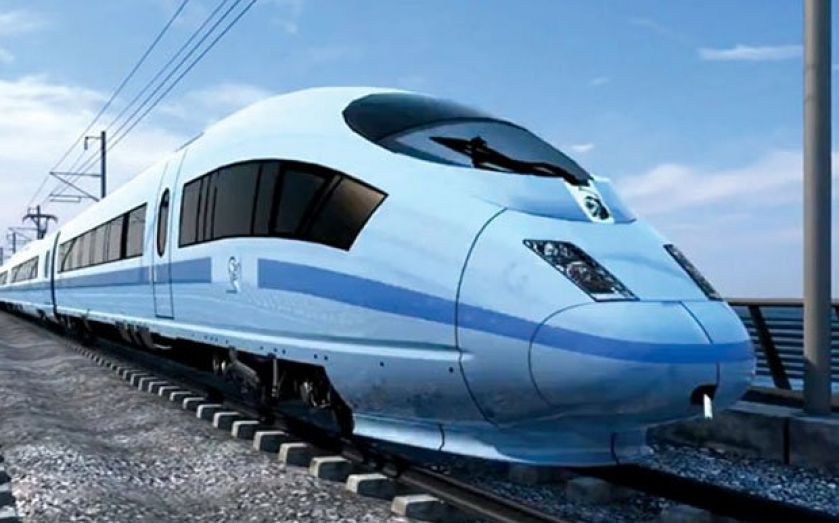
YESTERDAY saw the House of Commons give the green light to HS2 at second reading, with the bill now heading into Committee stage. And as the debate has twisted and turned over the years, so the justification for this huge taxpayer-funded rail project has mutated. At first, the reduction in journey times was considered the slam dunk. When that was scrutinised, focus shifted to capacity constraints in HS2’s absence. Now the main reasoning has changed once again. The new line is heralded as essential for the revival of the North’s economy, and for helping close the North-South divide.
When there is political concern about the powerful pull of London and a desire to rebalance the economy, claims that grandiose schemes like HS2 will transform the regions obviously resonate with certain constituencies. But the evidence base is distinctly lacking. In a report published yesterday, my colleague Richard Wellings clearly documented that the experience of HS1 in East Kent, and of the fast line between Doncaster and London, suggests that faster rail links are not a sufficient condition for economic prosperity.
In East Kent, for example, the average employment rate was 5 percentage points lower between 2010 and 2013 than during the pre-high-speed period examined, compared with much smaller falls of 2.1 percentage points for the South East and 1.8 percentage points nationally. Doncaster, meanwhile, remains one of the poorest towns in the country.
Pointing this out is not to deny that improved connectivity can have substantial positive economic effects. Reductions in transport costs help lower the cost of exchange – in turn boosting trade, bringing higher productivity through specialisation, and realising economies of scale. It can also enable the development of agglomerations, clusters of activity that may further increase productivity and output.
But this reasoning is not sufficient to justify huge public spending on this particular project. And this is not just because HS2’s purported effects on productivity have been criticised as a massive exaggeration (due to the difficulty of disentangling better rail connectivity from other factors). No, the key problem is that, when you are spending this amount of money, you don’t only have a duty to claim there are some benefits. You must also take into account what economists call the “opportunity cost” – the other ways these vast resources (£3,000 per household) could be put to use on other projects or tax cuts.
It’s clear from a transport perspective that there are better alternative projects, achievable at a fraction of the cost – cross-Pennine projects linking the major cities of Manchester, Sheffield and Leeds could help create the benefits of a single labour market, while the existing West Coast Main Line could be upgraded.
Road improvements would likely have more significant payoffs still and, given the potential future importance of innovations such as the driverless car, the benefits would be less likely to be undone by disruptive technologies. Indeed, forecasting benefits from HS2 far into the future necessarily ignores the potential for innovation to completely change the way we travel or choose to interact.
The proponents of HS2 have failed to make a case which addresses all these criticisms. The case for HS2 has instead been contorted and changed to fit a political narrative. Given the large cost to taxpayers, we deserve better.
Ryan Bourne is head of public policy at the Institute of Economic Affairs.