What a science tour of Wales taught me about time, the earth – and my nan

The history of time, and a touching family connection, brought Damien Gabet closer than ever to rural Wales
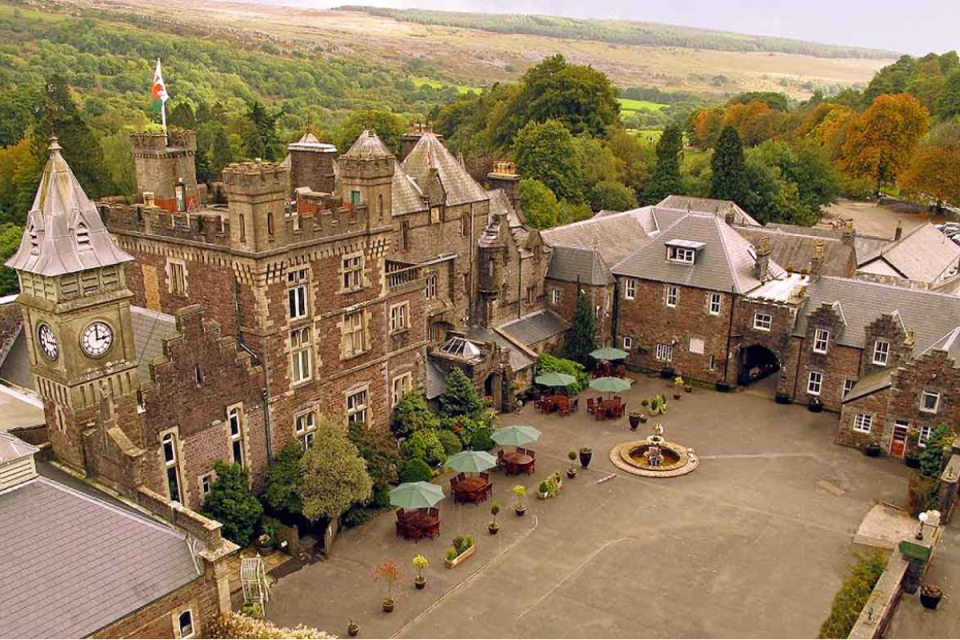
During the war my grandmother, Gwyneth, would walk from her parents’ farm in the South Swansea Valley to a neo-gothic mansion called Craig-y-Nos. Once home to the fabled opera singer Adelina Patti, it had since become a children’s hospital. My nan and other young women from the village gathered there to knit woollen gloves and scarves for the freezing boys on the front line.
Last autumn, 82 years later, I was sitting in the bar at Craig-y-Nos, now an events venue in the Brecon Beacons National Park, wondering if this was where she knitted. I’d been invited by New Scientist Discovery Tours to their inaugural Science of Deep Time weekender (the New Scientist runs other short breaks incorporating science, history and wellness in Austria, France and across Britain).
Our host, the author and science journalist Richard Fisher, was joined by a lineup of gloriously geeky experts. Together, they’d help us guests to grasp the inconceivable.
Beyond the obvious draw of clever, curious company, the trip appealed as a personal pilgrimage into the relatively deep time of my 92-year-old nan’s life – and therefore mine. Before I left she gave me a little hand-written note with a list of the spots to visit. “Make sure you see the castle’s opera theatre too,” she said. “It’s spectacular.” And that’s exactly where things began. Built to host Patti’s “astonishingly agile” soprano performances, it’s now a Grade I-listed rococo cove that still hosts occasional shows. Quite the spot to tell the story of time.
“The universe is 13.7 billion years old; Earth, 4.6 billion. Humanity? We’ve only just arrived,” said Richard in his gentle overture. “But where does our concept of time come from?” He reeled off the milestones, from the cyclical rhythms of agriculture to the Industrial Revolution’s merciless ticking clock. My little mind, so frequently fixed in ‘no tomorrow’ mode, was beginning to flex.
The room’s gilt stucco and velvet drapes notwithstanding, things were beginning to feel like an exciting school trip. When the national park’s geologist, Alan Bowring, came on stage, I was suddenly back at Cub Camp 1994, listening to an anorak effuse on rocks.
The difference was that Alan has talent. His eloquence and erudition would convince the cast of Love Island that stones are sexy.
Wales has some incredible caves, labyrinths of twisted formations that ripple and coil like sea beasts
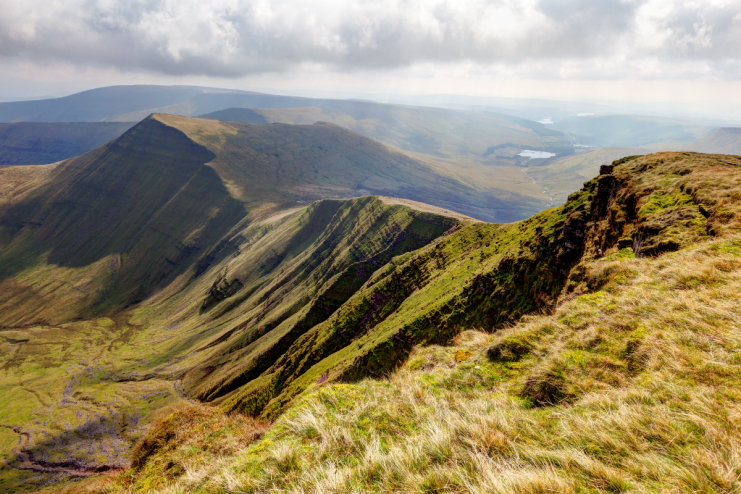
“This is a four-dimensional landscape, time sits heavily on these hills,” he declared, like Keats in a cagoule. “It’s a layer cake of rock and we are merely the decorations.” I loved the synchronicity he found in the last three geological periods – Cambrian, Ordovician and Silurian – and their association with Wales.
“Every rock is on a journey and the tectonic plates move at the same rate as your fingernails grow. Geology isn’t just in the past. It’s happening today. And it will happen tomorrow.” I enjoyed his soothing concept of “Timefulness”, too: how rocks help us think about time passing and so help us appreciate what little we have of it.
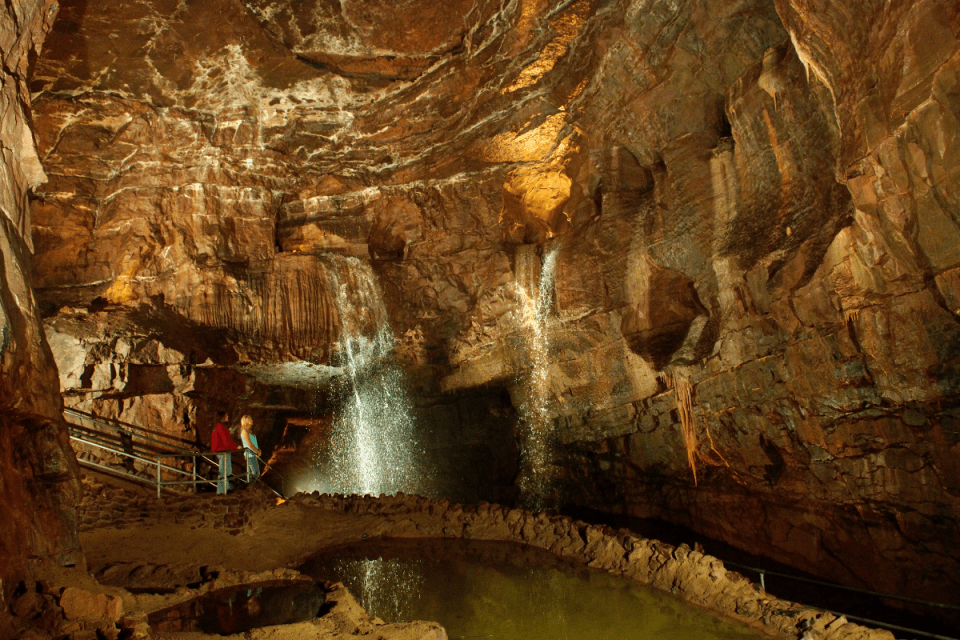
After lunch, he walked us to the nearby Dan yr Ogof caves, officially the National Showcaves of Wales, to put his prose into place. In 1939, my young nan and her father were the first members of the public to see the caves. When the war broke out a few months later, they were closed and turned into a secret munitions dump. “They told us it was a place to store sugar!” she told me, with a little grin.
Today, there are no candied bullets, but the walk round its three main caves is otherworldly. Particularly the Show Cave, a labyrinth of twisted formations that ripple and coil like sea beasts frozen in stone. I couldn’t hear what Alan was saying at the front of the pack, so I put classical music in my ears and leaned into some timefulness. Handel’s Water Music hit just as we reached the underground lake, its surface like polished slate.
In rural Wales, I peer at Saturn through a boss-level telescope
The evening’s session was hosted by the brilliant Martin Griffiths, director of the Brecon Beacons Observatory. He spoke of his work in securing the beacons’ Dark Sky status before taking us outside to see Saturn through his boss-level telescope. Miraculously for Wales, the clouds cleared and he was able to point his way around the firmament with a laser pen. “Right now you’re looking at light that’s older than humanity.”
The most ebullient of the speakers was Joe Botting, a mad-prof paleontologist who made a major discovery during lockdown. “Wales’s ancient seabeds, now rock, hold delicate imprints of creatures from half a billion years ago. Tiny, intricate forms preserved against all odds!” Joe and his wife are genuine trailblazers, finding fossils previously thought not to exist. Nearly as remarkable was their story of struggle: they had to crowdfund for microscopes, “because we’re not official academics.”
Later, Lauren Holt, author of The Great Rearrangement, had us pinned to our seats. She explores how complexity evolves and breaks down over deep time, be it in natural systems like whales or human constructs like cities and AI.
“What if DNA stops being the blueprint? If we upload ourselves to the cloud, are we still us?” she asked. Her book also looks into history’s most terrible ideas: “How about painting Greenland black to absorb heat and turn the Arctic arable? It’s stuff that makes you wonder what wild theories we’re clinging to now!” The final part of the weekend will last longest in my memory: a guided 4.6km walk over the Beacons, with a narrated account of Earth’s 4.6 billion-year history. Each metre, a million years. It was a brilliant, playful piece of learning. And, as Deep Time Walk Project co-founder Robert Woodford said, “A chance to foster awe, humility and responsibility for Earth’s future.”
First Robert asked us to consider and share our earliest memory. We then took a literal leap back to the beginning of everything. “Right now there’s actually nothing under your feet because we’re in the Orion Arm of the Milky Way!” From there, he spirited us through the formation of the Moon, the “zoological big bang” and the concept of Luca, our last universal common ancestor.
After some of the more impactful facts, we were invited to walk in meditative silence and enjoy the red kites hovering over bracken yonder. The group chats were some of the best mingling of the weekend: I met a physicist, an artist from San Francisco and a fella who invented night-vision goggles. “Ultimately, we are stardust!” Robert shouted, against the wind. “We are chemically connected to all of life – to all of the planet.”
His comment would soon prove crushingly poignant: shortly after returning from Wales my grandmother passed away. The next time I visit the Brecon Beacons it’ll be to spread her ashes. Back into the hills that raised her. Where time sits heavily. And we are merely decorations.
Book this experience yourself
The next New Scientist Discovery Tours’ The Science of Deep Time takes place in Wales from 1 September for three days, from £850 per person. To book go to newscientist.com/tours