Ikoyi founder Jeremy Chan: ‘Eating my own food is forbidden’

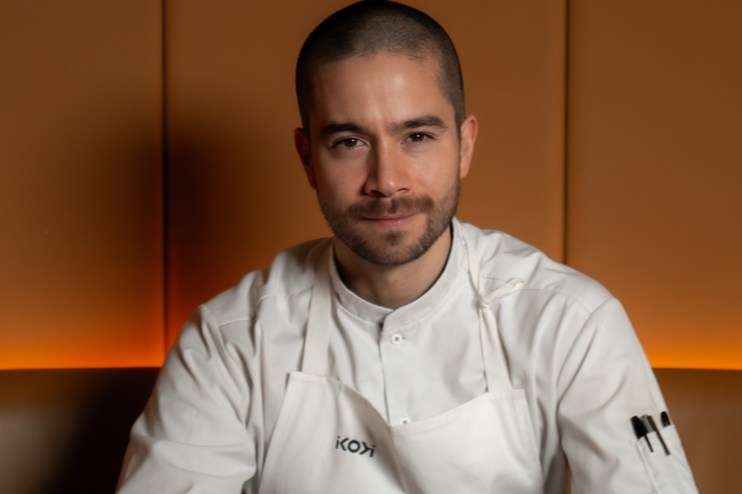
Jeremy Chan is a singular guy. Upon arrival for the only sitting at Ikoyi, he greets each guest at the door, ushering them into a space that feels less a dining room than a glimpse into his subconscious. Quiet and intense, he thinks about food in a way I’ve never heard expressed before. Eating his own dishes, for instance, feels “forbidden”, and he avoids eating the work of other chefs so he doesn’t dilute his vision.
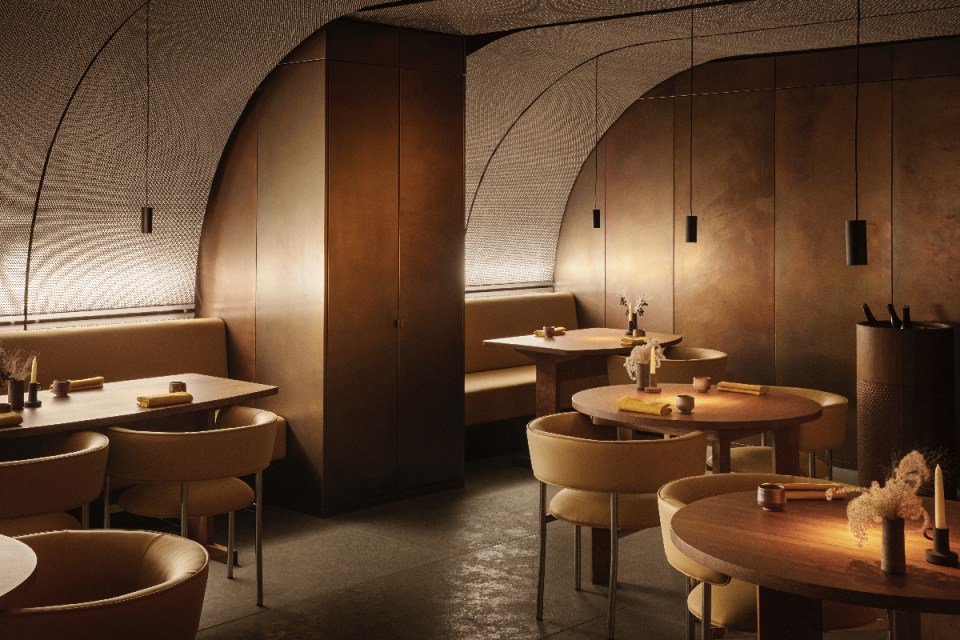
Ikoyi first opened in St James’s Market in 2017, earning first one, then two Michelin stars before relocating to its current digs at 180 The Strand. Designed from the ground up by Chan, the atmospheric, dimly-lit dining room was conceived as a single, impossibly complex machine, one built from waiters and cutlery and mid-century modern tables, all working in unison to create something effortless and… cool.
Most of all Ikoyi is extremely cool. It’s the fine dining restaurant that exists in your mind’s eye but you never thought you would actually visit. Everything is painstakingly, rigorously thought-out, from the low-hanging spotlights that present the dishes like museum exhibits or religious artefacts, to the crockery and the playlist and the cut of the waiters’ jib.
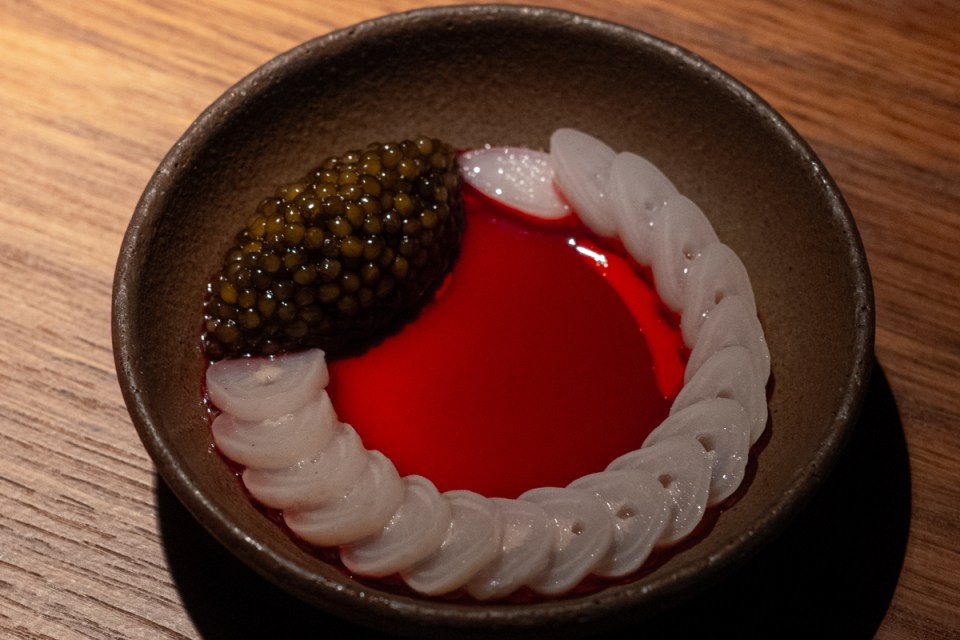
And the food; my god the food. From my first dish – a dainty bowl of caramelised pork jowl in a richly-spiced broth, into which a waiter deposits little globules of peppercorn oil through a pipette – you know you’re somewhere special. There’s a mushroom tarte with 100-day aged beef that’s so elaborate you could write a thesis on it. And, most famous of all, there’s the mussel and saffron custard with caviar and a fan of poached razor clam slices: visually striking, intriguingly textured, its unusual, decadent flavours – umami, a subtle sweetness, a lingering salinity – revealing themselves slowly and deliberately. After my meal I caught up with Chan to find out what makes him tick: his inspirations, his loves, his fears and his restaurant.
In conversation with Ikoyi’s Jeremy Chan
Steve: I ate at the restaurant last night and I found myself picking up your dishes, turning them around in my hands, looking at them from every angle, really trying to take it all in. Do you ever worry people overanalyse your food?
Jeremy: I never worry. I don’t think about it. All I care about is if they’re happy. How they want to experience it is up to them. If I thought about it too much, it would wear me down and stop me having an original voice, because I’d be thinking about how people are going to react rather than what I’m trying to create. I’m not even too interested if people don’t like the food, or they only like some of the dishes, or if they love every dish – for me it’s more about the final impression, that they feel the passion and the originality and the personality. When you see a film, you don’t have to love every aspect of it, but you should feel that it’s been made by a specific director, that it has a stamp of identity on it.
SD: It’s interesting you mention film – who outside of the restaurant industry do you look to for inspiration?
JC: I listened to a lot of death metal and black metal when I was growing up. I’m not talking about the corny type of metal, I’m talking about music that has this machine-like brutality to it, this precision, this coldness that strips away your feeling of humanity. I love that kind of music, it embodies the spirit of work and labour and precision and consistency.
There were a few bands that I listened to in the lead-up to opening the restaurant, which I’ve returned to lately. There’s a band I love called Meshuggah and another called Converge. It’s super intense, concentrated anger and sadness and brutality, but it comes out in this very pure, clean way. I don’t listen to it and feel sad. I listen to it and feel inspired, energised. It brings me up.
Cinema is also a big inspiration. I rewatched Boogie Nights the other day and I was thinking Paul Thomas Anderson was only 27 when he made that film. It’s so interesting to think about the choices he makes. What is he thinking? How is he feeling? What world is he trying to express? I love that about cinema and especially his movies, which combine comedy with a dark, sad reflection on life, and also this hopeful lightness. There are all these different feelings, and I think it’s very similar to the decisions I make at Ikoyi: I’m not just trying to convey joy, I’m trying to convey precision, introspection, reflection, deliciousness, all these different feelings about life and experience.
It’s just a meal, of course, it’s just food, people don’t need to pick up on all of that but the process of making it comes from a very personal, reflective place.
SD: I remember reading that Roger Waters from Pink Floyd – who were on the soundtrack last night – wouldn’t listen to any other music apart from his own when he was recording, and I heard that you do something similar, that you try not to look outwards for inspiration…
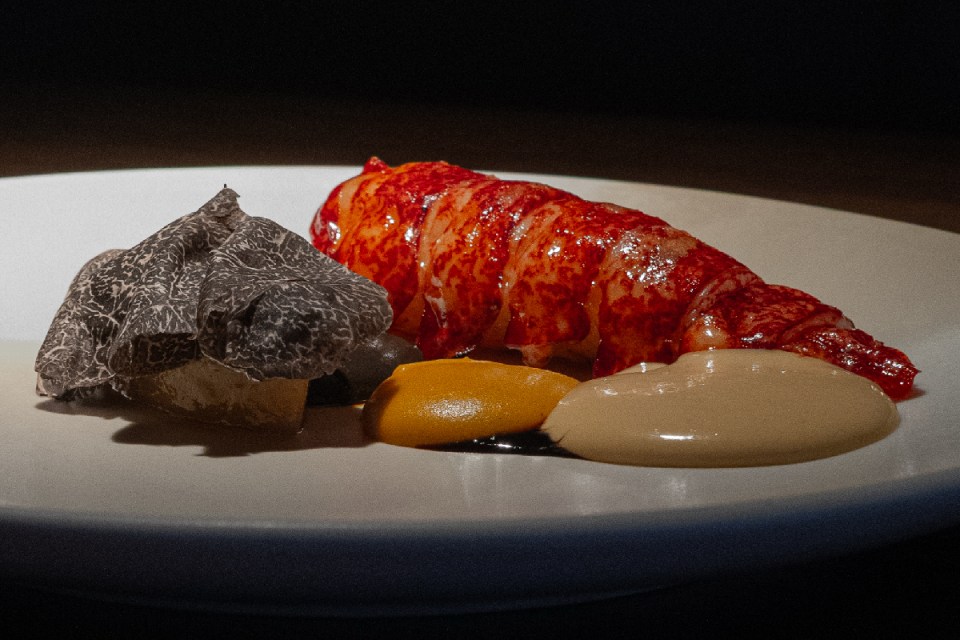
JC: I don’t really need to look elsewhere because these dishes have their own energy, they keep evolving. If you look at the menu, there are themes: it’s very sculpted and shiny and vibrant and sharp. Every dish is like a living sculpture that looks almost alive. It’s very intense. It’s very in the moment. It can’t be made ahead or pre-built. And everything is very finite. None of the dishes stay beautiful for long – a minute max – then they start to fade, they go cold, and I think that’s why it’s so exciting.
If I were to look at recipes or ideas, it would be old-fashioned things, things from the past.
SD: Is it true that you never eat your own dishes? That seems crazy, how does that work?
JC: As I was saying before, the food is alive. It feels like an extension of myself, so eating it feels weird. It’s intended for other people. It feels like I’m not supposed to eat it, that it’s forbidden, that I would be transgressing.
That doesn’t mean that I don’t know what the sauces taste like, or the cooking or the textures. I know the flavour combinations. I have faith in combining beautiful things. I also believe that things don’t always need to make sense, not everything needs to follow a strict logic. We’re weaving together so many delicate, beautiful, complex flavours that there is no ‘correct’ way to experience the dishes.
I think David Lynch would have liked Ikoyi
SD: David Lynch said something similar about his films, that they aren’t a code to crack, they’re about the feelings they inspire – there is no one literal reading…
JC: Exactly. That can make it difficult for people who go to fine dining restaurants and try to categorise them or analyse them. They come expecting an answer or looking for some specific form of harmony but that might be different for every guest. I read David Lynch’s autobiography: what an amazing, creative person, a pure artist. A lot of his ideas came from really wacky places and it’s the same with Ikoyi. It might look fairly conventional but the ideas behind it are not conventional, they’re far-reaching and cross-disciplinary and often unrelated to food. I hope Lynch would have picked up on that if he’d eaten here.
SD: How much of what we see and experience – the cutlery, the playlist, the suits – are your personal vision?
JC: Like, everything. Ikoyi is pretty much my soul. In terms of the aesthetic design, the materials, the textures, the tables, the interior, the uniforms, the colour palettes, the menus, the table cards… that all comes from me. It’s all part of one thing.
SD: It takes a singular mindset to get where you are. Do you think you will ever reach a point where you think: ‘This is it, I’ve nailed it’?
JC: I’m a long way away from getting where I want to be. I don’t think I’ll ever get there. There are so many things I want to do, life is just too short. I want to make tweaks to the design of the restaurant. There are things I’d love to do with the ceramics and the plates and the materials that we use for tableware and towels. I’m constantly seeing new ways of doing things, I’m always looking for something different.
‘I don’t feel young. I’m 39 and I’m coming to the end’
SD: You’re still young, do you see Ikoyi as your life’s work?
JC: I don’t feel young. I’m 39, I’m coming towards the end. Like, time is running out, so I’m just trying to make the most of it while I can. It’s frustrating because there are so many things I want to do. I’m trying to enjoy the experience and feel fulfilled. Is it my life’s work? It’s the longest work I’ve undertaken in my life. I don’t see myself changing in the future.
SD: How long does it take to bring a dish from the initial idea to serving it in the restaurant?
JC: It’s fast – like, a few days. Once the idea is there, it’s done, you just make it happen. I’m very impatient once I have an idea in my head and an inkling of how to make it. I just put all of my energy into making it happen. I need to see it come to life.
SD: What’s a common misconception people have about Ikoyi?
JC: That it’s a spice-based restaurant. It’s not only a spice-based restaurant, it’s about produce and technique and gastronomy. We’re not about fanfare or tableside service or gimmicks or this posh, aspirational idea of dining. Ikoyi is about cooking – that’s what I want it to be known for. I don’t want it to be seen as a restaurant that uses spices to make interesting food. That’s just five per cent of what we do.
SD: Do you ever feel like you need to adapt to outside forces?
JC: The world is becoming so standardised. Creativity is being crushed. But the more that happens, the harder I try to resist it. I feel like if you give in, you have to give in completely and play the game. And if you do, you’ll survive, but a little part of you will die inside, you will lose that feeling of excitement.