Industry body calls for seismic reforms to boost fracking

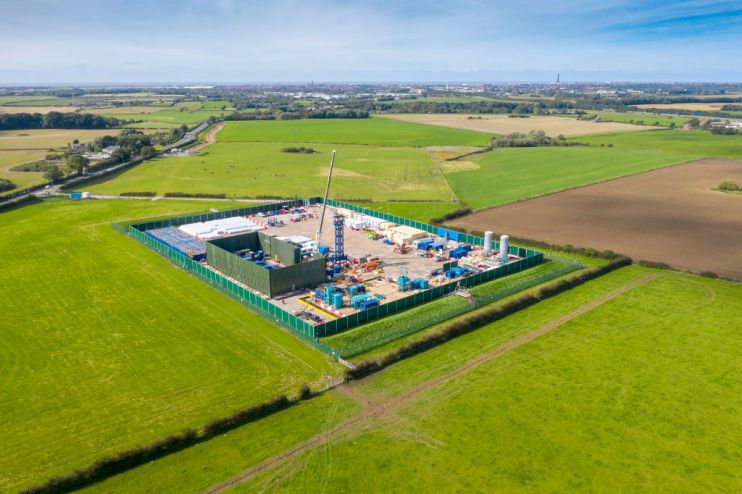
The UK’s leading onshore energy body has urged the Government to raise the maximum levels permitted for seismic activity involving fracking.
Charles McAllister, Director of Policy, Government and Public Affairs at UK Onshore Oil and Gas (UKOOG), welcomed Downing Street’s decision to lift the moratorium on fracking.
However, he argued that the Government needed to resolve inconsistencies between fracking and geothermal drilling in order to make the most of a revival of fracking.
He noted that the regulatory framework on seismicity applied to shale gas was “inconsistent with wider regulation of extractive industries”.
McAlliser said: “It is therefore pragmatic for Government to redress this unjustified discrepancy.”
In his view, this was key to boosting supplies from shale gas projects, amid a growing focus on domestic energy generation following Russia’s invasion of Ukraine.
Currently, fracking is limited to activity that will cause 0.5 on the richter scale, while geothermal drilling is permitted up to 2.5 on the richter scale – which remains below the level of some natural tremors recorded in the UK.
Industry prepared to work with Government over fracking problems
Fracking involves injecting a water, sand and chemicals at high pressure into boreholes deep underground to fracture rock and release shale gas.
A moratorium on fracking was imposed in 2019 amid concerns over tremors, and the Conservative manifesto in December 2019 said the party would “not support fracking unless the science shows categorically it can be done safely”.
Earlier this year, the North Sea Transition Authority (NSTA) ordered Cuadrilla to plug its two remaining shale wells in the UK.
However, following Russia’s invasion of Ukraine, NSTA gave fracking a reprieve – pausing its plugging requirement – before the Government decided to conduct a scientific survey on the practice to assess whether the process could be made safer.
The survey was undertaken by the British Geological Society, (BGS) which published its report today alongside the announcement and ministerial statement revealing fracking’s revival.
The BGS report argues that more data collection is needed in the UK to ascertain fracking’s safety and potential.
Chris Cornelius, the geologist who founded Cuadrilla Resources, which drilled the UK’s first modern hydraulic fracturing wells in Lancashire, recently described the UK as having “very challenging geology, compared with North America”, where fracking is a major industry.
He told The Guardian earlier this week that shale resources in the UK are “heavily faulted and compartmentalised”, making it more difficult to exploit at any scale compared to US resources.
McAllister revealed that UKOOG was prepared to work with the Government and local communities for potential exploration and scientific research at UK sites.
He also maintained the industry body’s view that fracking could help meet the UK’s net zero ambitions and national energy needs.
He said: “UKOOG continues to support the UK’s transition to Net Zero. Every single costed Net Zero compliant scenario recognises the need for natural gas and oil throughout and at the outcome of our 2050 goal.”
The group has previously cited data from the British Geological Survey there could be as much as 37.6tn cubic metres of shale gas under the ground.
If ten per cent was recoverable, UKOOG argues this would be enough to help meet the country’s energy needs for the next five decades.
Wonks divided over fracking’s potential
Andy Mayer, energy analyst at free market think tank the Institute of Economic Affairs, praised today’s decision as a “welcome start.”
However, he argued the lifting of the moratorium had to be matched with reforms to planning laws to make projects easier to green-light alongside equalising the seismic requirements with other drilling.
Mayer said: “Lifting the fracking moratorium and issuing more licences is a welcome start, but radical regulatory reform of planning, permitting and safety rules are required for there to be serious progress. Equalisation of seismology rules with other industries is the highest profile example.”
As it stands, he believed the “climate blob” remained firmly in charge of energy policy.
By contrast, Adam Bell, head of policy at research consultancy Stonehaven, raised doubts over industry claims for fracking’s potential.
He told Morning Wire it was wrong to confuse resources with reserves, and that it was irrelevant how much gas was underground if it could not be reliably extracted without invoking huge costs.
This meant that he tended to support much more conservative estimates for its potential, suggesting it could perhaps meet 10 per cent of the UK’s energy needs.
He also highlighted that projects will require local consent, with fracking remaining unpopular compared to other energy generation projects.
Bell said: “The Government’s announcement was specific about its requirements for local consent. In practice, that’s a far bigger challenge for gas recovery than available resource.”
Meanwhile, Sam Hall, director of the Conservative Environment Network, said it was “understansable the Government is pulling every lever to boost energy supplies.”
However, he argued the Government should instead focus more on boosting onshore wind and insulation.
He told Morning Wire: “Fracking is unlikely to yield significant amounts of energy due to UK geology. Ministers should instead prioritise liberalising planning rules for onshore renewables and helping lower income households insulate their homes. Renewables and insulation will cut bills quickly, be popular with the public, help deliver the PM’s commitment to net zero, and reduce reliance on volatile international fossil fuel markets.”