Inflation target: Why economists think it’s time for a change

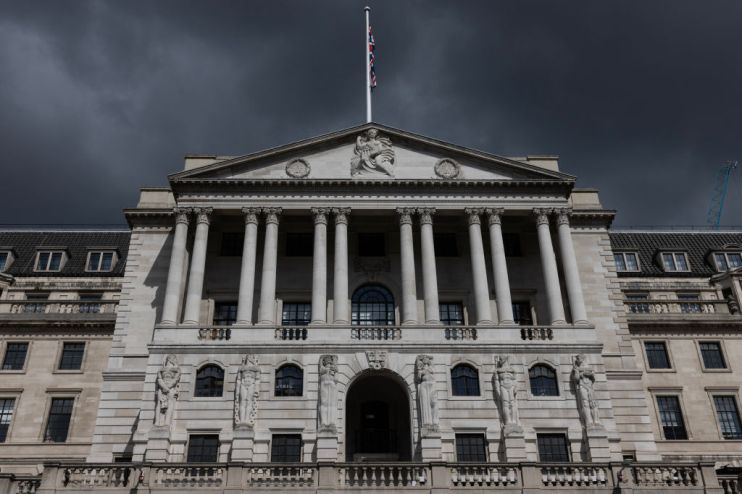
The global economy has been hit by the most serious round of inflation since the 1970s, prompting central banks and analysts to rethink their understanding of inflation.
With inflation now on the way down, attention is beginning to turn to what the ‘new normal’ will be – if we ever make it there.
Inflation targeting has been an essential and important part of the old macroeconomic regime, and it will still have a very important role to play going forward, but there is a growing chorus of voices suggesting reform is needed.
Do they have a point?
What is the target and where does it come from?
New Zealand was the first country in the world to adopt an inflation target in 1990 with the UK following soon after in 1992.
The idea of a target became attractive as economists increasingly recognised the extent to which expectations helped to generate inflation.
If workers thought prices would rise in the medium term, they would ask for a pay rise which would send prices even higher. However, if a central bank had a target, and it was seen to be credible, then expectations could be anchored through the target.
This would help to ensure that temporary price rises would not morph into structurally higher inflation.
Until last year, inflation in the UK had hovered around two per cent fairly reliably. Indeed across much of the developed world, inflation remained low and stable.
Economists told City A.M. that the regime as a whole had been effective and there are very few economists who argue that inflation targeting should be abandoned altogether.
“Although the two per cent target is fairly arbitrary, the wider inflation targeting regime has played an important role in anchoring expectations,” Andrew Goodwin, chief UK economist at Capital Economics, said.
So why change?
Ageing populations, geopolitical tension and the green transition will all put pressure on the supply-side of the economy in coming years. This makes inflation more likely, because costs will be significantly higher.
Mohamed El-Erian, leading economic commentator, supports raising the inflation target to three per cent. He told City A.M. that “running inflation at a slightly higher rate is something that we believe can accommodate these important supply transitions”.
By tolerating a slightly higher rate of inflation, interest rates would not have to be so high giving the economy more broadly slightly more breathing space.
There are also ways to adjust the inflation target without necessarily moving the target higher.
“What you’re ultimately targeting is domestic inflationary pressures,” Dean Turner, chief UK and Eurozone economist at UBS said. “If you’re targeting an inflation number, you need to make sure that target is one that central banks can impact”.
In a world of increasing geopolitical volatility, economies will be buffeted by shocks outside of their control which will translate into higher inflation. But in those cases, there is not much central banks can do to reduce it.
As Turner pointed out, “there is little the Bank of England can do to influence global oil prices”.
The target could be adjusted to focus more precisely on domestic inflation. In the UK policymakers have often focused on wage growth and services inflation as indicators of domestically driven inflation.
“There should be regular reviews of what is the most appropriate measure to target which take into account the changing drivers of inflation.”
Policy
A further argument in favour of moving the target is that it gives central banks more space to stimulate the economy in the event of a downturn.
The Resolution Foundation recently said that the Bank of England should raise the target to three per cent if the world returns to a world of lower interest rates.
Simon Pittaway, senior economist at the Resolution Foundation, said moving the target “moves you further from the effective lower bound of interest rates”. The effective lower bound is the point at which further interest rate cuts no longer provide a stimulus.
“Being stuck at the lower bound is not a good place to be,” he said.
Other things being equal, a higher inflation target means interest rates can move lower without putting the inflation target at risk.
This would give central banks greater ability to stimulate the economy, which is particularly valuable when governments already have huge piles of debt.
Dangers
Despite the arguments in favour, there is one big concern about changing the target: will it undermine central banks’ hard-won credibility?
The danger, many argue, is that central banks would effectively be moving the goalposts as soon as the going got tough. Remember, inflation is supposed to be all about expectations. If the target can be moved once, why not move it again?
“Once you’ve had 20 years of a two per cent target, the bar to moving higher is quite high,” Goodwin said. “It risks undermining the whole inflation targeting infrastructure,” he continued.
El-Erian admitted that there were dangers in changing the target and suggested the target should not be changed “under bright lights”. Central banks have already lost a degree of credibility due to their handling of inflation, he said.
Pittaway also stressed that any changes to the inflation targeting regime must only come after inflation has returned to the two per cent target, for exactly this reason. A loss of credibility would be “disastrous”, Pittaway said.
But despite these concerns, El-Erian said inflation moving slightly higher would not de-anchor expectations in “any meaningful way”.
Japan moved its target from one per cent to two per cent around 10 years ago, with little impact on inflation. Admittedly its circumstances are fairly unique. Japan is still struggling with low inflation, even as advanced economies around the world have aggressively hiked interest rates.