Interest rate hikes are a hard lesson for investors who relied on central banks bailouts

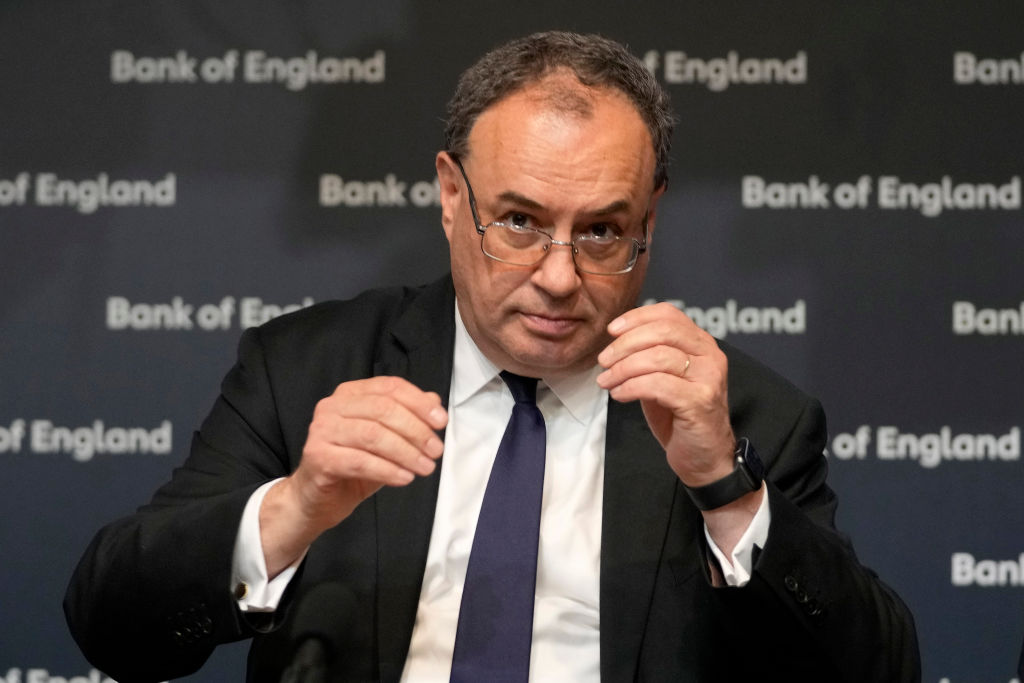
In May last year, I wrote in this newspaper about the risks of moral hazard and the pandemic, with a generation of investors who had developed a skewed sense of risk. After the unprecedented level of central bank intervention, many believed policymakers would always ride to their rescue, providing portfolio safety nets with cheap money and loose monetary policy.
The sweep of price declines, with US equities entering a bear market and extreme falls in the more speculative end such as crypto, are a salutary lesson. In the end, it is the responsibility of the individual investor to build a “safety net” for their portfolios and not central banks. Rampant inflation also means it is difficult to flood global markets with money or – as we’ve seen from the Federal Reserve and the Bank of England – to keep interest rates low.
We are now in reverse from where we were a year ago. Those listening to the sounds of the markets will hear the “suction noise” as liquidity is withdrawn. Before, bad news was seen almost as good news, as it often triggered a flood of quantitative easing and rate cuts. But now, the chickens have come home to roost, and bad news is just that – bad news.
There will be exceptions on the way, for example the European Central Bank’s new “anti-fragmentation instrument” – a mechanism that will prevent eurozone governments paying substantially different financing costs. But managing and taming inflation is the main focus for central banks. Last week in the US, they went up by 75 basis points; in the UK they rose 25 basis points. This opens the way for a new conundrum of policy failure and mismanagement of the interest rate.
Take the United Kingdom – the last time we saw inflation like this was during the 1970s; the current decision makers are on new ground.
Unfortunately, for the investors who took advantage of the false safety net of central banks, this will come with a significant challenge. Their appetite for risk was buoyed by a sense that there was someone waiting in the wings to take care of them. Clearly, that is not so.
Over the last 12 months, the notion of moral hazard, basic risk management, downside protection or making money when markets decline has been largely ignored. These were viewed as esoteric subjects for the “hedge funders” and some institutional investors, or they were just not thought of at all.
Wealth managers in general have not prepared their retail clients for these highly challenging markets. This is a missed opportunity and an increasingly expensive one as retail investors review the performance of their portfolios. Perhaps the market shocks we are seeing now will encourage retail investors to explore this more thoroughly with a focus on diversification, active risk management, low leverage and a greater understanding of all the gears the portfolio has.
Ignore the rhetoric that the risk management process is too complex – it is not, especially if delivered and presented well. This message also applies to those investors who are heavily weighted to the UK biased FTSE 100, which has recently outperformed global markets. It’s not difficult to paint a challenging picture for the UK – significant inflation, a cost-of-living crisis, a stretched consumer, a heavily indebted government, high taxes, and spiralling inflation.
But this rebalancing was always going to happen. Central banks are there to keep economies in check, not to bail out markets. We are in a period of sustained volatility and investors will need to manage this risk. They need to learn from this period and take these lessons into the future.