Skip to content
Sunday 23 August 2026London --:--Frankfurt --:--Zurich --:--
NewslettersSearchEN · DE · FR
MorningWire

European business, markets and politics

FTSE 100
10,816.56
+0.64%
DAX
26,136.56
+0.59%
CAC 40
8,484.43
+0.37%
STOXX 50
6,462.22
+0.63%
  • Europe
  • Markets
  • Business
  • Economy
  • Regulation
  • Politics
  • Opinion
More
GermanyFranceEU InstitutionsCompetitionPublic AffairsBankingTechnologyEnergy
  • Germany
  • France
  • Europe
  • Markets
  • Business
  • Economy
  • Regulation
  • Politics
  • Opinion
  • DE
Thursday 30 March 2023 6:00 am  |  Updated:  Thursday 30 March 2023 6:07 am

Labour and Tory governments shun £500bn of investment for UK economy since 2000
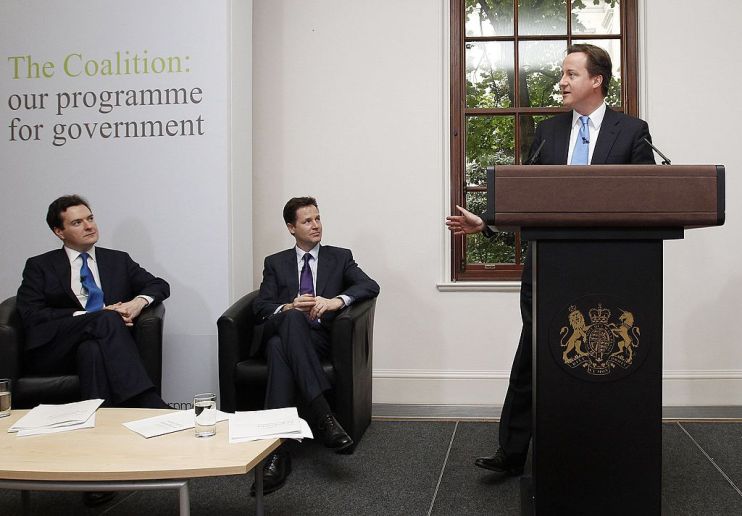
David Cameron And Nick Clegg Launch Coalition Agreement Programme
Since the turn of the millennium, the UK has injected around 2.5 per cent of gross domestic product (GDP) of public investment into the economy, among the lowest levels in the group of rich nations that make up the Organisation for Economic Cooperation and Development (OECD) (Photo by Stefan Wermuth - WPA Pool/Getty Images)

Britain has missed out on £500bn of public investment this century as a result of successive Labour and Conservative governments trimming capital spending to balance the books, a new report out today claims.

Since the turn of the millennium, the UK has injected around 2.5 per cent of gross domestic product (GDP) of public investment into the economy, among the lowest levels in the group of rich nations that make up the Organisation for Economic Cooperation and Development (OECD).

In fact, the average advanced OECD country has clocked up 3.7 per cent of GDP of public investment over the same period, around 50 per cent more than Britain’s contribution.

If successive Labour and Tory governments had closed that gap, the UK would’ve received an additional £500bn of public investment since 2000.

Chronically low investment has been driven by political short-termism and adherence to fiscal rules that don’t ring-fence investment spending from daily expenditure, forcing politicians to reach for capital spending cuts to shore up the UK’s finances, according to the economic think tank the Resolution Foundation, who calculated the figures.

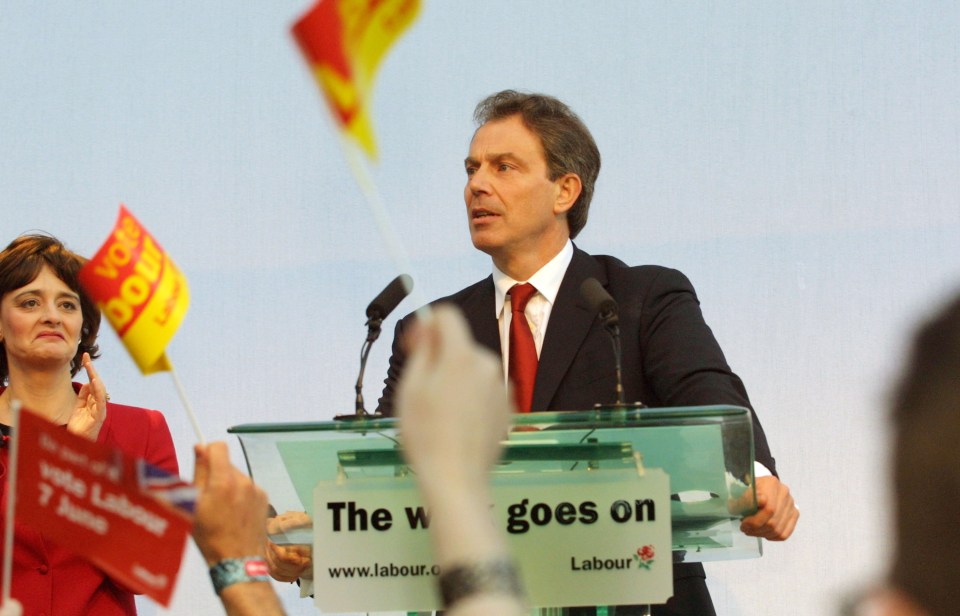
Spending on things like roads, schools and nurses bore the brunt of David Cameron and George Osborne’s sweeping cuts during the austerity years, although UK public investment only reached the long-term three per cent of GDP average at the tail end of Labour’s Tony Blair and Gordon Brown government.
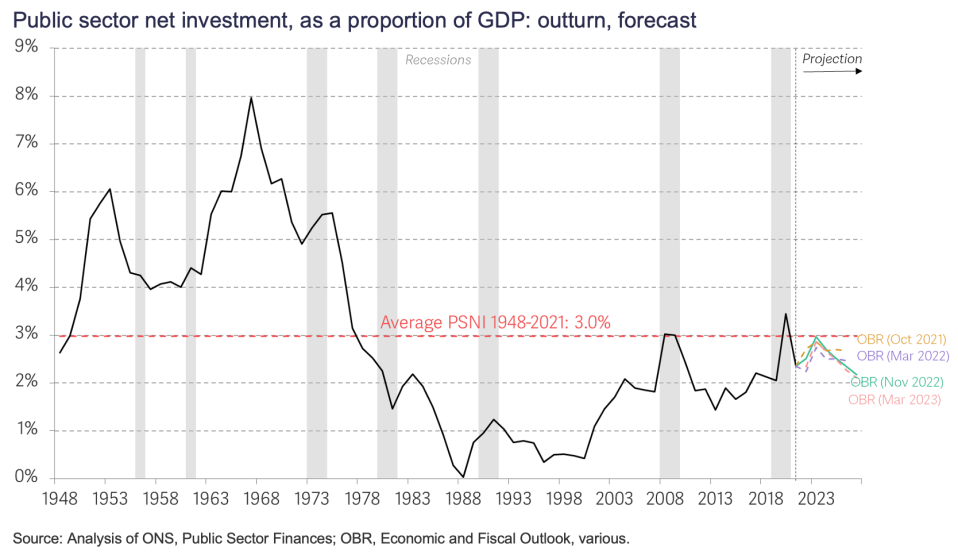
(Resolution Foundation)

James Smith, research director at the Resolution Foundation, said: “Britain’s record on public investment is one of long-term failure. Our investment levels are too low and too volatile, as investment plans are announced and then scrapped before they ever get going.”

Former Prime Minister Boris Johnson on entering office in 2019 stepped up government investment to levels not seen since the 1970s.
Read more

Revolut founder’s wealth set to balloon amid talks of share award at $500bn valuation

Revolut CEO Nik Storonsky speaking at a business conference, wearing a suit and tie, addressing financial innovation.

But a combination of the debt stock swelling to pay for Covid-19 spending and Liz Truss’s calamitous £45bn mini budget forced Chancellor Jeremy Hunt to trim those measures substantially at the November autumn statement.

Tony Blair wins UK General Election.
UK public investment only reached the long term three per cent of GDP average at the tail end of Labour’s Tony Blair and Gordon Brown government (Photo by Sion Touhig/GettyImages)

Public investment is “now due to be frozen in cash terms in the second half of the decade – reversing more than 80 per cent of the increases announced just three years ago,” the report said.

The Treasury countered this claim: “Despite the tough decisions we’ve taken to stabilise the public finances, we are maintaining record levels of capital investment with £600bn over the next five years in critical infrastructure like Northern Powerhouse Rail, HS2 and Sizewell C.”

Responding to a grilling by MPs on the treasury committee yesterday, Hunt defended his budget earlier this month, in which he injected around £20bn into the economy by offering investment reliefs for businesses and expanding childcare support.

He stressed that the government must keep its “eye on the ball” to avoid stoking inflation by over-stimulating the economy.

A series of tax bands have been frozen for several years, measures announced by now-Prime Minister Rishi Sunak in 2021, throwing the UK’s tax burden on track for its highest level since just after World War II. 

Hunt’s budget actually raised the projected tax burden slightly, mainly because the Office for Budget Responsibility slimmed its long-term GDP growth projections.

In a jibe at Truss’s reckless fiscal strategy, Hunt told MPs on the treasury that the fallout from her mini budget demonstrated governments “can’t fund tax cuts through increased borrowing”.

Read more

Britain’s problem isn’t too much Thatcherism, but too little

Margaret Thatcher smiling outside 10 Downing Street during her tenure as UKs longest-serving Prime Minister in the 20th ce...

Share this article

  • Facebook
  • X
  • LinkedIn
  • WhatsApp
  • Email

Similarly tagged content:

Sections

  • Markets & Economics
  • News

Categories

  • Economics
  • Politics

Related Topics

  • David Cameron
  • George Osborne
  • Jeremy Hunt

Trending Articles

  • Can debt-ridden Morrisons become a Big Four supermarket again?

  • Ratcliffe’s Ineos saves Runcorn plant

  • Mike Ashley’s Frasers offers to pay personal shoppers in Harvey Nichols takeover

  • Amazon says it buys books in bulk to ‘improve products’

  • Burnham predicted to raise taxes for ‘fundamental’ cost of living support

More from Morning Wire

  • Revolut founder’s wealth set to balloon amid talks of share award at $500bn valuation

    Fintech
    Revolut CEO Nik Storonsky speaking at a business conference, wearing a suit and tie, addressing financial innovation.
  • Britain’s problem isn’t too much Thatcherism, but too little

    Opinion
    Margaret Thatcher smiling outside 10 Downing Street during her tenure as UKs longest-serving Prime Minister in the 20th ce...
  • Government debt repayment ‘could rise to half’ of total taxes

    Economics
    OBR chiefs told the Treasury Select Committee that a higher tax burden could stifle growth.
  • ‘Cost of business crisis’ as government drives up overheads by 70 per cent in a decade

    Business
    Andy Burnham, Mayor of Greater Manchester, drinking a pint of beer in a busy pub setting
  • How Britain can stay clear of rivals as home of overseas sport club owners

    Sport Business
    Football fans protest holding Love United Hate Glazer and Glazers Out Ratcliffe Out banners.
  • Can John Healey deliver Burnham’s make-or-break devolution agenda?

    Economics
    John Healey, in a red tie, speaking with Andy Burnham, wearing glasses and a dark blue jacket, outdoors.
  • War and tax: How the UK economy could get knocked off course

    Economics
    Andy Burnham speaking at a public event, emphasizing local governance and policy changes, wearing a suit and gesturing pas...
  • Devolution should mean regions competing for investment

    Opinion
    Manchester skyline with iconic landmarks during a Belfast speech event, highlighting urban landscape and architectural bea...
MorningWire

Independent European business, markets and political news for decision-makers.

Morning Briefing

Europe

  • Germany
  • France
  • EU Institutions
  • Europe

Business

  • Markets
  • Business
  • Economy
  • Regulation
  • Competition
  • Public Affairs

Editorial

  • Opinion
  • Editorial Policy
  • Corrections
  • Contact

Company

  • About Morning Wire
  • Privacy Policy
  • Terms of Use
  • Cookie Policy
© 2026 Morning Wire Ltd · Published by Morning Wire Media, Bahnhofstrasse 65, 8001 Zürich, Switzerland
Privacy · Terms · Cookies · Facebook