Lexus ES 2026 review: Easygoing electric saloon goes its own way

Lexus has built some superb saloon cars during its 37-year lifetime, from the original LS 400, which bested the benchmark Mercedes-Benz S-Class, to the stylish and dynamic IS 300: a worthy rival for the contemporary BMW 3 Series.
Today, however, Lexus is almost exclusively an SUV company. Its UK range stretches from the compact LBX to the luxurious and long-serving RX. Only two outliers break this SUV-shaped mould. One is the LM, an ultra-plush people carrier that costs nearly £100,000. The other is the new ES tested here – the only saloon left in the Lexus lineup.
The ES is now into its eighth generation since 1989, although this is only the second version offered in the UK. So you could be forgiven if, like me, you had to Google the previous car – sold here from late 2018 – to remind yourself what it looked like.
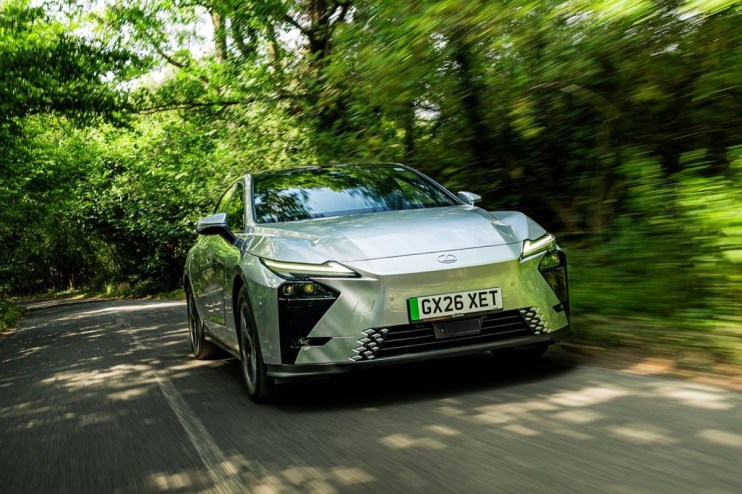
With its angular contours and sleek, coupe-like profile, the new ES might be more memorable. In a break with the past, it’s also fully electric, combining a 77kWh battery with a 224hp motor and front-wheel drive.
Priced from £59,345, or around £659 per month on PCP finance, its EV rivals include the Audi A6 E-Tron, BMW i5, Volvo ES90 and outgoing Mercedes-Benz EQE. So, can Lexus win the battle for saloon car supremacy once again?
Getting the Lexus look
Arriving at the shiny new Toyota and Lexus Media Experience Centre near Gatwick, I’m soon distracted by all the classics on display. From a perfectly preserved Mk1 Toyota Yaris to the V10-powered Lexus LFA supercar, there is something for every automotive appetite here.
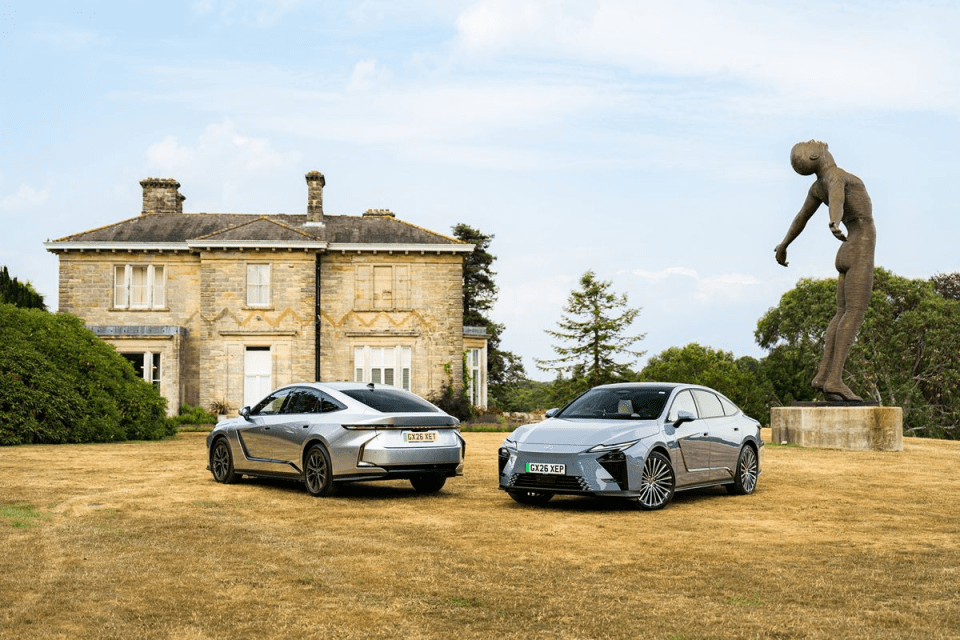
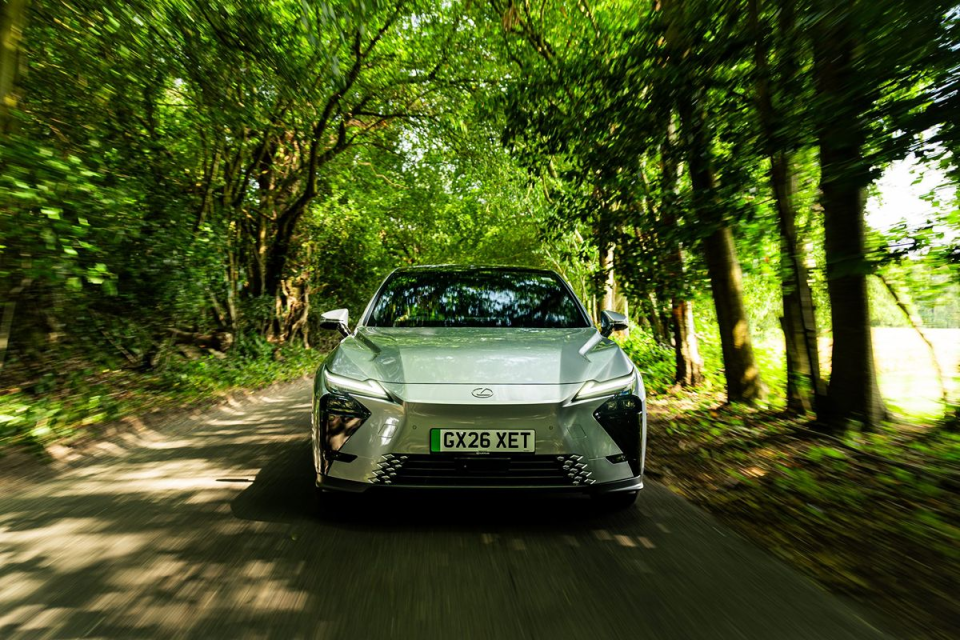
Doing its best to stand out in such company, the new ES has some striking design details. The familiar Lexus ‘spindle’ grille is reinterpreted by the pinched shape of the bonnet, which is framed by lightning-bolt daytime running lights (the main headlights are semi hidden inside the air intakes underneath).
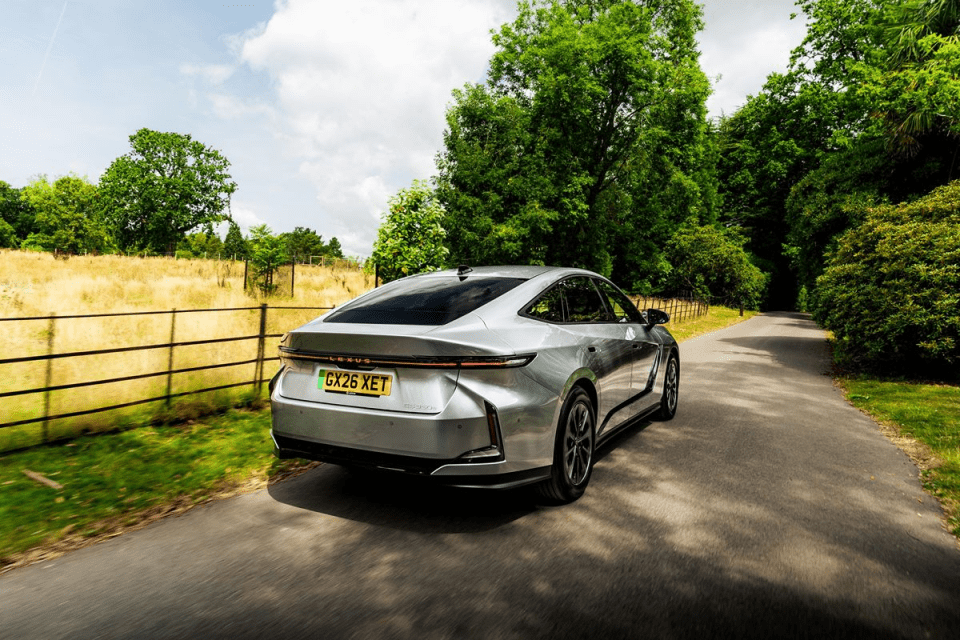
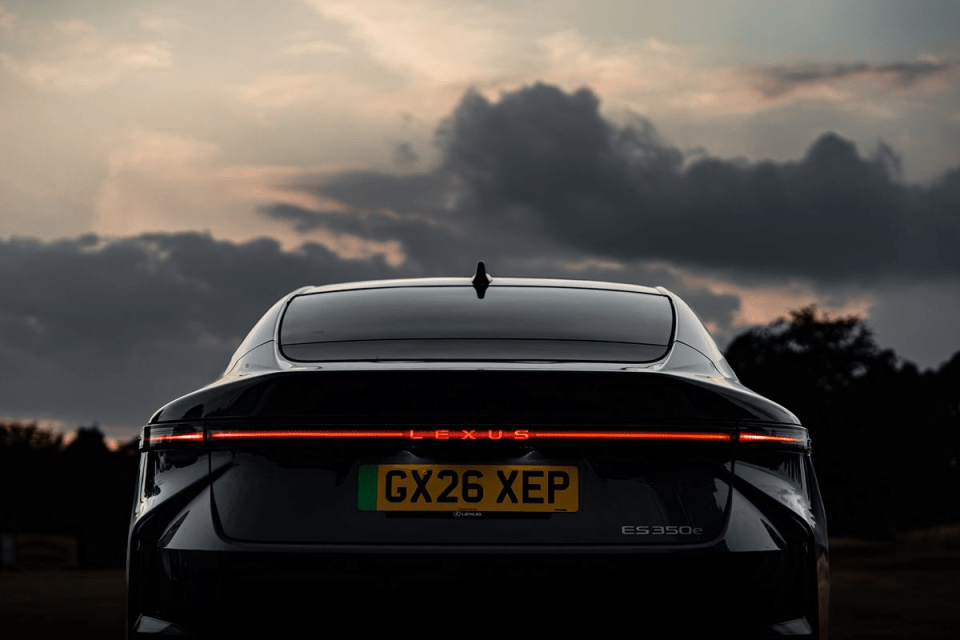
From the side, you’ll note the bold black crease that carves down the car’s flanks, along with that elongated roofline – making the ES look more like a hatchback than a saloon. The rear view is more generic, with a full-width light bar and illuminated ‘LEXUS’ lettering: both bang-on-trend for 2026. As a whole, I’m not convinced it looks particularly premium, but it is distinctive, especially in a class dominated by heavy-set German cars.
One thing that doesn’t come across in photos is the size of the ES. At more than five metres, it’s longer than the first LS 400 – ostensibly a car from the class above. And these dimensions pay dividends when you click open the solenoid-style door handles and step inside…
Inside the 2026 Lexus ES
Let’s start in the back, because these really are the best seats in the house. The slim front chairs and long wheelbase create limo-like legroom for passengers to really stretch out, although headroom isn’t quite so generous. Go for the top-spec Takumi and the nearside occupant gets a reclining backrest with an extending, ottoman cushion to put their feet up, plus a remote control to fold the front passenger seat forwards. Subjecting the driver to your smelly socks? It’s all part of the luxury experience.
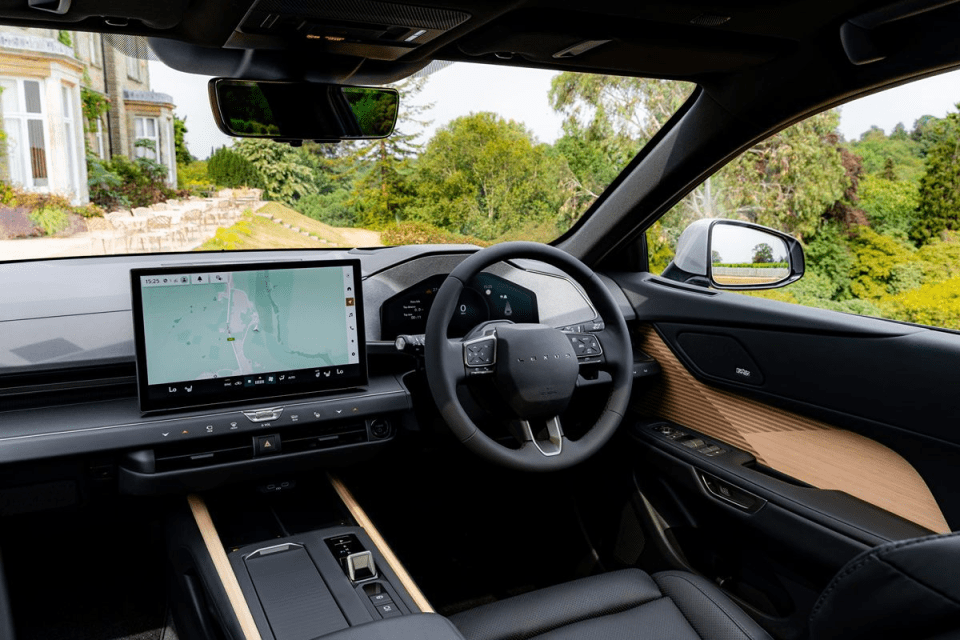
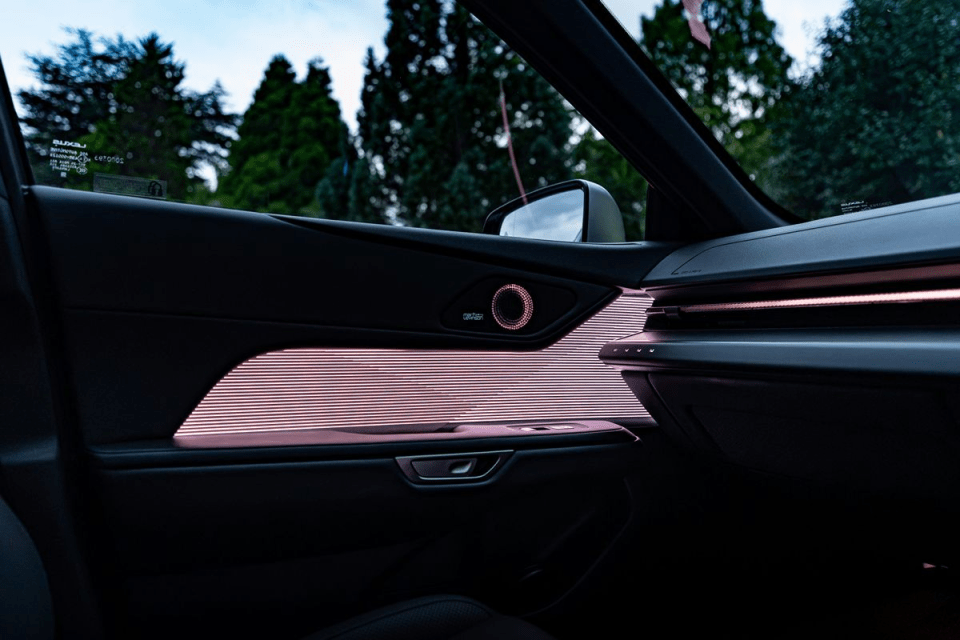
Up front, there’s a minimalist dashboard with a 14-inch touchscreen and neat hidden switches that only illuminate when the car is switched on. Premium Plus and Takumi versions get real leather seats, offered in a choice of cream, tan or black at no extra cost. You can also have bamboo trim on the doors, which looks fantastic – especially at night, when backlit by colourful new ‘surface-emitting illumination’ technology (see image below).
As for luggage, the boot will swallow a useful 512 litres, although its ability to carry bulky loads is hamstrung by a typically narrow saloon-style opening, plus the fact that the rear seats don’t fold forwards. Perhaps Lexus should have built a big hatchback after all.
Lexus ES specifications
Elsewhere in the world, the ES is available with two different hybrid powertrains, plus there’s a more powerful electric version with 342hp and four-wheel drive. All of these are denied to UK buyers, though, leaving us with the 224hp EV in a choice of three trim levels.
The base ES 350e Premium (£59,345) comes with 19-inch alloy wheels, the 14-inch touchscreen, heated and ventilated front seats, a panoramic sunroof and 64-colour ambient interior lighting. Stepping up to Premium Plus (£68,245) adds leather upholstery, bamboo trim, cornering lights, a head-up display, automatic parking, an extra wireless phone charger and a 17-speaker Mark Levinson audio system.
The flagship Takumi (£72,545) gets 21-inch alloy wheels, three-zone climate control, heated and ventilated rear seats, tinted windows and that ottoman-style recliner behind the front passenger.
The important numbers are 0-62mph in 8.0 seconds, a maximum charging speed of 150kW – allowing a 10-80 percent fill-up in 28 minutes – and 361 miles of range. It’s worth noting, though, that choosing the larger 21-inch rims (a £1,600 option, or standard on the Takumi) slashes the car’s official range to 326 miles. It’s a heavy price to pay for style.
Calm and comfortable
Settle into the ES and your whole body seems to exhale, your pulse slowing by a few beats per minute. The driving position might be higher than expected – thank the ‘skateboard’ EV platform, with batteries stored beneath the floor – but it’s very calm and comfortable. The slimline seats are supportive and the thin-rimmed steering wheel is wrapped in buttery soft leather.
Maintaining that sense of serenity in any modern car means switching off the ADAS ‘driver aids’, such as lane assist and speed warning bleeps. The Lexus won’t allow you to deactivate these while in motion, but you can create a shortcut on the home screen, saving you time at the start of each journey (as per EU rules, the systems reactivate every time the car is switched on again).
There are four drive modes: Range, Eco, Normal and Sport, plus a pair of paddles behind the wheel – not for changing gear, of course, but to adjust the level of regenerative braking. Unlike some EVs, however, there is no option for true one-pedal driving.
Driving the Lexus ES
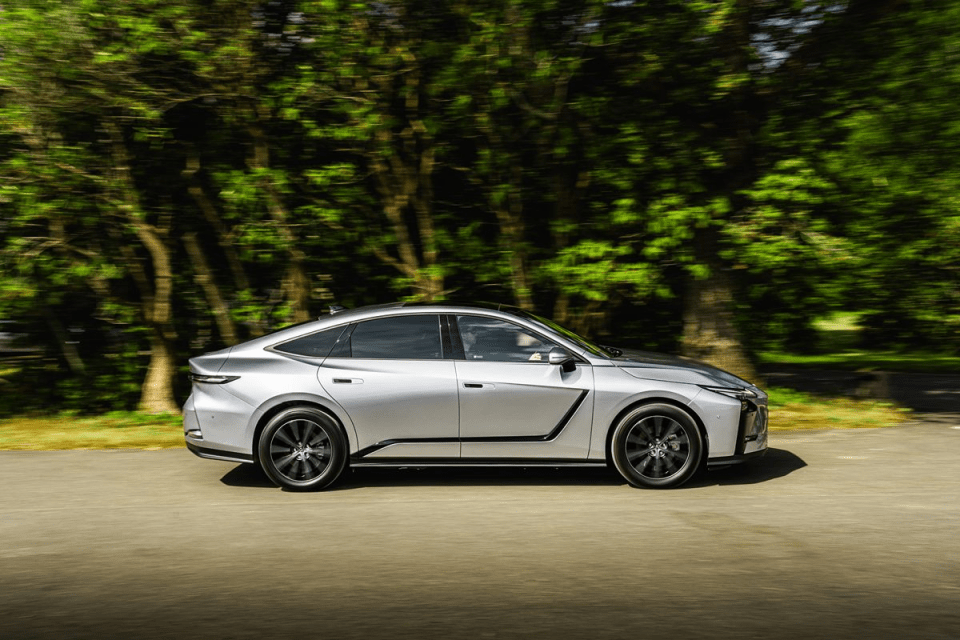
With 224hp to shift a chunky 2,245kg, the ES certainly won’t be drag-racing any Teslas on YouTube. Performance is brisk enough, but overtakes require a bit more planning than in some rivals. A top speed of 99mph won’t earn you much kudos on the German autobahn, either.
This is an easy car to drive smoothly, with linear throttle response and a consistent brake pedal. You might feel an occasional scuffle from the front tyres, but only if you try too hard. The ES prefers not to be rushed.
It’s also impressively hushed on the move. While some car companies give their EVs a carefully curated soundtrack, from orchestral swells to a simulated V8 snarl, Lexus uses Active Noise Control to cancel out motor whine, wind whoosh, tyre rumble and other disruptive sounds. It’s a similar technology to that found in noise-cancelling headphones.
Best experienced in the back
The ES’s desire to take it steady is reinforced when you encounter a few corners. Its suspension is tuned for ride comfort rather than attacking apexes, exactly as most Lexus buyers would expect.
Even so, being front-wheel drive does rob the ES of the dynamism of some rear-driven rivals. A BMW i5 is certainly more engaging on the right road. Once again, it’s hard to escape the feeling that the best seats are in the back, where you can fully relax and let the chauffeur take the strain. Just keep your shoes on, please.
I sampled the ES in middle-rung Premium Plus spec on both the 19-inch and 21-inch alloys and there wasn’t much discernible difference in ride quality. Still the 35-mile penalty in range makes the smaller wheels the obvious choice – and reason enough to avoid the Takumi, which is available on 21s only.
Verdict: Lexus ES 350e
The ES isn’t a class leader in many respects. While its 361-mile range is the longest of any electric Lexus to date, it falls short of its rivals. The Audi A6 E-Tron, Volvo ES90 and Mercedes-Benz EQE can all exceed 400 miles, depending on the model chosen.
Additionally, the Lexus offers modest performance and isn’t exceptional to drive, despite being very comfortable. It seems like a car that your passengers will enjoy more than you will.
Hang on, though, because there are two reasons to consider the ES that we haven’t mentioned yet. The first is Lexus’s reliability record, which is regularly ranked among the best in surveys worldwide. Secondly, an industry-leading warranty, which covers your car for up to 10 years or 100,000 miles if serviced each year at a Lexus dealer. That peace of mind counts for a lot, particularly when the typical warranty offered by premium brands is only three years or 60,000 miles.
Easygoing and easy to live with, the ES sees Lexus playing to its strengths. Unlike several Lexus saloons of the past, though, it doesn’t do enough to upset the established order, so is likely to remain a niche choice – albeit one that suits certain buyers very well.
Tim Pitt writes for Motoring Research