Our approach to energy prices shows we want climate policies only if they’re free

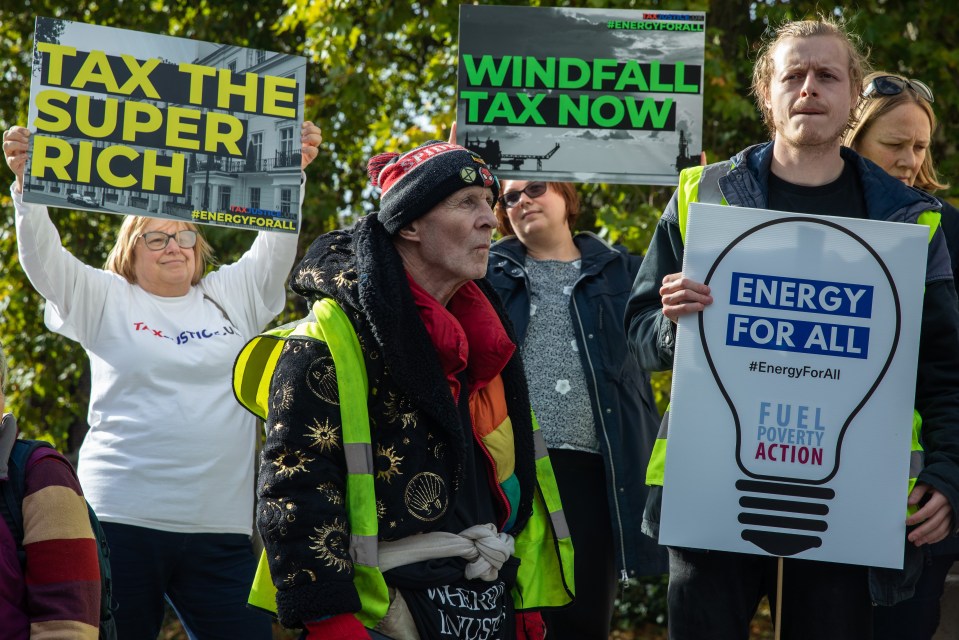
High energy prices could have been an incentive for companies to move to less energy intensive processes and for consumers to use less energy. The opposite happened, writes Paul Ormerod
The energy sector continues to grab the headlines. The government has announced the windfall tax on oil and gas companies will be scrapped if prices fall to more normal levels for a sustained period.
Cue predictable outrage from the likes of the Green party, who said the government should be “tightening the tax and ensuring the money raised helps people through the cost-of-living crisis”.
When energy prices rocketed last year, more or less everyone across the political spectrum was strongly in favour of subsidising the price to consumers. Indeed, the massive open-ended commitment to such spending was why the markets lost faith in the short-lived Truss government. The amounts of money involved dwarfed the costs of the income tax cuts proposed.
Governments across the West have fervently embraced the concept of limiting carbon emissions. The sharp rises in energy prices could have been an incentive for consumers to use less energy. Perhaps even more importantly, the shift in relative prices potentially created incentives for firms to move to less energy intensive processes.
The latter point is exactly what happened following the quadrupling of oil prices in 1973/74. Energy had previously been incredibly cheap; the huge increases in costs incentivised companies to innovate.
It took time to introduce new processes, but even by 1980 the amount of energy used to generate a unit of GDP had fallen by 10 per cent compared to 1975. By 1985, the reduction was 25 per cent. The innovations continued, so that by 2021 the energy consumption per real dollar of GDP had dropped by 60 per cent since the mid-1970s.
Yet rather than welcoming the energy price increases in 2022, governments went out of their way to mitigate the impact on both consumers and companies. Even now, as the reaction to the UK proposal to abandon the windfall tax shows, there is widespread belief that energy prices should continue to be subsidised. The implication is that people should be able to continue, through government subsidies, to consume just as much energy as before the prices rose.
This whole episode represents a very valuable natural experiment. Natural scientists can carry out laboratory experiments to investigate their ideas. But obviously, there’s no way to do the same with electorates. That is why the reactions to major events such as big energy price increases are so useful: they give information about something which has happened naturally.
In surveys, people often express support for policies which are designed to meet climate change targets. Economists are more sceptical about the results of such surveys. In the jargon, they show stated preferences. People are merely asked to say what their response might be in hypothetical situations.
Yet in real life situations, when energy prices rose in a way which would have drastically reduced consumption and facilitated the achievement of climate targets, they were wildly unpopular. Governments scrambled to offset the impact as fast as they could.
There is a clear implication. Policies to meet climate change targets are broadly acceptable if they impose few costs on electorates. As soon as they do, there is a huge adverse reaction.
In this context, the decision by Rachel Reeves, the Labour shadow Chancellor, to step back from the party’s commitment to spend £28bn a year to meet green targets makes a lot of political sense.
St Augustine wrote in his Confessions, “Oh Lord, make me chaste, but not yet”. Western electorates appear to have a similar attitude to climate change policies. They do like them, except when they have to pay.