Skip to content
Wednesday 9 September 2026London --:--Frankfurt --:--Zurich --:--
NewslettersSearchEN · DE · FR
MorningWire

European business, markets and politics

FTSE 100
10,670.06
-1.31%
DAX
25,576.45
-1.66%
CAC 40
8,156.67
-1.94%
STOXX 50
6,311.56
-1.58%
  • Europe
  • Markets
  • Business
  • Economy
  • Regulation
  • Politics
  • Opinion
More
GermanyFranceEU InstitutionsCompetitionPublic AffairsBankingTechnologyEnergy
  • Germany
  • France
  • Europe
  • Markets
  • Business
  • Economy
  • Regulation
  • Politics
  • Opinion
  • DE
Wednesday 15 March 2023 5:00 am  |  Updated:  Tuesday 04 April 2023 11:08 am

A post-mortem of pandemic-era lockdowns expose a dangerous disregard for scepticism

By: Paul Ormerod

Add as a preferred source on Google
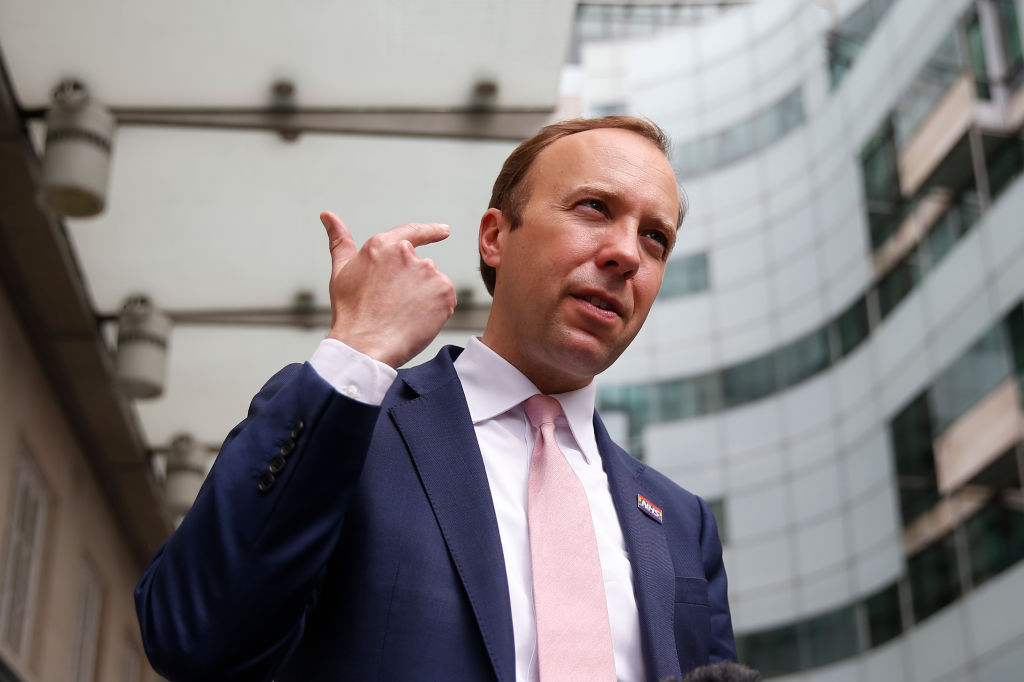
Guests Arrive For The Andrew Marr Show
Leaked messages from Matt Hancock have been published by The Telegraph. (Photo by Hollie Adams/Getty Images)

Ministers promised they were ‘following the science’ during the pandemic, but as uncertainty narrowed, leaked messages demonstrated they failed to take into account different opinions, writes Paul Ormerod.

Like most people, the revelations from the leaked WhatsApps of government ministers during the pandemic have left me with a mixture of emotions. 

At one level, they reveal how difficult it is to make decisions amidst considerable uncertainty. It is always easy, after the event, to point to mistakes and say they could have been done differently. 

So anyone except those – and there are plenty of them around – with a dogmatic central planning mentality will empathise with the initial struggles of the government to deal with the problem.

When data first started emerging from Wuhan, it suggested the death rate for those infected was between 3 and 4 per cent. Our television screens were quickly filled with nightmarish scenes from Northern Italy. 

Understandably – against the then Prime Minister Boris Johnson’s libertarian instincts – a lockdown was imposed, coming into force on 23 March 2020. But whereas the initial uncertainty was huge, it quickly narrowed as firmer information emerged.

For example, in the notorious paper from Neil Ferguson and his team from Imperial College London, they assumed a death rate of only 0.9 per cent, translating into half a million deaths without any restrictions, according to an analysis of the report from UCL. So even then it was accepted that the death rate would be very much less than the terrifying Wuhan figures had suggested. As it turns out, the true number was very much lower than the Imperial estimate. 

By early April, it was apparent that the public across Europe had reacted to the pandemic in the way in which humanity has reacted to plagues for thousands of years: we stopped seeing one another. In the modern jargon, social mixing fell dramatically.  

Read more

‘Absurd’: Government seeks quantum tech chief – no experience necessary

Advanced quantum computer with intricate circuits and glowing interface, illustrating cutting-edge technology innovations

By the simple expedient of taking the peak day for deaths and backtracking the known average time from infection to death, it was obvious that the number of cases in almost every country had started to fall before lockdowns were imposed.  People themselves were taking steps to avoid being infected.

Within just a couple of weeks of lockdown, then, the case for it had been seriously weakened.

A number of distinguished economists such as David Miles of Imperial College and Bob Rowthorn at Cambridge published papers in May and June of 2020 carrying out cost-benefit analyses of lockdown. 

This methodology is routinely applied to all other aspects of government policy – except lockdowns. Rishi Sunak, then Chancellor, was one of the few proponents of reinstating a run-of-the-mill way of evaluating the effectiveness of policies. He was overruled. 

What the post mortem by The Telegraph has demonstrated is not simply that, as we now know, costs exceeded the benefits, but that ministers knew this. Children’s prospects, mental health, deaths from delayed treatments, all these things were known at the very top of government.

And yet lockdown persisted. It is abundantly clear that the government’s own diktat of “following the science” was ignored. Science means looking at a vast array of different factors, not listening to a very small group of people. When evidence emerged which contradicted the “theory” that lockdowns were essential, they simply disregarded it.

Many have called lockdowns proof that ministers are unable to deal with uncertainty and make decisions based on risk. This is overly generous: they had a good idea of what would happen, and they did it anyway. 

Read more

Millions spent, reputations battered: Fraud watchdog, Dechert and ENRC legal war reaches an end

Serious Fraud Office

Share this article

  • Facebook
  • X
  • LinkedIn
  • WhatsApp
  • Email

Similarly tagged content:

Sections

  • Opinion

Categories

  • Opinion

Trending Articles

  • Hedge fund billionaire Chris Rokos joins UK wealth exodus 

  • Tesco and Boots lead 100,000 jobs pledge to tackle Neets crisis

  • Airport chaos latest: Heathrow, London City ‘starting to recover’ after air traffic control failure

  • Five lenders hike mortgage prices as interest rate threat looms

  • As it happened: FTSE 100 dives as oil prices surge past $100 in blow to inflation

More from Morning Wire

  • ‘Absurd’: Government seeks quantum tech chief – no experience necessary

    Tech
    Advanced quantum computer with intricate circuits and glowing interface, illustrating cutting-edge technology innovations
  • Millions spent, reputations battered: Fraud watchdog, Dechert and ENRC legal war reaches an end

    Lawsuit
    Serious Fraud Office
  • EV targets set to be watered down

    Transport & Infrastructure
    Car bodies on an assembly line in a UK car plant, showcasing EV manufacturing process
  • IT consultant ordered to pay £50,000 after being accused of stealing Soho House members’ personal details

    Legal
    Soho House has continued to attract new members to its clubs.
  • Government to inject millions into electric vehicle firms despite mandate backlash

    Politics
    Car bodies on an assembly line in a UK car plant, showcasing EV manufacturing process
  • Britain should back the North Sea if it wants energy security and net zero

    Opinion
    Oil prices have risen as Israel and Iran tensions escalated.
  • ‘We’d love an apprentice – but the government has made it too expensive’

    Economics
    Technician in blue shirt operating a large metal lathe machine, industrial manufacturing process
  • Healey’s adviser warns ‘you won’t grow the economy just by spending more’

    Economics
    Man in suit and red tie speaking at a podium to an audience in a modern building.
MorningWire

Independent European business, markets and political news for decision-makers.

Morning Briefing

Europe

  • Germany
  • France
  • EU Institutions
  • Europe

Business

  • Markets
  • Business
  • Economy
  • Regulation
  • Competition
  • Public Affairs

Editorial

  • Opinion
  • Editorial Policy
  • Corrections
  • Contact

Company

  • About Morning Wire
  • Privacy Policy
  • Terms of Use
  • Cookie Policy
© 2026 Morning Wire Ltd · Published by Morning Wire Media, Bahnhofstrasse 65, 8001 Zürich, Switzerland
Privacy · Terms · Cookies · Facebook