Public-private partnership must be at the heart of tackling climate change ahead of COP26

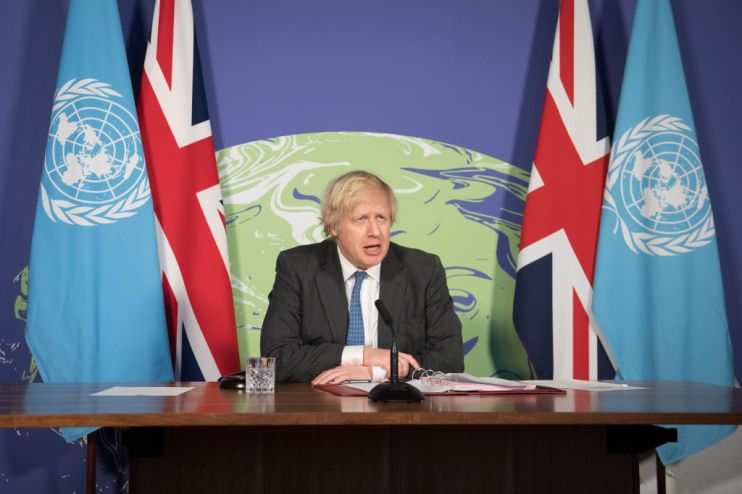
Later this year, representatives of over 190 governments will gather at COP26 to voice their commitments to tackling the climate crisis, confirm a “landing zone” on net zero and negotiate the intricacies of the Paris Agreement rulebook. But it’s an illusion to think that government commitments are enough to kick-start climate recovery.
Since the global gathering to halt climate change in 1991, greenhouse gas emissions have continued their inexorable rise. This year can be different. There is a unique opportunity for the UK, as COP host, to show global leadership in decarbonising an industrial economy by highlighting the role that the private sector must play going forward.
The science is clear and continues to emphasise the urgency of tackling climate change, however a greener world must not be a poorer one. Turning off the carbon tap now, as some activists advocate, would simultaneously turn off the global economy. Climate action must, therefore, be entwined with economic growth, creating a viable economic future for those whose livelihoods are set to be impacted by a green transition. It is my long-held belief that well-regulated market forces are the way to deliver growth and prosperity.
It is sadly the case that for too long business activities have been associated with environmental degradation. Although, those who advocate overthrowing capitalism as the solution to the planet’s problems have clearly not studied the wholesale climatic and natural destruction wrought by some centrally planned economies.
Increasingly, there is a growing cadre of global business leaders who recognise the personal, moral and economic imperative to operate in a way that benefits people and the planet. Initiatives such as The Prince of Wales’ Terra Carta and the World Business Council for Sustainable Developments’ Vision 2050 are setting the gold standard for sustainable business ambition and action.
But how do you bring together the governments who “set the rules” and the private sector who accelerate action, amplify innovation and create prosperity?
Firstly, the private and public sectors must work in synchrony to ensure the policies being put in place deliver a commercially viable outcome – long-term subsidies lead to poor decision-making.
Second, transparency and reporting must underpin every green pledge. Without shared taxonomies like the Greenhouse Gas Protocol or the Task Force on Climate-related Financial Disclosures (TCFD), public and private investment has no way to weed out action from greenwash. And finally, every pathway must consider the realities of the world as we find it not as we want it to be. Far too many conversations around energy transition ignore the real energy dilemmas facing so much of the developing world and can smack of energy imperialism.
In the run-up to COP, the UK Government can look to its own track record of pragmatic public and private policy-making that has switched off coal plants and turned on an offshore wind revolution. It can be proud of its championship of TCFD and other climate reporting initiatives. Importantly, it can also point to its inclusion of the private sector in the decision-making and planning process. An example of this work is the virtual convergence of the teams behind Partnerships for Growth (P4G) and COP26 in London later today.
P4G aims
P4G aims to match the best sustainable innovators with investors aiming to build climate-resilient economies and, since its start in 2018, the platform has generated revenue of $300 million and reduced CO2 emissions by 110,000 tonnes, with a scalable and replicable model. At this pre-summit, ahead of the P4G annual event in Seoul this summer, the success stories of private-public partnerships as part of the race to net zero will be on show, and the P4G serves as a reminder that enterprise and investment is the key enabler in supporting climate action on the ground.