Retailers warn of ‘inevitable’ job losses and price rises after budget tax hikes
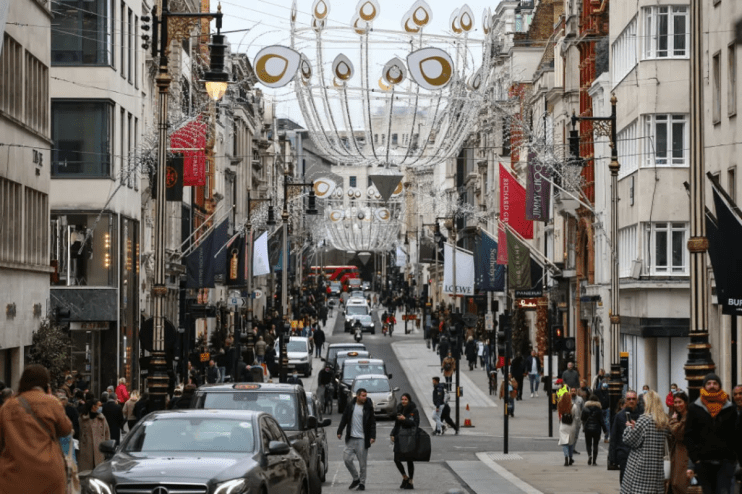
Retail bosses warned that they will be forced to hike prices and cut jobs due to the government’s tax hikes, as the sector braces for a substantial increase in employment costs.
In a draft letter to the Chancellor, coordinated by the British Retail Consortium (BRC), retail bosses warned that job losses were “inevitable” and higher prices a “certainty”
The letter said the “sheer scale of new costs in the Autumn Budget and the speed with which they occur”, together with “costs from a raft of other regulation” create an unsustainable burden.
“It will not be possible for businesses to absorb such a significant increase to their cost base over such a short timescale,” the letter added. The letter was first reported by Sky News‘ Mark Kleinman.
In last month’s Budget, Rachel Reeves increased the amount employers have to pay in NICs by 1.2 per cent, and lowered the wage threshold at which employers must start paying the tax from £9,100 to £5,000.
The BRC has estimated that the changes will increase retailers’ tax burden by £2.3bn annually. Three-quarters of that is expected to come from lowering the earnings threshold.
Many retail businesses rely heavily on part-time workers, which were previously exempt from the tax.
Chair of BRC (and JD Sports), Andrew Higginson, warned that a jump in costs would be “too much for [the retail] industry to bear”.
“There’s only two ways to deal with that,” Higginson, who also chairs the BRC, said on BBC Radio 4’s Today programme.
One is to cut back on investment, cut back on recruitment, cut back on headcount, cut back on jobs
Secondly, to put up prices… The one thing we guarantee is that we’ll see inflation in retail prices.
Hospitality warns on extra £3.5bn burden
Hospitality bosses have similarly warned on the effect of changes to national insurance contributions and an increase to the minimum wage.
Like retail, hospitality is a labour-intensive, part-time reliant and low-margin sector, making it particularly sensitive to changes in employers’ wage costs.
Alongside increasing employers’ national insurance contributions, Reeves announced that the minimum wage would rise by 6.7 per cent next year, a larger rise than many firms had expected.
“This is the biggest threat to hospitality I’ve seen in my lifetime,” chief executive of Fuller’s, Simon Enemy, told Morning Wire.
“Fuller’s will be OK… we’ve been around for 130 years, and our balance sheet is strong,” he added. “But lots of companies won’t be”.
Chair of Fuller’s, Michael Turner, added: “The Chancellor’s actions are a direct attack on those labour-intensive industries that are the lifeblood of our economy, whilst leaving the large City institutions, that can afford to pay their share, almost completely untouched.”
Hospitality is expected to take a £3.5bn hit from the tax and wage changes.
Wetherspoons boss Tim Martin, plus supermarkets Sainbsury’s and Tesco, have also warned that higher costs will lead to price inflation.
Analysts predict squeezed margins and lower growth
The comments come after new research from City brokers quantified the scale of the hit facing firms in the retail sector.
Peel Hunt estimated that retail firms in their coverage will see pretax profit fall by an average of 7.5 per cent as a result of the tax increase, although some will be hit much worse than others.
“Headcount costs significantly impact how retailers operate their businesses,” they wrote. “The idea that this is simply an additional cost that retailers must wear is not really how this will land”.
“While mitigation efforts will be prioritised, some stores may become unviable, projects may be shelved, and prices may rise,” they wrote.
Analysts at Panmure Liberum were even more gloomy, suggesting that the tax hike combined with the minimum wage increase could knock 10 per cent off retailers’ pretax profit.
“Labour have proved to be anti-business and it will only be the consumer and employees that will inevitably pay for the tax hikes through higher prices and loss of employment,” they said.
Factoring in firms’ response, they estimated that the downgrade would be around six per cent, suggesting the sector would see “a squeeze on margins and much lower growth”.
Both firms noted that the extent of the impact on firms would depend a great deal on the outlook for consumer demand, which is expected to recover further over the next couple of years.
“The big unknown is how large unemployment rises as companies executive efficiency projects,” the Panmure Liberum analysts cautioned.