Starmer’s brawl with the unions is a rite of passage for the Labour party

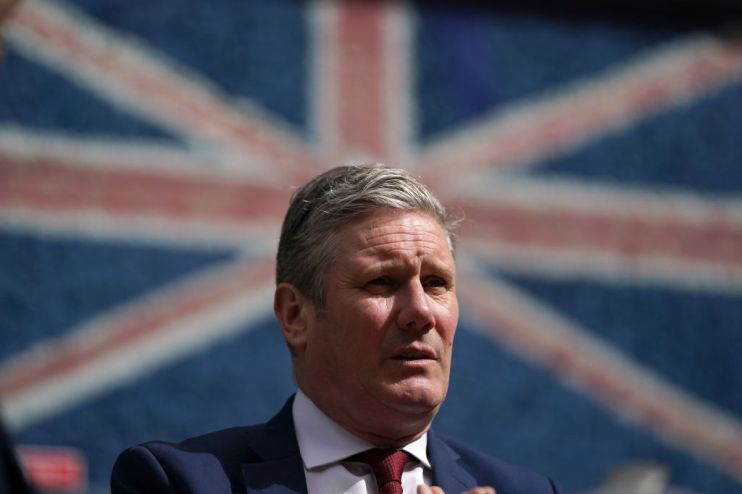
All the Labour Party had to do was to cede the entire summer to Tory infighting. But when it comes to factionalist fights among themselves, Labour are the experts. Since being given a begrudging vote of confidence by Durham Police, clearing him from the most boring of allegations of rule-breaking, Sir Keir Starmer has found himself increasingly vexed by the issue of his party’s stance on the strikes plaguing the country. It is a mantle almost every Labour leader has had to take up at some point or another.
It was junior shadow transport, Sam Tarry, who finally brought weeks of briefings and counter briefings to boil over. After Starmer’s demand that frontbenchers steer clear of the picket lines, Tarry turned up at Euston where rail staff were striking, and publicly called for an above-inflation pay increase on Sky News. Tarry was swiftly fired for failing to toe the line and giving an “unauthorised media appearance”. Since then, Starmer’s shadow cabinet have been pushing the boundaries of his authority, with another frontbencher Lisa Nandy making a point of going to a local picket line. She, at least, gave Starmer’s office a warning.
Contrary to the platitudes trotted out, the Labour Party was not founded to support striking workers. It was founded to build a world where no one would have to utilise the nuclear option of withdrawing one’s labour to be treated with respect and dignity; in other words, to advocate for them in parliament to save them the bother of striking.
Those who instead focused on strikes were either Liberal Trade Unionists who failed to comprehend the greater cause, or dangerous syndicalists that wanted to ferment violent revolution. Either way they were not allies, but rivals who had to be either persuaded or defeated. Not for nothing did the early leaders of the Labour Party happily set their face against the wave of industrial unrest that gripped Britain before the First World War, in return for policy concessions from the ruling Liberal Party.
The question of strikes and an uneasy relationship with the unions has continued to bedevil Labour throughout its history. Ramsay MacDonald’s first Labour government was brought down after they pulled the prosecution of a communist activist who had called on troops not to fire at striking workers. Both Harold Wilson and Jim Callaghan spent the year before their general election defeats trying to face off the mounting power of the trade unions.
This is a tension hardwired into the Labour Party. As an institution, it has always believed socialism will be achieved through winning power in parliament to tackle the systemic issues the British worker faces. Much of this has focused on reforming industry, redistributing wealth, and providing workers welfare in time of need.
The key word here is winning, something Labour has struggled to achieve of late.
And whenever Labour has found itself in opposition, the claim to be the sole people who can win true equality rings hollow. After all, the trade unions have more power over British railways than today’s Labour Party – as we’ve seen clearly from the repeated shutdowns of the network.
The Labour Party’s founders feared such victories were always setting the stage for either the bosses or government to bring the hammer down on workers. Liz Truss’ pledge to ban railway workers from striking might seem far-fetched, but clearly the Conservatives are willing to step over this line. Already, they have brought in new laws to allow businesses to use agency workers in place of striking workers. A move designed to reduce the effectiveness of strikes and curtail the power of the unions.
At its core, Labour was formed on the belief that systemic inequalities require systemic solutions, not industrial whack-a-mole where workers transform society one strike at a time. This was the fight Starmer was having when he fired Sam Tarry.
He didn’t understand this when he was a self-consciously radical lawyer fighting the Tories or corporations in the courtroom. But as he prepares his party’s latest assault on Downing Street, he clearly does now. In doing so he has brought himself in line with the intellectual tradition of Ramsay MacDonald and Philip Snowden, and everyone else who has led Labour into government over the past 100 years.