Stop blaming lazy landlords for empty shops and look for the cause not the symptom

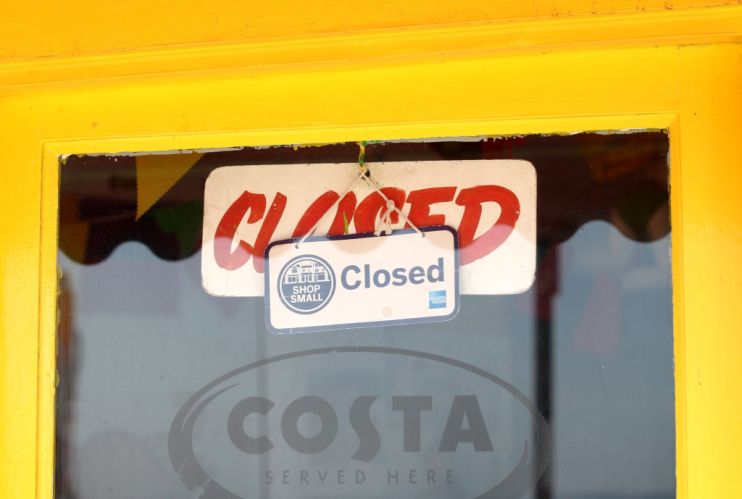
We’re blaming landlords for empty high streets because we’re too scared to look at the real problem underneath, the falling incomes across the country putting retail in a binds, writes Dominic Curran.
Planning rules for new homes. Housing targets. Michael Gove, the levelling up secretary has had plenty on his hands with new legislation to solve the housing crisis. But one new rule which has flown under the radar aims to address the many empty shops on Britain’s high streets.
So-called high street rental auctions were presented as a new power for local authorities to take over leasing out high street and town centre units if they have been continuously empty for a year, or for 12 months in the preceding two years. Gove justified this measure as an attack on “lazy landlords”. Others, such as think tank Onward, opined that it was largely faceless corporate landlords who were disproportionately responsible for the scandal.
And who could disagree? Everyone can probably think of at least one shop or restaurant in their area that seems to have been empty for an unjustifiably long time. And recent analysis by the Centre for Retail Research found that 17,145 shops closed last year. Why not force these units to be occupied, to support local jobs and add to local vitality? And why not bash these commercial titans, no doubt headquartered overseas, in the process?
But Gove was confusing correlation with cause. The places with the highest level of vacancies are often those with the lowest income to spend in shops. That’s why the northeast of England has almost double the vacancy levels of more prosperous London. Are Geordie landlords “lazier” than London ones? Of course not. Sometimes local demand just isn’t there to sustain shops and restaurants. In addition, the huge burden of business rates, particularly when transitional relief heaps extra costs onto the bill, can make leases simply unviable for businesses.
Property owners generally don’t want to keep properties empty – it deprives them of rental income, requires them to pay business rates, and invites vandalism and higher maintenance costs. So, who owns these empty shops? The British Property Foundation decided to develop the evidence base that the Government didn’t have.
We gathered data on the top ten “most vacant” town centres in England and Wales. In three of them, their vacancies were based on large shopping centres awaiting sale or redevelopment.
Of 700 units identified as vacant, it transpired that private individuals accounted for four out of ten empty properties. Taken together with small companies – usually owned and registered in the same region – and local authorities, they accounted for two thirds (67 per cent) of all vacant units. So, far from being caused by uncaring distant corporate behemoths, a sizeable majority of vacant units were owned by individuals and local firms.
In fact, large property companies, real estate investment trusts and pension funds accounted for just two out ten (21 per cent) of all empty units, with overseas companies accounting for only one in ten (11 per cent). So far, so few lazy landlords.
Empty properties should be put to better use, whether that’s being occupied or redeveloped to provide what people actually want. But the blunt tool of high street rental auctions, which undermines property rights and investor confidence in large responsible property owners, is based on flawed assumptions. These property companies are often the only private sector bodies capable of providing the investment needed to level up town centres.
Rather than threatening them, these auctions should be better targeted at those smaller individual landlords who are not even trying to rent out their properties. Ministers should also simultaneously re-build relationships with large property owners to see how they can be a friend in levelling up and regeneration, rather than pointing the finger at them.
These businesses want to see vibrant high streets and town centres with occupied retail, leisure and other uses; bashing them for a problem that is not their fault helps no one.