Skip to content
Thursday 10 September 2026London --:--Frankfurt --:--Zurich --:--
NewslettersSearchEN · DE · FR
MorningWire

European business, markets and politics

FTSE 100
10,611.46
-0.55%
DAX
25,401.23
-0.69%
CAC 40
8,120.47
-0.44%
STOXX 50
6,276.97
-0.55%
  • Europe
  • Markets
  • Business
  • Economy
  • Regulation
  • Politics
  • Opinion
More
GermanyFranceEU InstitutionsCompetitionPublic AffairsBankingTechnologyEnergy
  • Germany
  • France
  • Europe
  • Markets
  • Business
  • Economy
  • Regulation
  • Politics
  • Opinion
  • DE
Wednesday 09 November 2022 6:15 am  |  Updated:  Wednesday 09 November 2022 11:29 am

Sunak’s flexibility has been curtailed by our undue reverence for the Bank of England

By: Paul Ormerod

Add as a preferred source on Google
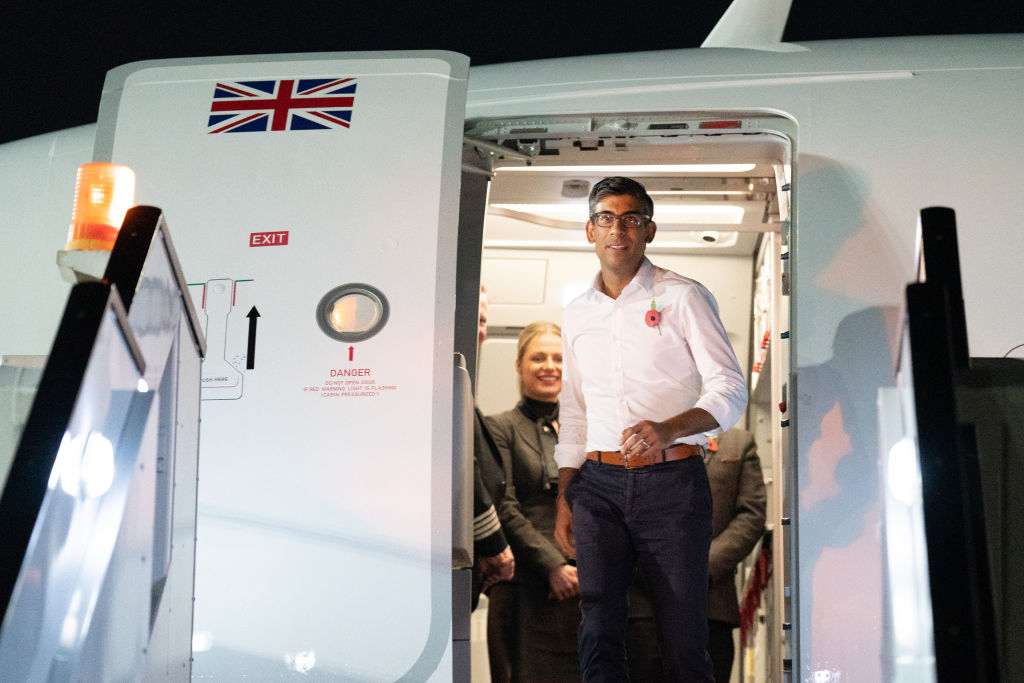
UK Prime Minister Attends COP27
Rishi Sunak is looking to find £50bn of savings. (Photo by Stefan Rousseau – Pool/Getty Images)

Rishi Sunak will deliver an updated Autumn Statement next week, after Liz Truss’ so-called “mini-budget” triggered her demise. His freedom for manoeuvre has been sharply contained by the new found reverence being accorded to the Bank of England and the Office for Budget Responsibility.

The Bank of England has forecast a long recession, which could last two years. A statement treated, unquestioningly, as gospel despite the variety of failures at Threadneedle Street.

The performance of the Bank of England has left a great deal to be desired. Long after any potential threats from the financial crisis of the late 2000s had worked their way through the system, the Bank continued with its incredibly loose monetary policy of quantitative easing with near-zero interest rates. Asset prices and, eventually, the prices of everyday goods and services soared.

The Bank missed the early warning signs that the rise in inflation – even before the energy price surge – was much more than a mere temporary blip. And now it’s tipped over 10 per cent, with pensions and welfare payments set to rise with it, at the hefty cost of £11bn to the Exchequer.

Incredibly, the governor and his senior team have managed to escape any significant criticism, with all the blame being levelled at Liz Truss. It’s not to say the uncertainty of the Truss era did not have its repercussions, but Bailey and his ilk have slipped under the radar.

At the same time, we have also heaped massive importance on the forecasts published by the Office for Budget Responsibility (OBR).

But the plain fact is there is substantial room for error in any particular economic forecast, even just one year ahead, let alone the longer-term horizons we often look to in projections. This has always been the case, but where there is significant geopolitical uncertainty over many of the causes of our woes – such as energy prices and their link to the war in Ukraine – this becomes even more stark.

Read more

Government pushes Bank of England to innovate on payments and digital currencies

Bank of England building on Threadneedle Street, London, showcasing its historic architecture and financial significance

The Survey of Professional Forecasters (SPF), administered by the Federal Reserve Bank of Philadelphia, has the longest and best maintained database with which to assess the accuracy of economic forecasts. It pertains, mostly, to the US, but the track record elsewhere in the West appears roughly on par.

The SPF data, updated quarterly, goes back to 1968. We can compare the average prediction for one year ahead made by a wide range of forecasters, both public and private sector and using a variety of models, and what actually happened.

The good news for soothsaying economists is that over the 1968-2022 period, the economic projections were on average correct.  

But the good news comes to an abrupt end. The correlation over time between the one year ahead GDP growth forecasts and the actual data is zero. What happens is simply that the errors, which can be large, cancel each other out. But any individual forecast is more likely to be wrong than it is to be correct.

Despite advances in the statistical techniques used to build models and, some would claim, developments in macroeconomic theory, there is no evidence that the forecasts are becoming more accurate. Neither does any particular group or approach have a decisive advantage over any other.

Of course, forecasts must be made. But they should be treated not just with a pinch but with a whole tablespoon full of salt.

Read more

Economists urge Bank of England to halt bond sales as borrowing costs climb

Bank of England headquarters with financial charts overlay, illustrating private credit stress test analysis

Share this article

  • Facebook
  • X
  • LinkedIn
  • WhatsApp
  • Email

Similarly tagged content:

Sections

  • Opinion

Categories

  • Opinion

Trending Articles

  • Tesco and Boots lead 100,000 jobs pledge to tackle Neets crisis

  • Primark sales slip as owner dresses up retailer for demerger

  • Airport chaos latest: Heathrow, London City ‘starting to recover’ after air traffic control failure

  • Hedge fund billionaire Chris Rokos joins UK wealth exodus 

  • Crystal Palace owner Blitzer part of £1bn mega stadium redevelopment

More from Morning Wire

  • Government pushes Bank of England to innovate on payments and digital currencies

    Regulation
    Bank of England building on Threadneedle Street, London, showcasing its historic architecture and financial significance
  • Economists urge Bank of England to halt bond sales as borrowing costs climb

    Economics
    Bank of England headquarters with financial charts overlay, illustrating private credit stress test analysis
  • How the Treasury got ‘fed up’ with the Bank of England’s payments plan

    Fintech
    The Bank of England's Breeden argued the recent inflation bump was transitory (Photo by Chris Ratcliffe/Bloomberg via Getty Images)
  • War and tax: How the UK economy could get knocked off course

    Economics
    Andy Burnham speaking at a public event, emphasizing local governance and policy changes, wearing a suit and gesturing pas...
  • Can John Healey deliver the growth the UK needs?

    Economics
    Two men in suits and a woman in safety glasses and workwear at a factory.
  • IMF sounds alarm on borrowing costs surge as bond rout deepens

    Economics
    Chancellor John Healey smiling, wearing a navy suit, white shirt, and red tie.
  • How patient can the Bank of England be?

    AD
    Historic Royal Exchange building in London with modern skyscrapers behind, clear blue sky.
  • Lord O’Neill declines job in Burnham government

    Economics
    Jim ONeill, economist and former Goldman Sachs chairman, sitting on a yellow sofa in front of large windows.
MorningWire

Independent European business, markets and political news for decision-makers.

Morning Briefing

Europe

  • Germany
  • France
  • EU Institutions
  • Europe

Business

  • Markets
  • Business
  • Economy
  • Regulation
  • Competition
  • Public Affairs

Editorial

  • Opinion
  • Editorial Policy
  • Corrections
  • Contact

Company

  • About Morning Wire
  • Privacy Policy
  • Terms of Use
  • Cookie Policy
© 2026 Morning Wire Ltd · Published by Morning Wire Media, Bahnhofstrasse 65, 8001 Zürich, Switzerland
Privacy · Terms · Cookies · Facebook