Skip to content
Monday 14 September 2026London --:--Frankfurt --:--Zurich --:--
NewslettersSearchEN · DE · FR
MorningWire

European business, markets and politics

FTSE 100
10,650.44
+0.39%
DAX
25,568.56
0.00%
CAC 40
8,179.77
0.00%
STOXX 50
6,325.13
0.00%
  • Europe
  • Markets
  • Business
  • Economy
  • Regulation
  • Politics
  • Opinion
More
GermanyFranceEU InstitutionsCompetitionPublic AffairsBankingTechnologyEnergy
  • Germany
  • France
  • Europe
  • Markets
  • Business
  • Economy
  • Regulation
  • Politics
  • Opinion
  • DE
Wednesday 20 October 2021 6:15 am  |  Updated:  Wednesday 20 October 2021 12:12 pm

The Bank of England has developed a mythical stature – it’s time to burst it

By: Paul Ormerod

Add as a preferred source on Google
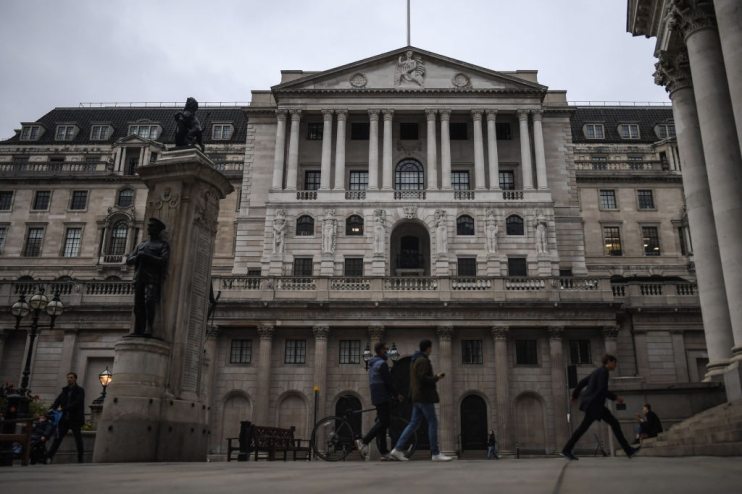
Bank Of England Considers Negative Interest Rates
The Bank of England is close to a mythical beast for many economists. It's time to put this myth to the test. (Photo by Peter Summers/Getty Images)

The UK, along with the rest of the Western world, has just lived through a period of low inflation. In the 25 years since the mid-1990s, inflation has averaged just 2 per cent a year.  It is enough to double the price level every 35 years, but a far cry from the double-digit rates seen in the 1970s and 1980s.

Over the many decades between 1870 and 1950, the average was very similar -1.6 per cent.  

One of the first acts of Tony Blair’s Government in 1997 was to make the Bank of England independent. Supposedly independent, that is, of politicians and their obsession with short-term popularity.

Then-Chancellor Gordon Brown used his first press conference to announce he would bring interest rates up by 0.25 per cent – but that it would be the last time any person in No11 would do so. With that, the stature of the Bank of England became, in economists’ minds, a kind of mythical beast.

Many economists attribute the recent period of low inflation to the sagacity of the independent central bank, aided by developments in modern macroeconomic theory.  

Allegedly, the Bank of England has shown such skill in finessing short-term interest rates that inflation has been controlled. We might reasonably ask why, if that is the case, inflation was also low for the best part of a century when the Bank was not independent.

The idea that marginal changes in the short-term interest rate can exercise precision control over a large, complex economy is a pure fantasy. There is a great deal else going on.

For much of the past three decades, power in most of the labour market has rested with employers rather than with the workforce.

The reason for this was the integration of both China and India into the world economy.  In the late 1980s, these were for all intents and purposes closed economies.  

Read more

Bailey warns on inflation risks as Iran war roils UK economy

Bank of England Governor Andrew Bailey addressing financial stability concerns at a press conference

Now, they are full participants in the global economy.

A key effect of them opening up was to add well over a billion workers to world labour supply.  Little wonder that the bargaining power of labour in the West was contained in the face of such a huge increase in supply.

Wages, the biggest single item of the costs of production, were kept under control and so therefore was inflation itself.  I have argued for several years in this column that this period has been gradually coming to an end.

Even before the current shortage of workers, driving up wages massively in certain industries, the bargaining power of labour was gradually being restored.

In the US, wages and salaries as a share of total national income was 57 per cent in 2000. As the impact of China and India started to be felt – it dropped sharply to 52 per cent in 2015.

This may not seem much, but America is a $20tn economy. So a shift of “just” five percentage points meant that a full trillion dollars was moved from wages to profits.

The fall halted in the mid-2010s and has now been reversed, with the wage share back to 55 per cent in 2020.

Over the coming decade or so, inflation will be higher on average than it has been in the previous two.  Only a severe recession will prevent this from happening.  The musings of the experts on the Monetary Policy Committee are irrelevant.

Read more

Mortgage nightmare as investors price in three interest rate hikes 

Bank of England building on Threadneedle Street, London, showcasing its historic architecture and financial significance

Share this article

  • Facebook
  • X
  • LinkedIn
  • WhatsApp
  • Email

Similarly tagged content:

Sections

  • Opinion

Categories

  • Opinion

Trending Articles

  • Wetherspoon boss: ‘Not up to Burnham’ to choose who is on the high street 

  • Badger Beer maker Hall & Woodhouse doubles profit ahead of tie-up with James May

  • Four interest rate hikes loom despite surprise economic growth

  • Primark sales slip as owner dresses up retailer for demerger

  • Lotus, Porsche and Corvette: the best sports cars to buy in 2026

More from Morning Wire

  • Bailey warns on inflation risks as Iran war roils UK economy

    Economics
    Bank of England Governor Andrew Bailey addressing financial stability concerns at a press conference
  • Mortgage nightmare as investors price in three interest rate hikes 

    Economics
    Bank of England building on Threadneedle Street, London, showcasing its historic architecture and financial significance
  • Bank of England’s Pill warns against ‘wait and see’ interest rates approach

    Economics
    Huw Pill, Bank of England Chief Economist, smiling in a suit and tie against a blue NABE banner.
  • Inflation expectations softer than predicted ahead of interest rate decision

    Economics
    The Bank of England is expected to hold interest rates at four per cent due to stubbornly high inflation.
  • How patient can the Bank of England be?

    AD
    Historic Royal Exchange building in London with modern skyscrapers behind, clear blue sky.
  • As it happened: Vodafone leads FTSE 100 rally after TV launch; oil jumps again

    FTSE 100 Live
    Vodafone and Three company logos on a red and white sign outside a modern glass building
  • Inflation leaps to 2.9 per cent in blow to Burnham 

    Economics
    Burnham cityscape showcasing modern architecture, bustling streets, and vibrant community life in a thriving urban setting
  • Five lenders hike mortgage prices as interest rate threat looms

    Banking
    Barclays shares have taken a hit since Trump's tariff announcement.
MorningWire

Independent European business, markets and political news for decision-makers.

Morning Briefing

Europe

  • Germany
  • France
  • EU Institutions
  • Europe

Business

  • Markets
  • Business
  • Economy
  • Regulation
  • Competition
  • Public Affairs

Editorial

  • Opinion
  • Editorial Policy
  • Corrections
  • Contact

Company

  • About Morning Wire
  • Privacy Policy
  • Terms of Use
  • Cookie Policy
© 2026 Morning Wire Ltd · Published by Morning Wire Media, Bahnhofstrasse 65, 8001 Zürich, Switzerland
Privacy · Terms · Cookies · Facebook