To save the NHS, we need radical reform designed by independent experts

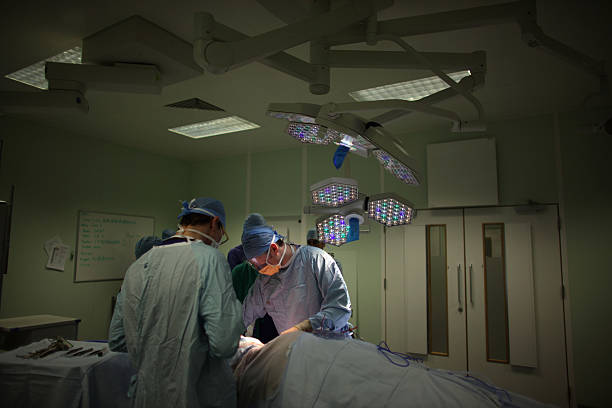
The NHS is in urgent need of bold reform. Perhaps the best way to save it is through an independent commission of experts who can set policies that go beyond politics, writes Martin Jones
The NHS is currently facing the worst crisis in its 74-year history. Just last week, the public accounts committee stated our health service won’t meet its backlog targets, with record waits for cancer care.
As the situation worsens so does the blame game, with politicians at loggerheads while trying to address a crisis which is possibly the most politically thankless task they’ve ever faced.
Some of them do bring valuable solutions and ideas to the table. Last year, Sajid Javid set out a digital agenda to harness technological breakthroughs and drive transformation in the NHS and social care. By devolving tasks to technology, medical staff will have more time to focus on critical and urgent aspects of care.
A decade ago, the then prime minister David Cameron launched his national dementia challenge – an unprecedented action in a neglected field, a day that neurologists compare to Richard Nixon’s “war on cancer” in the 1970s.
Mayor of Greater Manchester Andy Burnham has been pushing the idea of integrating health and social care for a number of years – an approach which many believe could be pivotal in preventing the collapse of the NHS.
Such ideas and innovation are invaluable. Yet we can’t ignore critical structural and procedural problems within health and social care. These must be addressed before real change can ever be properly realised.
The NHS is like a big ship, and it’s going to take time to turn it around. Chances are the plans set in place by today’s political leaders will wane as governments change – and as we’ve seen, prime ministers and health secretaries come and go quite quickly.
Some of the most pressing issues we face today cannot be solved by politicians alone. It’s time to move the big decisions about health and social care out of government control to an independent body.
There’s precedent for this. When it comes to that key part of the economy, interest rates, we turn to the Monetary Policy Committee (MPC), a selection of independent and informed thinkers, to make the big fiscal calls.
Perhaps we need another MPC – a Medical Policy Committee – to set funding and make other crucial decisions for health and social care. Such a committee could be made up of individuals bringing genuine expertise from inside and outside the sector. It would build consistency in thinking and planning – something that wouldn’t need to be reset every time a government or political leadership changed.
We need nothing short of a drastic reorganisation, because the situation across our health services is only going to get worse. The biggest threat we face is our ageing population – an exponential challenge which as a society we’re poorly prepared for. We’re sleepwalking into a disaster as demand for health services is already at a boiling point.
The way we organise and operate social care to cope with this demographic change is obviously crucial. The home is a much-overlooked potential ally to the NHS, particularly when it comes to minor medical procedures and care of the elderly. The NHS could allocate tasks and refer certain patients to providers outside the bricks-and-mortar of the hospital to start relieving the pressure on our overburdened system.
To achieve this, we need to professionalise the role of the caregiving workforce, with enhanced training for specialist diseases such as dementia and Parkinson’s in addition to clinical training to help designate more health tasks in the home. Better trained care professionals will turn our care workers into a critical support network to the NHS and help free up capacity for those who truly need it.
For nearly all older people independence is a priority – with independence comes dignity. Likewise, the NHS deserves some independence to help it revitalise itself and thrive once again.