Skip to content
Monday 17 August 2026London --:--Frankfurt --:--Zurich --:--
NewslettersSearchEN · DE
MorningWire

European business, markets and politics

FTSE 100
10,750.11
-0.21%
DAX
26,440.31
+0.53%
CAC 40
8,636.80
0.00%
STOXX 50
6,539.59
-0.09%
  • Europe
  • Markets
  • Business
  • Economy
  • Technology
  • Politics
  • Opinion
More
GermanyFranceBankingAIEnergyFintechPropertyCapital Markets
  • Germany
  • France
  • Europe
  • Markets
  • Business
  • Economy
  • Technology
  • Politics
  • Opinion
  • DE
Thursday 26 February 2015 5:09 am

Too much sleep can double your risk of a stroke, but no one knows why

By: Sarah Spickernell

Add as a preferred source on Google

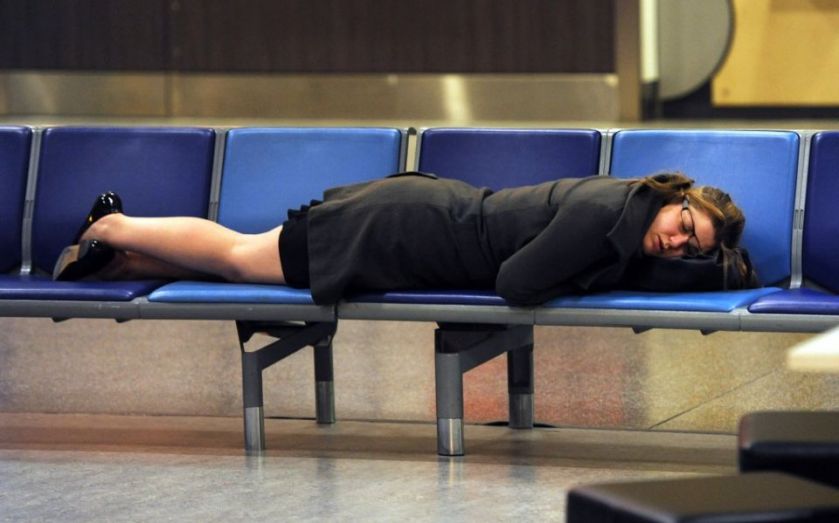
Taking the attitude that you should try and get as much sleep as possible may not be a good idea.

Sleeping over eight hours a night significantly increases your risk of having a stroke, according to research from the University of Cambridge, but the puzzle is that no one knows why.
 
Over a 10 year period, the scientists followed the sleeping habits of just under 10,000 people in the UK aged 42 to 81, and studied how these related to the likelihood of suffering a stroke. 
 
The results, published in the journal Neurobiology, show people who regularly get more than eight hours of sleep a day are 46 per cent more likely to suffer a stroke than the average. This compares to an 18 per cent higher risk for those getting less than six hours.
 
The link is not entirely surprising – previous studies have shown a similar connection, but this is the first time a detailed study on the British population has been published. 
 
The danger is even greater for older people, whose chance of a stroke doubles if they persistently sleep for longer than the recommended six to eight hours. 

Continuity is key

Over the long term, the most dangerous thing you can do is to go from getting continually little sleep to getting large amounts of sleep. Making such a drastic change increases the risk of stroke by four-fold compared to those who are consistent in their sleeping habits.  

Cause or symptom? 

The connection is clear, but the scientists say they are unaware of why it exists – there are lots of different factors at play, all of which could be influencing the results. These include disrupted metabolism due to sleep pattern, increased levels of stress hormones and higher blood pressure. 
 
In fact, the study's authors even suggest that the cause of increased stroke risk could be something entirely different, and that longer sleeping time might just be another symptom of this. 
 
Professor Kay-Tee Khaw, who led the research, said it was important to continue unravelling the mystery:
 
We need to understand the reasons behind the link between sleep and stroke risk. What is happening in the body that causes this link? With further research, we may find that excessive sleep proves to be an early indicator of increased stroke risk, particularly among older people.

Share this article

  • Facebook
  • X
  • LinkedIn
  • WhatsApp
  • Email

Similarly tagged content:

Sections

  • News

Categories

  • Tech

Trending Articles

  • Jobs market ‘stops moving’ as employment costs weigh on hirers

  • House prices suffer biggest August slump in eight years 

  • Back bookshops in bid to rebuild high streets, Burnham urged

  • Aldi boss wades into supermarket ‘price-gouging’ row

  • Reform pledges £50bn savings in ‘generational’ benefits shake-up

More from Morning Wire

  • Ten bold ideas to fire up the British economy

    Economics
    Morning Wire
  • You don’t have to be psychopathic to work in the City… but it helps

    Opinion
    Gez pic by Nick CD, showcasing a candid moment capturing the essence of the event, suitable for a news/business audience.
  • Insulet Partners with Calm to Bring Mindfulness and Well-Being Tools to the Diabetes Community, Featuring a New Sleep Story Narrated by Lila Moss

    Business Wire
  • I was on the Goodyear blimp above London – here’s what it was like

    Life&Style
    Goodyear blimp hovering prominently in the sky against a clear backdrop, capturing attention with its iconic branding.
  • Screens aren’t the problem, it’s what’s on them that’s rotting our brains

    Opinion
    Unfortunately, without additional context from the article or details about what the image depicts, it is challenging to g...
  • Aberdeen is back in the FTSE 100 but is Interactive Investor holding it up?

    Investing
    Skyline of Canada with iconic financial district buildings, highlighting UK investments and economic growth.
  • Exclusive: Twickenham residents branded anti-fun NIMBYs in rugby stadium row

    Sport Business
    Rugby stadium interior with large screen displaying Red Roses v Ireland, goalposts, and empty green seats
  • Oura Ring 5 vs Google Fitbit Air: The battle of the fitness trackers 

    Life&Style
    Close-up of Oura Ring 5 showcasing sleek design and advanced health tracking features in a tech-focused setting.
MorningWire

Independent European business, markets and political news for decision-makers.

Morning Briefing

Europe

  • Germany
  • France
  • Europe
  • UK & Ireland

Business

  • Markets
  • Banking
  • Technology
  • Energy
  • Property
  • Fintech

Editorial

  • Opinion
  • Editorial Policy
  • Corrections
  • Contact

Company

  • About Morning Wire
  • Privacy Policy
  • Terms of Use
  • Cookie Policy
© 2026 Morning Wire Ltd · Published by Morning Wire Media, Bahnhofstrasse 65, 8001 Zürich, Switzerland
Privacy · Terms · Cookies · Facebook