Skip to content
Friday 21 August 2026London --:--Frankfurt --:--Zurich --:--
NewslettersSearchEN · DE · FR
MorningWire

European business, markets and politics

FTSE 100
10,816.56
+0.64%
DAX
26,136.56
+0.59%
CAC 40
8,484.43
+0.37%
STOXX 50
6,462.22
+0.63%
  • Europe
  • Markets
  • Business
  • Economy
  • Regulation
  • Politics
  • Opinion
More
GermanyFranceEU InstitutionsCompetitionPublic AffairsBankingTechnologyEnergy
  • Germany
  • France
  • Europe
  • Markets
  • Business
  • Economy
  • Regulation
  • Politics
  • Opinion
  • DE
Tuesday 18 October 2022 3:57 pm  |  Updated:  Tuesday 18 October 2022 4:00 pm

Truss mini-budget sparked five worst days on UK debt market on record, Bank of England says
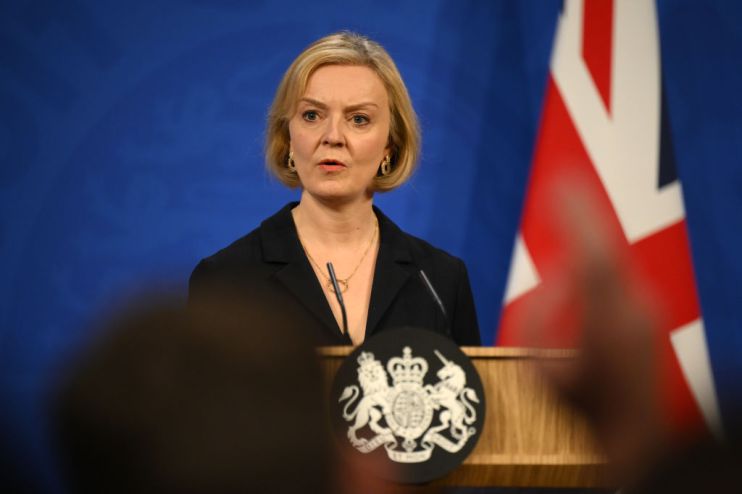
Liz Truss Holds Press Conference After Sacking Her Chancellor
Ms Truss called on the international community to agree a co-ordinated package of defence, economic and political measures to support Taiwan

Prime minister Liz Truss’s botched mini-budget triggered the five most volatile days on the UK debt market since records began 22 years ago, the Bank of England said today.

Financial markets were rocked by Truss and her former chancellor Kwasi Kwarteng launching £45bn worth of unfunded tax cuts and raising borrowing to fund a two-year typical energy bill freeze of £2,500 on 23 September.

Sharp movements in the gilt market forced the Bank of England to launch a £65bn emergency bond buying scheme to tame rising rates.

Sir Jon Cunliffe, the Bank’s deputy governor of financial stability, today in a response to a request from the treasury committee to explain why the scheme had been ratcheted up over the course of this month, said more support was necessary to prevent a fire sale dynamic in the pensions sector erupting.

Since the mini-budget was delivered on 23 September, “the five largest daily moves in the 30 year inflation-linked gilt, in data that dates back to 2000,” Cunliffe said.

Indexed linked gilts are instruments that provide a return that rises in line with inflation.

Yield on 30-year gilt has whipsawed since mini-budget
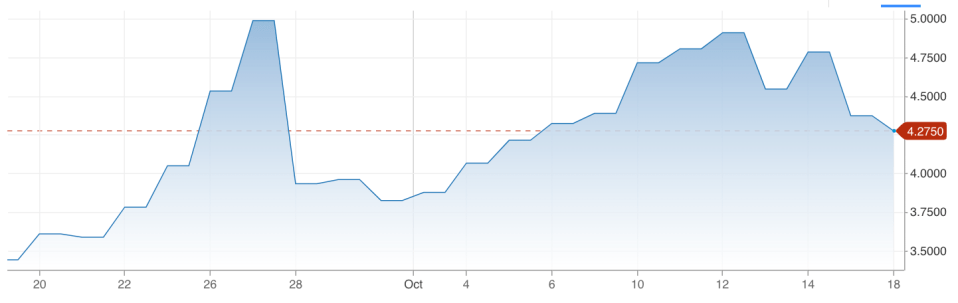
The Bank of England was forced to delay its bond selling programme to tame gilt market volatility after the mini-budget
Source: CNBC

Those moves prompted the Bank to expand a lending scheme to allow liability driven investment (LDI) funds, which pension managers have invested heavily in, “to access sufficient liquidity for a long enough period to facilitate their necessary rebalancing,” he added.

The Bank also expanded the original £65bn backstop to include daily purchases of index linked gilts, which Cunliffe identified as the segment of the debt that came under the toughest selling pressure after the mini-budget.

For months, the Bank has been planning to sell government bonds at the beginning of October to kick off the early stages of winding down its financial crisis and Covid-19 quantitative easing programme, which saw it hoover up over £830bn of debt.

Read more

‘Moron premium’ – Westminster turmoil has ‘cost taxpayers £35bn’ since 2022

Westminster Houses of Parliament under clear sky, iconic London landmark representing UK government and politics

However, market volatility forced the central bank to mothball those plans.

Speculation has grown in recent days over whether the Bank will delay selling bonds, known as quantitative tightening (QT). 

After it announced the temporary gilt market intervention late last month, it said QT would in fact begin on 31 October.

However, the Financial Times reported today Threadneedle Street had decided to delay QT due to recent severe market swings.

The Bank pushed back against that report, but did not completely deny its bond selling campaign had been delayed.

A Bank spokesperson described the FT story as “inaccurate”.

Gilt yields have scaled lower recently after new chancellor Jeremy Hunt scrapped nearly everything in Truss’s mini-budget.

He reversed plans to ditch the six percentage point corporation tax hike and froze the basic rate of income tax at 20 per cent “indefinitely”. The reversals amounted to £32bn of tax rises.

Read more

Why the Bank of England museum is a one-of-a-kind

Gold bar stamped PAMP SA SWITZERLAND on display at the Bank of England Museum, showcasing financial assets.

Share this article

  • Facebook
  • X
  • LinkedIn
  • WhatsApp
  • Email

Similarly tagged content:

Sections

  • Markets & Economics
  • News

Categories

  • Economics
  • Markets

Related Topics

  • Bank of England
  • Liz Truss
  • UK inflation
  • UK interest rates

Trending Articles

  • House prices in wealthy London boroughs fall by up to £300,000

  • As it happened: Miners fuel FTSE 100 recovery; oil jumps as Trump claims Strait of Hormuz

  • City law firm sues prominent Emirati business family

  • Amanda Blanc has worked her magic at Aviva

  • As it happened: FTSE 100 rallies after JD Sports drags on blue chips; oil jumps again

More from Morning Wire

  • ‘Moron premium’ – Westminster turmoil has ‘cost taxpayers £35bn’ since 2022

    Politics
    Westminster Houses of Parliament under clear sky, iconic London landmark representing UK government and politics
  • Why the Bank of England museum is a one-of-a-kind

    Toast the City
    Gold bar stamped PAMP SA SWITZERLAND on display at the Bank of England Museum, showcasing financial assets.
  • Hold interest rates but ‘sound hawkish’, Morning Wire Shadow MPC tells Bank of England

    Economics
    Andrew Bailey, Governor of the Bank of England, with the Bank of England building and Union Jack flag in the background
  • Bank of England warns Burnham of UK economy’s ‘big issue’

    Economics
    Bank of England Governor Andrew Bailey said the future of interest rates was "more uncertain".
  • Bank of England to relax capital rules despite warning of economic threats

    Banking
    Bank of England building on Threadneedle Street, London, showcasing its historic architecture and financial significance
  • Manchester was Burnham’s rehearsal – now get ready to pay the bill

    Opinion
    Manchester skyline with iconic landmarks during a Belfast speech event, highlighting urban landscape and architectural bea...
  • Healey faces £24bn spending squeeze as inflation puts tax rises in play

    Economics
    Bank of England headquarters in 2025, showcasing modern architecture and iconic London skyline in the background.
  • Bank of England to hold interest rates as oil price surge threatens UK economy

    Economics
    Bank of England building on Threadneedle Street, London, showcasing its historic architecture and financial significance
MorningWire

Independent European business, markets and political news for decision-makers.

Morning Briefing

Europe

  • Germany
  • France
  • EU Institutions
  • Europe

Business

  • Markets
  • Business
  • Economy
  • Regulation
  • Competition
  • Public Affairs

Editorial

  • Opinion
  • Editorial Policy
  • Corrections
  • Contact

Company

  • About Morning Wire
  • Privacy Policy
  • Terms of Use
  • Cookie Policy
© 2026 Morning Wire Ltd · Published by Morning Wire Media, Bahnhofstrasse 65, 8001 Zürich, Switzerland
Privacy · Terms · Cookies · Facebook