Skip to content
Tuesday 18 August 2026London --:--Frankfurt --:--Zurich --:--
NewslettersSearchEN · DE · FR
MorningWire

European business, markets and politics

FTSE 100
10,748.09
+0.26%
DAX
26,164.72
-0.66%
CAC 40
8,524.43
-0.64%
STOXX 50
6,480.23
-0.77%
  • Europe
  • Markets
  • Business
  • Economy
  • Regulation
  • Politics
  • Opinion
More
GermanyFranceEU InstitutionsCompetitionPublic AffairsBankingTechnologyEnergy
  • Germany
  • France
  • Europe
  • Markets
  • Business
  • Economy
  • Regulation
  • Politics
  • Opinion
  • DE
Friday 10 June 2022 1:00 pm  |  Updated:  Friday 10 June 2022 1:06 pm

UK banks no longer ‘too big to fail’ but sector still has room for improvement
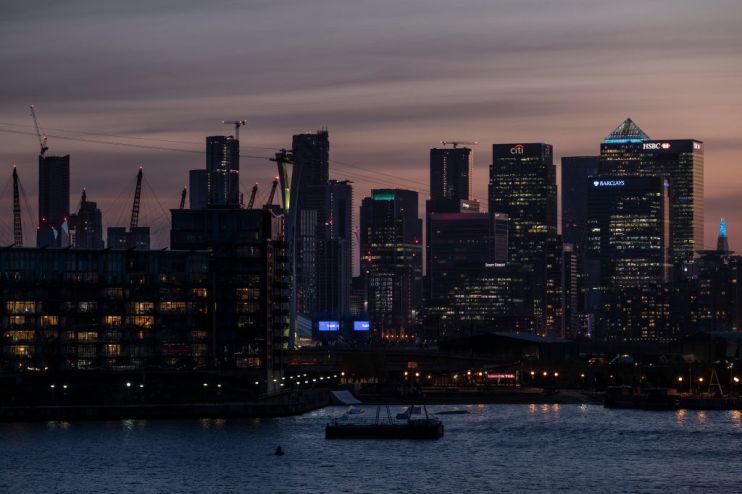
UK In Fifth Week Of Coronavirus Lockdown
Britain’s eight biggest high street lenders would be able to fail safely without a repeat of bailouts seen during the financial crisis in 2008, according to conclusions drawn by the Bank in its resolvability assessment (Photo by Dan Kitwood/Getty Images)

All of the UK’s top banks would survive a major financial shock, but some have shortcomings in ensuring they fund themselves through a crisis, the Bank of England said today.

Britain’s eight biggest high street lenders would be able to fail safely without a repeat of bailouts seen during the financial crisis in 2008, according to conclusions drawn by the Bank in its resolvability assessment.

Lenders would still be able to deliver on customers’ demands and “provide vital banking services to the economy” if they collapsed, the Bank said.

However, just Santander came away without any recommendations from the Bank’s analysts.

Asia-focused HSBC and Standard Chartered and Britain’s biggest mortgage lender Lloyds had “shortcomings” in their internal controls to limit the damage inflicted on stakeholders if they failed, Threadneedle Street said.

HSBC was slammed for not drawing up effective plans to fund itself through a crisis, while Lloyds was criticised for not demonstrating how it would take timely decisions on its liquidity position.

Despite the criticism, regulations put in place in the aftermath of the financial crisis that ensure the UK’s largest banks are sufficiently capitalised will limit losses to the general public should the sector collapse again.

“Shareholders and investors, not taxpayers, would be first in line to bear banks’ losses and the costs of recapitalisation,” the Bank said.

The government injected billions of pounds into the banking sector in 2008 to prevent a complete collapse of Britain’s financial system that would have intensified the economic shockwaves caused by the financial crisis.

The Bank’s assessment illustrates that the UK’s largest lenders are no longer “too big to fail”.

A spokesperson for Standard Chartered said: “Our resolution planning aims to meet the statutory objectives of resolution in the UK and the objectives of our overseas authorities. We remain committed to working with the BoE and our overseas authorities to continuously improve our preparedness for resolution.”

HSBC said: “In assessing our preparations for resolution, we have identified areas that require further improvement. In particular, HSBC recognises that it needs to take steps to enhance its capabilities for the execution of deep restructuring actions that could potentially be required in certain resolution scenarios.”

Read more

Bank of England to relax capital rules despite warning of economic threats

Bank of England building on Threadneedle Street, London, showcasing its historic architecture and financial significance

Share this article

  • Facebook
  • X
  • LinkedIn
  • WhatsApp
  • Email

Similarly tagged content:

Sections

  • Markets & Economics
  • News

Categories

  • Banking
  • Business

Related Topics

  • Barclays
  • HSBC Holdings
  • Lloyds Banking Group

Trending Articles

  • As it happened: FTSE 100 drops as oil prices rise after Trump makes Hormuz threat

  • US bond market jitters spark UK economy recession warning

  • Monzo chair makes early exit after boardroom rift

  • Aldi boss wades into supermarket ‘price-gouging’ row

  • New Premier League rules could see £11bn invested into new stadiums

More from Morning Wire

  • Bank of England to relax capital rules despite warning of economic threats

    Banking
    Bank of England building on Threadneedle Street, London, showcasing its historic architecture and financial significance
  • Kemi Badenoch’s economic revolution could set the City free

    Opinion
    Kemi Badenoch will push to restore the Tories' economic credibility in the eyes of the public in a key speech.
  • Revealed: Natwest banked company used by MFS founder to ‘siphon off’ funds

    Banking
    Hand holding a NatWest debit card with a colorful design, blurred NatWest logo in the background.
  • Bank regulation, not austerity, explains why Britain is poorer than America 

    Opinion
    Aerial view of a residential cul-de-sac with houses, green lawns, trees, and a swimming pool
  • Rachel Reeves to unveil next steps for ring-fencing reform at Mansion House

    Banking
    Descriptive image related to a news or business article with focus on general themes and engaging visual elements.
  • Don’t hike bank taxes, Barclays warns Burnham

    Banking
    Barclays investment bank income soared in the first quarter.
  • Big bank bosses on alert as tax noise gets louder under Burnham

    Banking
    Two men, one in a white shirt and red tie, the other in a navy jacket, conversing outdoors.
  • Close Brothers shares fall as motor finance scandal threatens worst returns in Europe

    Banking
    Close Brothers has upped its motor finance provisions.
MorningWire

Independent European business, markets and political news for decision-makers.

Morning Briefing

Europe

  • Germany
  • France
  • EU Institutions
  • Europe

Business

  • Markets
  • Business
  • Economy
  • Regulation
  • Competition
  • Public Affairs

Editorial

  • Opinion
  • Editorial Policy
  • Corrections
  • Contact

Company

  • About Morning Wire
  • Privacy Policy
  • Terms of Use
  • Cookie Policy
© 2026 Morning Wire Ltd · Published by Morning Wire Media, Bahnhofstrasse 65, 8001 Zürich, Switzerland
Privacy · Terms · Cookies · Facebook