Venezuela proves farce of political forecasting

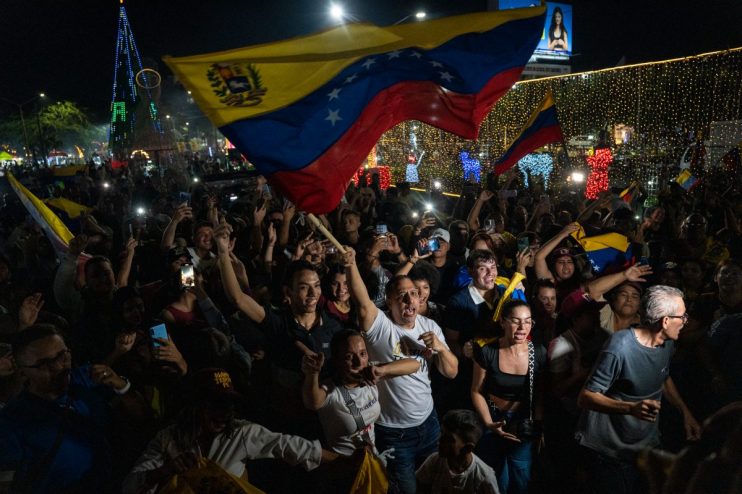
If history teaches us anything, it’s that political forecasters almost always get it wrong. Just look at Venezuela, writes Paul Ormerod
Following the dramatic events in Venezuela, regime change is a topical theme.
But until a few days, at most, before the American intervention, no one expected President Maduro to be ousted. The media was not full of stories from so-called experts predicting his imminent end.
He had rigged an election and inherited a formidable internal security service to suppress internal dissent. In any case, one third of the population of Venezuela, who might have formed an opposition, had already fled the country.
The failure to predict major political changes appears to be endemic.
A history of bad forecasting
Perhaps the most dramatic event since the Second World War was the rapid collapse of the Soviet Union and its East European empire at the end of the 1980s. Yet virtually no Kremlinologist – the word used to describe Western “experts” on the Soviet Union – saw it coming.
The American academic Philip Tetlock assembled a data base of over 80,000 predictions by experts on political and world events over a 20-year period. He set out his findings in his excellent book Expert Political Judgment: How Good Is It? How Can We Know?
Essentially, the average expert’s forecasts were not much better than those generated by chance alone.
We might usefully recall the recent example of many political commentators in the UK immediately after the July 2024 election. The new Starmer government was eulogised, with the phrase “the grown-ups are back in charge” being in prominent use.
The contrast with the actual performance of the government is self-evident (I can scarcely resist saying that in Morning Wire the week after the election I argued that despite the huge Labour majority the electorate was very volatile. And within less than three months Starmer’s net popularity had fallen by 45 percentage points).
It has become fashionable in political circles to criticise the accuracy of the forecasts produced by the expert economists at the Office for Budget Responsibility (OBR).
At least economists are aware of the problems of prediction. And their forecasts are properly documented so that they can be properly checked against outcomes, unlike the pronouncements of many political commentators.
The same difficulty of peering into the future extends into the world of business.
The limits of knowledge
The tech giants now dominate the landscape, and it is indeed a challenge to envisage exactly how they, too, might either wither away or collapse.
Myspace, the precursor of Facebook, was the most visited website in the world between 2005 and early 2008. By 2011 it had more or less disappeared.
A major change in the use of technology is happening before our eyes. According to Ofcom, 1.6bn fewer texts were sent in the UK last year than in 2024, a drop of over 20 per cent. The rate of decline is accelerating as what we might now call the traditional technology of SMS is being replaced by services such as Whatsapp and Snapchat.
The great economist Friedrich Hayek believed that these uncertainties about the future were inherent in the very nature of our economic and social worlds. Indeed, his Nobel Prize lecture was entitled “The Limits to Knowledge”.
Despite all this, there is an almost insatiable demand for forecasts. So here are some for 2026.
Household saving will remain high and business investment low. As a result, there will be an economic recession in the UK. Inflation will drop substantially, partly because of the state of the economy, but also because China is exporting falling prices in manufactured goods.
The economic slowdown will put more pressure on the public finances, and the government will increase taxes yet again. By the end of the year, Labour will be polling close to single figures.
A sceptical and belatedly Happy New Year.
Paul Ormerod is an honorary professor at the Alliance Business School at the University of Manchester. You can follow him on Instagram @profpaulormerod