Skip to content
Wednesday 9 September 2026London --:--Frankfurt --:--Zurich --:--
NewslettersSearchEN · DE · FR
MorningWire

European business, markets and politics

FTSE 100
10,670.06
-1.31%
DAX
25,576.45
-1.66%
CAC 40
8,156.67
-1.94%
STOXX 50
6,311.56
-1.58%
  • Europe
  • Markets
  • Business
  • Economy
  • Regulation
  • Politics
  • Opinion
More
GermanyFranceEU InstitutionsCompetitionPublic AffairsBankingTechnologyEnergy
  • Germany
  • France
  • Europe
  • Markets
  • Business
  • Economy
  • Regulation
  • Politics
  • Opinion
  • DE
Thursday 23 February 2023 5:00 am  |  Updated:  Wednesday 22 February 2023 5:31 pm

We didn’t know it, but it was 2015 not 2008 that changed the housing market forever

By: Giles Mackay

Add as a preferred source on Google
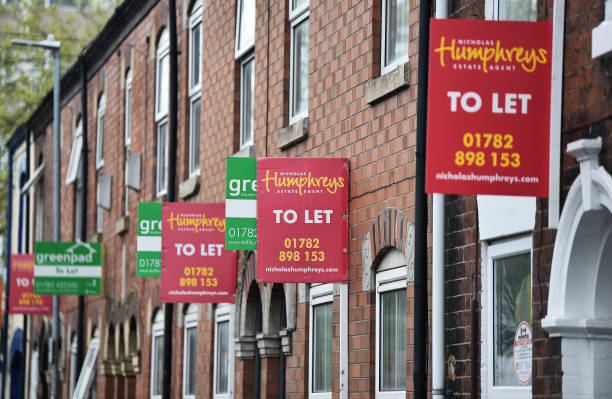
Placards from various estates agents advertising properties To Let are left outside house properties on May 20, 2021 in Stoke, England .
House prices in London rose by 2.1 per cent last month

2015 was the year when the “demand and supply” argument in housing was won and lost. Supply won the argument, because in order to build more, we have to drive more affordability first, writes Giles Mackay

For the housing market, 2015 was probably the most important year in over a hundred years. It was the year the long-held argument of “demand and supply” was won and lost. Supply, which lost the argument, is the governmental model according to which the more homes you build the lower the prices. The demand side is driven by the amount of people who can afford to buy.

Housebuilders like banks had been hit hard during the financial crisis of 2008. A significant majority had required support or gone bust. By 2015 the banks had largely divested themselves of the housebuilders, which were now back in private hands. They learned their lessons – don’t build too much and take on too much debt, and make sure there is an identifiable market for your product.

So why was 2015 a big deal? Looking back to the start of the millennium, when average house prices were £93,000 and average incomes were at £22,000, far more people than today would easily qualify for a mortgage.

However, by the time we reached 2015 prices had recovered enough to get back to pre-2008 levels. New mortgage regulations meant stress tests – applied to a mortgage borrower’s application to check the borrower’s ability to repay their mortgage at a given interest rate – and tighter lending criteria led to disappointment for many would-be buyers. The rest is history. Between 2000 and 2021 house prices rose by 186 per cent but incomes only rose by 76 per cent. 2022 made matters even worse, with inflation and a cost-of-living crisis only further denting people’s income.

That meant it became effectively impossible for the “affordability” question to be addressed by building more homes. Why? Because homes would have to have fallen by 20 per cent to be affordable and remain at that affordability level. In 2022 this number would be closer to 30 per cent. Owners would be in negative equity or have significant elements of their net worth wiped out and housebuilders would just not build in any case.

Help to Buy was introduced in 2013. Through the policy, buyers don’t have to pay interest on the top 20 per cent of the cost of the house for up to 5 years. This pushes the cost down below the level at which lenders feel comfortable and thus can lend. By 2015, first time buyers were catching on and by 2022 310,000 transactions had been completed to give families a chance to get onto the housing ladder.

Shared ownership similarly gives affordability because the shared owner only pays 2.75 per cent on the part of the house they do not own. Help to Buy has been phased out now but evidence shows that shared ownership units are being sold at 3 to 4 times the rate that full ownership units are, in the current difficult market conditions.

Builders, including Barratt and Persimmon, have all reported they have cut back on their build programs. They are not going to build if they cannot sell and will not make the same mistake as they did in 2008 when they got left with a lot of inventory.

Demand has won the argument and the only way to increase building rates is to drive more affordability by bringing forward models like shared ownership or policies pushing costs down. Otherwise, those families who can’t afford to buy will be forced to continue to rent.

Read more

Housebuilder Bellway calls for ‘immediate’ cut to stamp duty

Barratt Redrow said it remained "confident" in its medium-term target of 22,000 homes a year.

Share this article

  • Facebook
  • X
  • LinkedIn
  • WhatsApp
  • Email

Similarly tagged content:

Sections

  • Opinion

Categories

  • Opinion

Trending Articles

  • Hedge fund billionaire Chris Rokos joins UK wealth exodus 

  • Tesco and Boots lead 100,000 jobs pledge to tackle Neets crisis

  • Airport chaos latest: Heathrow, London City ‘starting to recover’ after air traffic control failure

  • Five lenders hike mortgage prices as interest rate threat looms

  • As it happened: FTSE 100 dives as oil prices surge past $100 in blow to inflation

More from Morning Wire

  • Housebuilder Bellway calls for ‘immediate’ cut to stamp duty

    Property
    Barratt Redrow said it remained "confident" in its medium-term target of 22,000 homes a year.
  • Stealth taxes intensify London first time buyer struggle

    Property
    Row of classic London terraced houses with white facades and green doors, indicating UK property.
  • Keir today, gone tomorrow: A London by-election may spell danger for Labour

    Opinion
    Keir Starmer shaking hands with a man in a tall hat and red furry costume at a Holborn and St Pancras election event.
  • Gary Stevenson is right, rich people want to help Britain – here’s how to let them do it

    Opinion
    Gary Stevenson debates economist Dr Kristian Niemietz on wealth tax issues during a live event.
  • Britain should back the North Sea if it wants energy security and net zero

    Opinion
    Oil prices have risen as Israel and Iran tensions escalated.
  • Housebuilder shares rally on Iran war peace hopes and help-to-buy revival

    Property
    Construction worker in high-visibility vest on a new house roof with red tiles, surrounded by scaffolding.
  • House prices fall for first time in three years as borrowing costs weigh on buyers

    Property
    Dense housing on a hillside with traditional brick and white stucco homes, some under construction, surrounded by trees.
  • House prices suffer biggest August slump in eight years 

    Property
    Aerial view of colorful residential houses built on a hillside, nestled among green trees, representing housing markets
MorningWire

Independent European business, markets and political news for decision-makers.

Morning Briefing

Europe

  • Germany
  • France
  • EU Institutions
  • Europe

Business

  • Markets
  • Business
  • Economy
  • Regulation
  • Competition
  • Public Affairs

Editorial

  • Opinion
  • Editorial Policy
  • Corrections
  • Contact

Company

  • About Morning Wire
  • Privacy Policy
  • Terms of Use
  • Cookie Policy
© 2026 Morning Wire Ltd · Published by Morning Wire Media, Bahnhofstrasse 65, 8001 Zürich, Switzerland
Privacy · Terms · Cookies · Facebook