Skip to content
Tuesday 18 August 2026London --:--Frankfurt --:--Zurich --:--
NewslettersSearchEN · DE · FR
MorningWire

European business, markets and politics

FTSE 100
10,752.18
+0.30%
DAX
26,237.10
-0.39%
CAC 40
8,542.80
-0.43%
STOXX 50
6,500.51
-0.46%
  • Europe
  • Markets
  • Business
  • Economy
  • Regulation
  • Politics
  • Opinion
More
GermanyFranceEU InstitutionsCompetitionPublic AffairsBankingTechnologyEnergy
  • Germany
  • France
  • Europe
  • Markets
  • Business
  • Economy
  • Regulation
  • Politics
  • Opinion
  • DE
Tuesday 25 June 2024 9:59 am  |  Updated:  Tuesday 25 June 2024 10:00 am

Weetabix: Shoppers switching to supermarket own brand squeezes profit

By: Jon Robinson

Add as a preferred source on Google
Weetabix is headquartered in Northamptonshire.

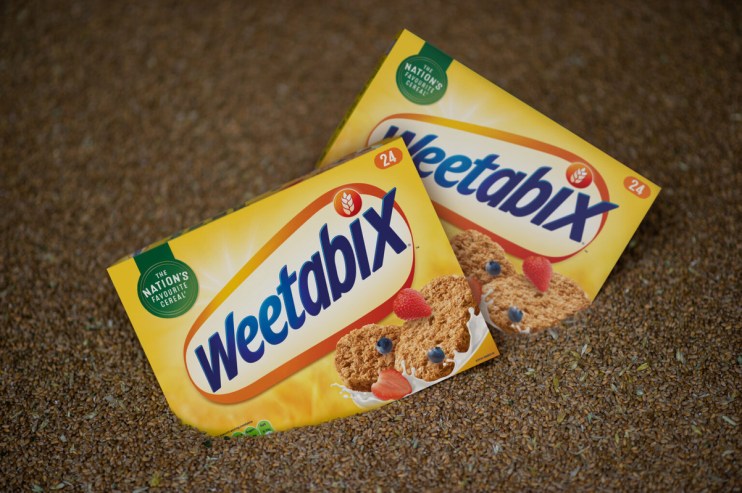
Shoppers switching to supermarket own brand cereals has squeezed Weetabix’s profit despite its sales edging up, according to newly-filed documents.

The cereal giant has reported a pre-tax profit of £47.9m for the year to September 30, 2023, down from the £78.4m it achieved in the prior 12 months.

According to results filed with Companies House, Weetabix’s revenue increased over the same period from £337.9m to £368.8m.

As well as Weetabix, the company’s brands include Ready break, Crunchy Bran, Wets, Oatibix and Alpen.

Shoppers buying into ‘culture of money saving’

A statement signed off by the board said: “Shoppers have been navigating the cost-of-living crisis for over two years.

“The UK economy remains challenged with high levels of inflation.

“This has had a dramatic effect on the way people shop, with many households being forced into changes and others encouraged by a culture of money saving and smart shopping.

“Whilst it is difficult to offset increases in some bills, food shopping is an area where shoppers have been able to readily adapt behaviour.

“For retail there have been three main consequences of squeezed household finances: where people buy their groceries (with the continued growth of discounters), what they buy and how much they buy.

“Throughout grocery and across categories, many shoppers have switched from brands to private label in an attempt to maximise spending power.

“On top of this, shoppers have generally been more frugal in the home.”

Shoppers placing value for money above brand loyalty

Weetabix added: “Whilst grocery inflation is still high, the financial pressure of households is expected to ease as inflation falls.

Read more

Brits think supermarkets are profiteering – despite slowing food inflation

Shopper with red backpack and blue basket walking through a supermarket aisle filled with groceries

“Despite an improving financial outlook for households, we do not expect a swift return to previous shopping behaviour.

“We are seeing a growing trend of ‘international’ shopping, where all prices have been scrutinised, new cheaper channels frequented and new product repertoires have given shoppers a sense of clear agency.

“In many cases they are happy with compromises already made, particularly private label where the quality of products has been widely acknowledged.

“Perceived value is likely to remain the biggest draw for many, with retailers themselves keen to promote their pricing advantage through membership schemes and loyalty cards.

“Cereal remains a great value for money breakfast option as such we anticipate the category remaining relatively robust in 2024, but with a continued shift towards private label volume.”

Change at the top for Weetabix

The results come after a new boss was named at Weetabix ahead of its current managing director’s retirement.

Sally Abbott, who has been in the role since 2017, will move into a strategic advisory role on October 1 and retire on March 31, 2025.

She has been with the Northamptonshire-based company since joining as marketing director in 2008.

Morning Wire also recently reported that the acquisition of a cereal maker on the border between England and Wales helped Weetabix’s sales increase by almost 10 per cent in the six months to March 31, 2024.

The brand posted net sales of $267.1m (£212.9m), up 9.9 per cent.

The figures were revealed by its US owner Post Holdings in filings for the first half of its financial year.

Post Holdings acquired the Northamptonshire-based Weetabix in 2017 in a deal which valued it at £1.4bn.

Read more

Tesco ‘in talks’ to exit eastern Europe

Tesco storefront with shoppers entering and exiting, highlighting the brands popularity and bustling retail environment

Share this article

  • Facebook
  • X
  • LinkedIn
  • WhatsApp
  • Email

Similarly tagged content:

Sections

  • News

Categories

  • Retail

People & Organisations

  • breakfast
  • cost of living crisis
  • food
  • food inflation
  • Inflation
  • Supermarket
  • UK Supermarkets
  • Weetabix

Related Topics

  • Companies House
  • Cost of living crisis
  • Manufacturing sector
  • UK inflation

Trending Articles

  • As it happened: FTSE 100 drops as oil prices rise after Trump makes Hormuz threat

  • US bond market jitters spark UK economy recession warning

  • Monzo chair makes early exit after boardroom rift

  • Aldi boss wades into supermarket ‘price-gouging’ row

  • New Premier League rules could see £11bn invested into new stadiums

More from Morning Wire

  • Brits think supermarkets are profiteering – despite slowing food inflation

    Retail
    Shopper with red backpack and blue basket walking through a supermarket aisle filled with groceries
  • Tesco ‘in talks’ to exit eastern Europe

    Retail
    Tesco storefront with shoppers entering and exiting, highlighting the brands popularity and bustling retail environment
  • Picky Brits: Heatwave fuels surge in finger food spending

    Retail
    Tesco quiche, cured meats, olives, and dip on a wooden board, ready for a party or meal.
  • Burnham’s crackdown on ‘price-gouging’ splits supermarkets 

    Retail
    Every Lidl helps: Tesco looses appeal in the supermarket logos dispute
  • Aldi boss wades into supermarket ‘price-gouging’ row

    Retail
    Giles Hurley, Aldi UK CEO, stands in a supermarket produce aisle with fresh fruits and vegetables.
  • Can a team of retail veterans solve Argos’ catalogue of woes?

    Retail
    Argos storefront showcasing the latest product displays and promotional banners in a bustling city center location
  • Great Britain Leads Europe’s FMCG Inflation as NIQ Launches New Inflation Barometer

    Business Wire
  • Could a ‘land blocking’ rule change spell danger for Aldi and Lidl?

    Retail
    Lidl supermarket sign with blue, yellow, and red logo against a clear blue sky
MorningWire

Independent European business, markets and political news for decision-makers.

Morning Briefing

Europe

  • Germany
  • France
  • EU Institutions
  • Europe

Business

  • Markets
  • Business
  • Economy
  • Regulation
  • Competition
  • Public Affairs

Editorial

  • Opinion
  • Editorial Policy
  • Corrections
  • Contact

Company

  • About Morning Wire
  • Privacy Policy
  • Terms of Use
  • Cookie Policy
© 2026 Morning Wire Ltd · Published by Morning Wire Media, Bahnhofstrasse 65, 8001 Zürich, Switzerland
Privacy · Terms · Cookies · Facebook