Skip to content
Wednesday 9 September 2026London --:--Frankfurt --:--Zurich --:--
NewslettersSearchEN · DE · FR
MorningWire

European business, markets and politics

FTSE 100
10,657.35
-1.43%
DAX
25,536.48
-1.81%
CAC 40
8,152.05
-1.99%
STOXX 50
6,303.63
-1.71%
  • Europe
  • Markets
  • Business
  • Economy
  • Regulation
  • Politics
  • Opinion
More
GermanyFranceEU InstitutionsCompetitionPublic AffairsBankingTechnologyEnergy
  • Germany
  • France
  • Europe
  • Markets
  • Business
  • Economy
  • Regulation
  • Politics
  • Opinion
  • DE
Monday 27 March 2023 4:00 am  |  Updated:  Friday 24 March 2023 2:45 pm

We’re living with the impact of a decade of a Goldilocks approach to interest rates

By: Charles White-Thomson

Add as a preferred source on Google
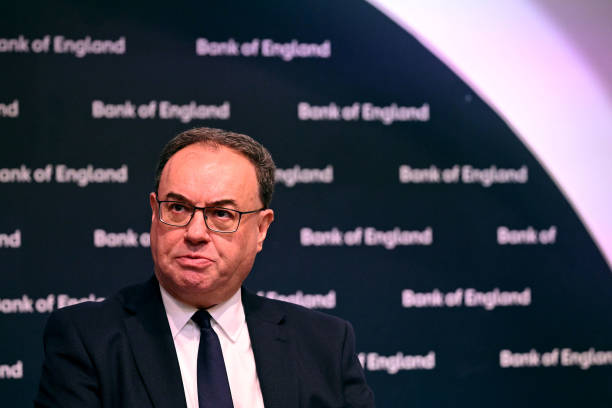
Governor of the Bank of England Andrew Bailey holds a press conference after the bank issued its latest Financial Stability Report at Bank Of England...
Andrew Bailey announced further interest rates hikes in the UK last week (Photo by Leon Neal/Getty Images)

We are in an hangover era of monetary policy, recovering from a period when bad news was considered good news by investors. We must work to change that outlook, writes Charles White-Thomson

The last decade will not be looked back on kindly by financial historians. A period of ultra-loose monetary policy, industrial sized quantitative easing and cheap debt or money has created a generation of investors and corporates with a dependency on financial stimulation, an overly optimistic attitude to portfolio performance and a general lack of risk management.

This cheap money has triggered rampant inflation and asset bubbles. In other words, boom or bust. It has also had its hand in suppressing productivity. The Goldilocks era, as I like to call it, was powered by overly supportive central banks and pervasive moral hazard. I draw inspiration from an excellent 5000-year chart showing interest rates and the standout period or race to zero during our Goldilocks era. As a reminder, rates in the United States bottomed out at 0.25 basis points and the United Kingdom at 0.10 basis points – rocket fuel for a stimulated and stimulant hungry market. If you need more evidence, then there is the United States Federal Reserve Balance Sheet as a percentage of GDP; it  peaked at 37 per cent or $8.95tn late 2021 versus just above 6 per cent in 2007.

During the later phase of the Goldilocks era, investors – whether subconsciously or consciously – adopted the mantra that bad news is good news, as it triggered more interest rate cuts, or quantitative easing and further market stimulation. That is behind us for the time being, with both the Fed and the Bank of England continuing to raise rates.

We are now in a kind of hangover era of monetary policy. This has its own mantra, opposite to before: good news, including excess animal spirits, is bad news as it means the potential for further rate hikes and quantitative tightening. Riddle me that.

This underlines the dependency on stimulation. The hangover will be complex and challenging, with further shocks likely. The choreography of slowing inflation with the blunt weapon that are interest rates opens the way for policy failures either through overtightening or stepping back too soon.

The credibility of the central banks is of paramount importance, and they have had, in general, a challenging period. In years gone by all the central bank governors needed to do was raise a disapproving eyebrow to quell any mischief or disorderly behaviour. Of the two possibilities, marginally over tightening is preferable. Prematurely stepping back, and inflation rearing back up again, would be particularly damaging for these institutions.

For investors, there is more to it than just “buying the dip”, it has to be about understanding risk management, being familiar with how to make money when markets decline and being cautious of over-concentration.

We all want a return to a time when good news is good news, bad news is bad news and central banks are more traditional and balanced in their response. For the time being, normality is a bit too much to ask for, and investors will have to work hard for their returns.

We must learn our lessons from the Goldilocks periods, with a review of our monetary policy overseen by generalists and experts to understand the risks of sustained excess liquidity and an over accommodating monetary policy. This will be an opportunity to celebrate the wins and bold steps taken in the face of significant global stress and most importantly, a time to review the errors and the consequences, so we don’t repeat them.

Read more

Fed chair Kevin Warsh faces Jackson Hole D-Day

Kevin Warsh, former Fed Governor, in a suit and blue tie, attending Jackson Hole meeting.

Share this article

  • Facebook
  • X
  • LinkedIn
  • WhatsApp
  • Email

Similarly tagged content:

Sections

  • Opinion

Categories

  • Opinion

Trending Articles

  • Hedge fund billionaire Chris Rokos joins UK wealth exodus 

  • Tesco and Boots lead 100,000 jobs pledge to tackle Neets crisis

  • Airport chaos latest: Heathrow, London City ‘starting to recover’ after air traffic control failure

  • Five lenders hike mortgage prices as interest rate threat looms

  • As it happened: FTSE 100 inche up as oil holds gains; Healey says UK paying ‘Truss penalty’

More from Morning Wire

  • Fed chair Kevin Warsh faces Jackson Hole D-Day

    Economics
    Kevin Warsh, former Fed Governor, in a suit and blue tie, attending Jackson Hole meeting.
  • The Fed wants you to get used to higher interest rates

    Opinion
    Kevin Warsh, former Federal Reserve Governor, in a suit and tie at Jackson Hole conference
  • Bank of England’s Pill warns against ‘wait and see’ interest rates approach

    Economics
    Huw Pill, Bank of England Chief Economist, smiling in a suit and tie against a blue NABE banner.
  • Domestic policies are choking UK businesses

    Opinion
    London skyline with The Shard, Walkie Talkie, and Gherkin skyscrapers towering over residential buildings and autumn trees.
  • Mortgage nightmare as investors price in three interest rate hikes 

    Economics
    Bank of England building on Threadneedle Street, London, showcasing its historic architecture and financial significance
  • As it happened: Vodafone leads FTSE 100 rally after TV launch; oil jumps again

    FTSE 100 Live
    Vodafone and Three company logos on a red and white sign outside a modern glass building
  • Five lenders hike mortgage prices as interest rate threat looms

    Banking
    Barclays shares have taken a hit since Trump's tariff announcement.
  • Economists urge Bank of England to halt bond sales as borrowing costs climb

    Economics
    Bank of England headquarters with financial charts overlay, illustrating private credit stress test analysis
MorningWire

Independent European business, markets and political news for decision-makers.

Morning Briefing

Europe

  • Germany
  • France
  • EU Institutions
  • Europe

Business

  • Markets
  • Business
  • Economy
  • Regulation
  • Competition
  • Public Affairs

Editorial

  • Opinion
  • Editorial Policy
  • Corrections
  • Contact

Company

  • About Morning Wire
  • Privacy Policy
  • Terms of Use
  • Cookie Policy
© 2026 Morning Wire Ltd · Published by Morning Wire Media, Bahnhofstrasse 65, 8001 Zürich, Switzerland
Privacy · Terms · Cookies · Facebook