Why don’t I have an EV yet?

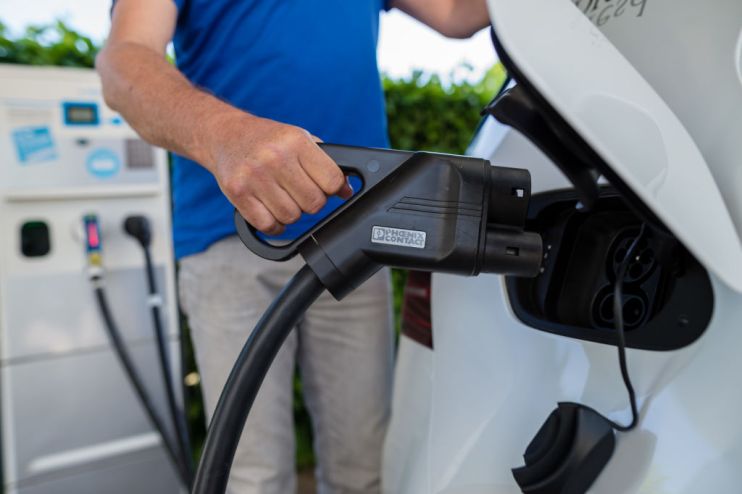
Given all the hype around electric cars, it is sometimes easy to forget just how far off mass adoption of the climate friendly vehicles still is.
A recent survey by consumer trends data firm Dynata suggests that as yet just 16 per cent of Brits have bought an electric or hybrid car – way behind world leader China, where 45 per cent of survey respondents now own one.
That’s despite the fact people are more inclined to buying the vehicles than ever before – helped, in part, by government plans to ban the sales of all new petrol and diesel cars in 2030.
Again, data from Dynata backs this up – showing that 62 per cent of people in this country would buy an EV if they could.
So why aren’t they?
Money for nothing
At the heart of the matter is the question of cost, as Jim Holder, editorial director of What Car? told Morning Wire:
“Currently, electric vehicles still command a premium over their petrol and diesel counterparts. The key reason for the cost disparity is the expense in manufacturing the large battery packs for EVs.”
Although manufacturers are working hard to drive costs down, at the moment the price of making these cars is prohibiting people from getting hold of an EV, as Jamie Hamilton, head of EVs at Deloitte, said.
“The next segments that carmakers really need to get to are the more affordable type of ‘runabout’ cars that cost about £25,000 to £30,000. And that’s really been an issue because there aren’t a lot of these models coming onto the market yet”, he told Morning Wire.
Most manufacturers suggest that the moment of price parity – when it is no more expensive to buy an EV than a petrol or diesel car – will come between 2023-2025.
But if you look at EVs in terms of total cost of ownership over their life, not just take-home cost, says Woodward, you may be surprised.
“Under that metric, we’ve already reached parity”, he says. “The problem is nobody looks at price parity on total cost of ownership – just the price of the cars themselves.”
Second hand news?
Another problem comes in the way people in the UK buy cars, with second hand models by far the most popular option for most consumers.
In 2020, for example, there were just 1.6m new cars sold, compared to 6.7m used vehicles.
But given the relatively limited period of time for which EVs have been around, a sizeable second hand market for these vehicles is yet to emerge properly.
In a recent Deloitte survey, 42 per cent of respondents said that they would spend about £20,000 on an EV, showing the need for such a market.
Hamilton said: “Clearly that’s not going to be satisfied by the pure first sale market – there’s going to have to be a second hand car market as well.”
Alongside this, he argued that consumers need more clarity of government incentives to buy EVs after the current subsidy scheme was slashed by £500 last month.
When the Chinese government took a similar step in 2019 it clearly backfired, he pointed out, with sales of EVs slipping as state support dried up.
Start me up
Part of the problem also lies in the fact that moving from the internal combustion engine to the electric car also requires a complete overhaul of the country’s infrastructure to make sure there are enough charge points to support the mass adoption of EVs.
The UK’s biggest auto trade body, the Society for Motor Manufacturers and Traders (SMMT), says that this will be the biggest barrier to the transition away from traditional cars.
It says that the government must install 700 charging points a day if the country is to hit its end of the decade target, with 2.3m chargers required in total by 2030.
At the moment, said SMMT boss Mike Hawes, there are just 42 charging points being installed a day, well short of what is required for mass adoption of the new transit mode.
Hamilton shares his concerns. “There’s no solution on paper that I’ve seen so far that is going to satisfy the need. It’s coming, but it’s still a big gap”.
And the general public will need convincing too, it seems, with Dynata’s data suggesting that 67 per cent of UK respondents think that a lack of charging infrastructure remains the biggest obstacle to mass adoption.
The chain
The above obstacles would have been taken into account by carmakers and governments; they are, in a sense, known quantities.
But there are factors over which manufacturers have even less control, as the last few months have shown.
Around the world, car manufacturers have been thrown into disarray by a sudden shortage of the semiconductor chips vital to building their machines.
A hybrid EV, for example, requires 3,500 of these chips, almost three times as many as a traditional petrol or diesel vehicle.
As yet, it is unclear when this shortage will be sorted out, but several key industry figures have warned that it may not be until next year at the earliest.
Deloitte’s UK automotive lead Mike Woodward said that the shortage could be the first of a series of different supply difficulties that could impact production, especially in the case of EVs.
“The current shortage is symptomatic of how car supply chains work. Carmakers have been caught out by both the growth in electric items like tablets and the growth in EVs.
“This could be the first of a number of supply constraints that could start impacting EV production.”
Energy experts Rystad have identified a similar choke point in the global supply of lithium, a key element in making the batteries which power EVs.
“A major disruption is brewing for electric vehicle manufacturers. Although there is plenty of lithium to mine in the ground, the existing and planned projects will not be enough to meet demand for the metal.
“If more mining projects are not added to the pipeline quickly, the energy transition of road transport may need to slow down,” says James Ley, senior vice president at Rystad Energy’s Energy Metals team.
According to the firm’s estimates, up to 20m vehicles could be affected by the shortfall by 2030, which could throw production plans into disarray.