Why the energy crisis is set to derail the UK economy in 2022

A wave of concern over the swelling cost of living is sweeping across Britain.
While households are bracing for higher tax bills and are already being stung by food prices leaping, it is swelling energy costs that will hit hardest in 2022.
The UK’s benchmark gas prices have quintupled since January 2021, leaping from £54 per therm to £245 per therm in December 2021.
While tensions between Putin and the West might seem like distant political intrigue found in a tepid spy novel sold at an airport, the reality remains that domestic energy costs are beholden to European political stability.
Britain imports a large proportion of its gas supplies from the Continent who, in turn, rely on Russia for around 35 per cent of their own natural gas flows.
When relations between Moscow and Brussels break down – just as they are now – the UK’s energy market often enters a period of volatility.
Britain is making gains in domesticating its energy supplies to solve this issue.
The UK is expanding into a diversified range of energy sources such as hydrogen and nuclear power in its drive to reach net-zero by 2050 and flex its green credentials after hosting COP26.
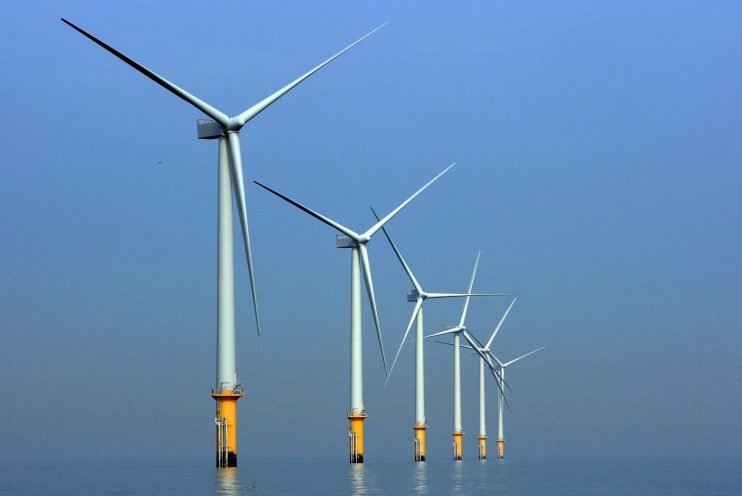
But, its primary source of renewable energy is wind power, which is volatile at best. During an unseasonal windless winter it has underperformed significantly, leaving the UK increasingly reliant on gas exported from Europe.
The energy market is highly inefficient due to the intrusion of government policy.
Firms are rigidly constrained by a price cap that often causes them to produce energy at a loss, the primary reason why a wave of suppliers have gone to the wall.
Bulb, the UK’s seventh biggest energy company which recently fell into administration, was buying gas at £4 per therm, up from 50p per therm a year before. However, the price cap, set at £1,277 a year for average use, meant they could only charge consumers 70p.
Weak oversight by the watchdog Ofgem has allowed a flood of nascent firms led by people inexperienced in the energy market to flood the space.
As a result, smaller energy firms failed to hedge properly in a desperate push to chase customers, leaving them exposed to sharp rises in gas prices.
The energy crisis has already hit millions of Brits, but is set to hit more still.
Fund manager Investec, meanwhile, forecasts that domestic consumers will be on the hook for £3.2bn fo energy firms collapsing – an average of £120 per household.
The price cap was increased 12 per cent last October. Ofgem is set to announce its next on February 7, and City analysts expect it to climb by at least 50 per cent this time.
Hiking the energy price cap will exert an enormous amount of upward pressure on inflation in the UK.
In fact, most City economists, and even the Bank of England, think the cost of living would not even get close to their predictions if gas prices were hovering around their historically low levels.
Nonetheless, the Bank has bet on inflation peaking at six per cent this April when Ofgem’s price cap decision will take effect.
However, experts in the City think the Bank has undershot its inflation estimates and expect the energy watchdog to raise the cap even further.
Pantheon Macroeconomics, a consultancy, set out several scenarios, each examining how inflation could move depending on the scale of the price cap hike.
In a rosier prediction, Ofgem lifts the cap 46.5 per cent, pushing inflation to 6.2 per cent. However, in a bleaker scenario, the cap is hiked 54 per cent, hoisting inflation to 6.4 per cent.
Investment banking giant Goldman Sachs also reckon the price cap could rise as much as 50 per cent, but warn the cost of living will rise to 6.8 per cent, the highest level in recent history.
Investec think the price cap will increase 56 per cent in, raising the average energy bill from £1,277 to around £2,000 per year.
The result of the UK’s energy market undergoing a bout of volatility is a severe squeeze on households’ real incomes.
The Resolution Foundation, an economic think tank, has warned a combination of looming tax hikes, rip roaring inflation and higher energy costs will erode Brits’ living standards, prompting the organisaiton to dub 2022 the “year of the squeeze”.
The burden of a higher cost of living will predominantly fall on lower income households as they tend to spend a greater proportion of their income on essentials.
However, wealthier households will absorb the harshest financial shocks from the looming 1.25 percentage point increase in national insurance contributions as they tend to have higher employment rates.
The corrosion of Brits’ finances is therefore widely distributed, casting doubt over whether consumer spending can power the UK economy back to its pre-pandemic size.
Household budgets for spending on non-essential goods will shrink as they divert more money toward paying higher energy tax bills.
The UK is highly dependent on consumer spending to generate output, indicating the economy could still be in the mire heading into the spring – just when the cost of living blizzard and energy price cap hike are set to materialise.