Winter Olympics can show Britain how to start winning again

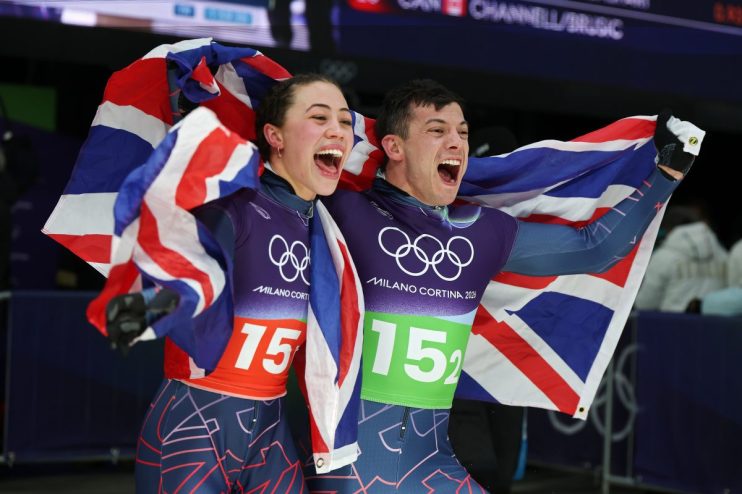
Britain’s success in the Winter Olympics is a corrective to narratives about our decline – and hold lessons for funding our public services too, says John Oxley
Narratives of Britain’s decline abound. From our stalling economic growth to our inability to build sufficient housing to our overwhelmed public services, all point to the country’s struggles. Yet a counter to this was demonstrated over the weekend – our rise as a powerhouse in elite sports.
By the 1990s, Britain had become an Olympic backwater. At the Nagano Winter Olympics, we picked up just one bronze medal. On Sunday, we won two golds in one day. Similarly, our performance in the summer games has gone from also-rans, gaining just one gold in 1996, to dominance, winning 27 in 2016 and coming second in the medal table. The miraculous turnaround was no accident and perhaps harbours some hints about what else about our nation we can improve.
Part of that is just deciding there is a problem. Then Prime Minister, John Major, felt there was a case for making Britain a sporting nation again. This feeling came alongside with an opportunity – The National Lottery – to allocate funding without the political cost of it coming directly from the state. It is this initial decision that we see paying off in gold medals today, with funding for elite sport more than ten times what it was in the early 90s.
Yet as we have seen with other services, it is not just money, but what you do with it that matters. The UK Sport system has benefited from factors that are often absent in the other bits of our state. That may explain why our athletes are succeeding where others falter.
The first is clarity of mission. The elite sports programme is about one thing: winning Olympic medals. Everything it does is weighed solely against that goal. It is not interested in broadening grassroots participation, social mobility, environmental impact or any other side missions that could dilute an organisation’s purpose. Where public programmes often get bogged down trying to do everything for every stakeholder, Team GB keeps only one aim in mind.
Put money where it will make a difference
It also does so by directing money at places where more cash will really make a difference. Our Olympic programme is carefully calibrated around sports in which our funding model and national characteristics align to provide an advantage. In summer games, we target sports like cycling and rowing, events where we have a pedigree and where technology can give us an edge. Likewise, in winter, we don’t try to keep up with Norwegians who cross-country ski before they can walk, but instead target sliding sports in which you can train hard without cold weather.
This is combined with a ruthless focus on what delivers returns. There is little sentimentality in the allocation of money. Deliver wins, and the money keeps flowing. Fail at the big occasions, and it is cut back. This ensures a focus on results, best practices and honest feedback. Sports that are faltering – like gymnastics in the 2000s – get forced to reconsider their approach. There is no room for complacency, and no tolerance for underperformance.
Of course, delivering Olympic wins is very different from healthcare, benefits or education. The process is narrowly focused, tiny in scale, and ingeniously funded from outside of taxes. But the way the programme has developed has avoided many of the pitfalls that exist elsewhere in our system. It has a clear, singular purpose, allocates funds where it yields the greatest leverage and demands excellence. Our system is entrepreneurial in spirit and ruthless in execution. Most of all, it works.
The sight of Matt Weston, two golds around his neck, should give pause to declinists. Britain has not lost the capacity to plan, prioritise and deliver. We have simply chosen not to apply those disciplines elsewhere. If we want more golds beyond the podium, the formula is already there: clarity, commitment and consequences.
John Oxley is a political commentator