Skip to content
Saturday 29 August 2026London --:--Frankfurt --:--Zurich --:--
NewslettersSearchEN · DE · FR
MorningWire

European business, markets and politics

FTSE 100
10,824.26
+0.29%
DAX
26,569.99
+0.77%
CAC 40
8,401.18
+0.98%
STOXX 50
6,485.67
+0.95%
  • Europe
  • Markets
  • Business
  • Economy
  • Regulation
  • Politics
  • Opinion
More
GermanyFranceEU InstitutionsCompetitionPublic AffairsBankingTechnologyEnergy
  • Germany
  • France
  • Europe
  • Markets
  • Business
  • Economy
  • Regulation
  • Politics
  • Opinion
  • DE
Sunday 21 December 2014 10:58 am

Winter solstice 2014: Why is today the shortest day of the year?

By: Sarah Spickernell

Add as a preferred source on Google

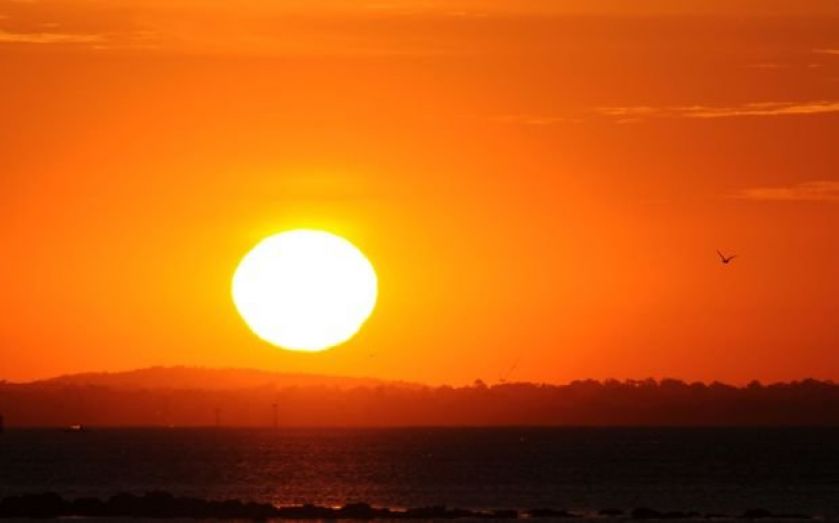
Today is the winter solstice 2014, meaning the time between sunrise and sunset is less than on any other day of the year. 
 
Once darkness sets in this afternoon, those of us in the Northern Hemisphere will have been exposed to total 7 hours and 50 minutes of sunlight.
 
By comparison, yesterday we received seven hours and 56 minutes of sunlight, and tomorrow we will receive seven hours and 55 minutes. 

SAME TIME EVERY YEAR

The winter solstice occurs at approximately the same time every year. It is usually on 21 December, but sometimes takes place on 22 December instead (as it will in 2015).
 
Meanwhile, those in Australia and the rest of the Southern Hemisphere experience the exact opposite – for the them it is summer right now, and their winter solstice will not take place until June next year. 
 
The cause of this disparity comes down to the angle with which the Earth orbits the sun. When the North Pole is tilted furthest from the sun and the sun's daily maximum height is at its lowest point, the number of daylight hours is reduced to a minimum. This point is reached once a year in the Earth's orbital cycle. 

DARKER MORNINGS

Despite the longer days we have to look forward to from now until December next year, the mornings will continue to get darker into early January. This is because the added period of light will be tacked on to the end of the day, rather than the beginning. 
 
The darkening mornings and lighter evenings are a consequence of the solar day not always being exactly 24 hours. In fact, only four days a year are 24 hours long – the rest are either slightly longer or slightly shorter than that. 
 
They are at their shortest in early September, when the length is around 23 hours 59 minutes and 30 seconds. They are longest in December, when length reaches 24 hours 30 seconds.
 
Varying day length occurs in part because of the Earth's tilted rotation is that the Earth's rotation – it is 23.5 degrees from the vertical. Also, the Earth's speed varies as it moves in an elliptical orbit around the sun, accelerating when it is closer to the star's gravitational pull and decelerating when it is further away.
 
The result is that for part of the year, the sun does not quite keep up with the 24-hour clock, and for another part of the year it moves faster than the clock. This means the change in sunlight hours is not exactly evenly spread over the course of the day, and for the coming month the lighter hours will appear at the end, rather than the beginning.

Share this article

  • Facebook
  • X
  • LinkedIn
  • WhatsApp
  • Email

Similarly tagged content:

Sections

  • News

Categories

  • Business

Trending Articles

  • Pensioners to hand over bank statements in government benefits crackdown

  • Jamie Carragher: HMRC petitions for Sky Sports star to be declared bankrupt

  • Brewdog founder James Watt hits out at ‘total silence’ over new venture

  • Jamie Vardy bags Bundesliga rights as he steps up streaming war with Neville and Lineker

  • Lloyds Bank and Halifax users unable to use app in latest outage

More from Morning Wire

  • Tour de France Femmes: World famous cycling race plunged into bra row

    Sport Business
    Tour de France Femmes avec Zwift banners promoting the Grand Départ in Great Britain 2027
  • Josh Kerr took the mile record. But how much further can we go?

    Opinion
    Josh Kerr celebrates new mile record 3:42.66 on Omega scoreboard, Union Jack visible, track stadium background.
  • Energy price cap rises to three-year high

    Energy
    Smartphone displaying an energy bill, with British pounds and coins beside it, symbolizing rising costs.
  • Why Albania’s Tirana could be the city break of the future

    Life&Style
    Radisson Collection hotel in Tirana, Albania, featuring a swimming pool, palm trees, and an external fire escape.
  • Octopus boss Greg Jackson calls for ‘urgent reform’ on energy as bills rise

    Politics
    Octopus Energy, which was founded by Greg Jackson, is to spin-off Kraken. Chris Ratcliffe/Bloomberg via Getty Images
  • Ex-UK minister Robertson rubbishes Ukrainian claims he aided Russia’s Olympic return

    Sport Business
    Sir Hugh Robertson, British Olympic Association, wearing a poppy and name tag, at an event
  • Britain should back the North Sea if it wants energy security and net zero

    Opinion
    Oil prices have risen as Israel and Iran tensions escalated.
  • Four mistakes founders are making with AI and the true cost of inertia

    Partner
    Panel discussion on Leveraging AI on Your Scaleup Journey at the SCALEEXPOSUMMIT event.
MorningWire

Independent European business, markets and political news for decision-makers.

Morning Briefing

Europe

  • Germany
  • France
  • EU Institutions
  • Europe

Business

  • Markets
  • Business
  • Economy
  • Regulation
  • Competition
  • Public Affairs

Editorial

  • Opinion
  • Editorial Policy
  • Corrections
  • Contact

Company

  • About Morning Wire
  • Privacy Policy
  • Terms of Use
  • Cookie Policy
© 2026 Morning Wire Ltd · Published by Morning Wire Media, Bahnhofstrasse 65, 8001 Zürich, Switzerland
Privacy · Terms · Cookies · Facebook