Forget writing letters to stay at home mums, we need to rethink tax-free allowances

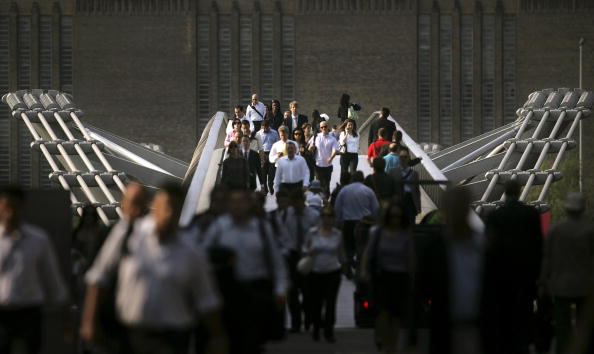
Britain has a productivity and employment problem and the government, try as it might, can’t get the over 50s or parents back to work. Changing tax-free allowances might be the ticket, writes Alex Petropoulos
It is no secret that British productivity is a mess. While all countries experienced a drop in economic activity during the pandemic, the UK’s recovery has lagged behind its peers. Aiming to reverse this trend, Mel Stride, the Secretary of State for Work and Pensions, has set himself the challenge of getting people to rejoin the post-Covid workforce. With the spring budget due in mid March, Stride has spent the past fortnight toying with various ideas on how to lure people back to work ranging from writing letters to stay-at-home mums to scrapping income tax for over 50s.
While boosting employment figures to strengthen the economy is the right idea, his proposals have so far ranged from over-targeted and bureaucratic, to outright unfair. Ultimately, ministers are missing out on a solution to Britain’s workplace woes that’s simpler, smarter, and benefits everyone out of work: letting unspent tax-free allowances “carry over”.
The tax-free allowance is a 0 per cent tax bracket applied to the first £12,500 earned each year. This effectively means each year, the government permits every employed person to keep £2,500 that they’d otherwise take as taxes at the base 20 per cent rate. A good, progressive policy. Mostly.
But, of course, if people don’t earn an income, they aren’t taxed on it. An alternative to blanket tax cuts would be to give them that money back as a one-off increase to their tax-free allowance when they re-enter the workforce.
Sound simple? It is. Whenever someone earns under £12,500 in a year, we should automatically move 80 per cent of their unused tax-free allowance from that year to the following year, up to a cap of £50,000. By only rolling over 80 per cent of people’s yearly unused allowances, they would still be better off working now, versus in a year’s time, if they could. And they would still pay normal taxes on everything earnt above £50,000 (when the 40 per cent “higher rate” kicks in). But, this could act as a much needed push to bring people back into the workforce, thus growing the economy.
Although it doesn’t sound like much, after 4 years of banking these allowances, economically inactive people could be sitting on up to £7,500 in bonus take-home pay for re-entering the workforce by extending their 0 per cent income tax rate to their first £50,000 earnt.
This change would also be relatively simple to implement. HMRC already knows how much of their allowance a worker uses each year, meaning they could roll this policy out quickly and efficiently with a simple update to PAYE and avoid the complex web of benefits exceptions and tax loopholes required by other proposed solutions.
The policy would lend a helping hand to recent university graduates who often use little of their tax-free allowance while earning during their degrees. With student loans ballooning with inflation and rising interest rates and graduates facing the highest marginal tax rate out of anyone in the country, they would certainly benefit from a one-off bonus for their first year in the workforce proper.
The government is rightly focused on getting people to join the workforce, it’s worth remembering that it’s sometimes in the economy’s best interest for some people to be out of the workforce. Whether you’re taking a sabbatical, pursuing a startup or having children, temporary breaks from work can yield more productive workers, pave the way for innovation and entrepreneurship and boost birth rates to secure our future finances.
The current system actively punishes anyone who chooses one of these paths. Therefore, by allowing tax-free allowances to “carry over”, we can not only welcome back those who are out of work, jump-starting the economy, but we can also open countless doors for people, by enabling them to temporarily leave the workforce for whatever reason they may have. Because chances are it’s a good one.