Skip to content
Wednesday 9 September 2026London --:--Frankfurt --:--Zurich --:--
NewslettersSearchEN · DE · FR
MorningWire

European business, markets and politics

FTSE 100
10,657.35
-1.43%
DAX
25,536.48
-1.81%
CAC 40
8,152.05
-1.99%
STOXX 50
6,303.63
-1.71%
  • Europe
  • Markets
  • Business
  • Economy
  • Regulation
  • Politics
  • Opinion
More
GermanyFranceEU InstitutionsCompetitionPublic AffairsBankingTechnologyEnergy
  • Germany
  • France
  • Europe
  • Markets
  • Business
  • Economy
  • Regulation
  • Politics
  • Opinion
  • DE
Wednesday 29 March 2023 5:15 am  |  Updated:  Wednesday 29 March 2023 6:50 am

Yes, money can buy happiness and our well-being doesn’t plateau as we get richer

By: Paul Ormerod

Add as a preferred source on Google
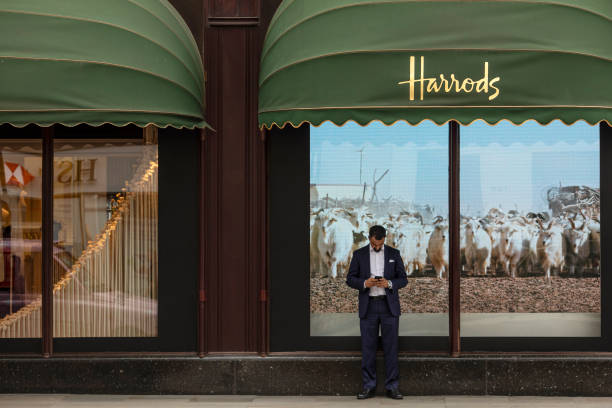
Man checks his phone outside the department store Harrods, near the home of Zamira Hajiyeva, the wife of Azerbaijan state banker Jahangir Hajiyev, on...
 Recent studies have suggested that earning and having more money makes you, indeed, happier. (Photo by Dan Kitwood/Getty Images)

The secret to happiness is…money. Recent studies have finally solved the debate on how to calculate what makes us happy, and indeed, it’s having more funds, writes Paul Ormerod

Does money buy happiness?  The question is a perennial one. From ancient times we have the cautionary tale of King Midas, who, according to Aristotle, starved to death as a result of his “vain prayer” to turn everything he touched into gold.

The quality of life is influenced by many factors other than money, as we see in data published by the Office for National Statistics.

The ONS surveys people under ten separate headings of which only two –  personal finance and the economy – are related directly to money. Others include health, our jobs, where we live, and the environment. The headings themselves are broken down, so there are 44 indicators of well-being.

These are condensed into a single measure of well-being, or happiness. Making this metric the main target of government policy, rather than the purely economic based GDP growth, has attracted support.

But it is this kind of data which gave rise to the so-called Easterlin paradox, named after Richard Easterlin, of the University of Pennsylvania. In a very influential 1974 paper he showed, using post-war American data, that although at a point in time people with more money reported higher happiness levels than those with less, over time the overall level of happiness did not grow even though incomes did. Between 1946 and 1970, after allowing for inflation average incomes grew by no less than 140 per cent. But reported happiness was flat.

The finding, if correct, did indeed have important implications for public policy.

It also seemed to strike at the very heart of economic theory. In the jargon, a key assumption is that of “non-satiation”. In other words, getting more of everything makes people feel better off – without limit. They cannot be satiated.  

Read more

It’s not just Jason Arday, most of sociology is a scam

Jason Arday smiling, wearing academic regalia with a blue cap and gown with red accents.

Economists recognise that this process is subject to diminishing returns. A household buying its first car derives significant benefit. The second car, albeit useful, doesn’t add quite as much as the first. Incomes follow the same pattern, in theory at least.

Nobel Laureates Angus Deaton and Daniel Kahneman seemed to achieve a partial resolution of the issue, in a paper published in 2010. They split the concept of well-being into two categories. “Emotional”, which refers to the emotional quality of a person’s everyday experience,  and “life evaluation”, which measures the thoughts which people have about their life when they think about it.

They found that life evaluation rises steadily with income. Emotional well-being, however, seemed to plateau at an annual income level of around $75,000. Many interpreted this, wrongly, as showing that incomes above $75,000 did not contribute to happiness at all.

In 2021, Matthew Killingsworth, using a sample of over 1 million experience-sampling reports, was unable to find any plateauing of emotional well-being as incomes rose.

Last month, a joint paper by Kahneman and Killingsworth seems to have resolved the issue: both scientists accept that for most people, higher incomes lead to higher levels of well-being, however the latter is defined. The gains from additional income become less as income rises, but they do not level out.

There is, however, what they term an “unhappy minority”, perhaps 20 per cent of the population whose emotional well-being does indeed plateau.

So, after fifty years of intensive research, it is official. For most people, money can buy happiness.

Read more

Josh Kerr took the mile record. But how much further can we go?

Josh Kerr celebrates new mile record 3:42.66 on Omega scoreboard, Union Jack visible, track stadium background.

Share this article

  • Facebook
  • X
  • LinkedIn
  • WhatsApp
  • Email

Similarly tagged content:

Sections

  • Opinion

Categories

  • Opinion

Trending Articles

  • Hedge fund billionaire Chris Rokos joins UK wealth exodus 

  • Tesco and Boots lead 100,000 jobs pledge to tackle Neets crisis

  • Airport chaos latest: Heathrow, London City ‘starting to recover’ after air traffic control failure

  • Five lenders hike mortgage prices as interest rate threat looms

  • As it happened: FTSE 100 inche up as oil holds gains; Healey says UK paying ‘Truss penalty’

More from Morning Wire

  • It’s not just Jason Arday, most of sociology is a scam

    Opinion
    Jason Arday smiling, wearing academic regalia with a blue cap and gown with red accents.
  • Josh Kerr took the mile record. But how much further can we go?

    Opinion
    Josh Kerr celebrates new mile record 3:42.66 on Omega scoreboard, Union Jack visible, track stadium background.
  • The answer to regional inequality isn’t public money, it’s productivity

    Opinion
    Two men setting up a black banner with 10 NORTH in white text on a grey patterned carpet.
  • Burnham bounce? Business confidence tells a different story

    Opinion
    Andy Burnham, John Healey, and Louise Haigh by a doorway, discussing tax policy for a news article.
  • The only answers to over-tourism are prices or queues

    Opinion
    Tourists photograph the ornate white marble Trevi Fountain in Rome, Italy.
  • The UK can still lead in tokenisation – but only if we move fast enough 

    Opinion
    Bank of England facade with classical columns, intricate carvings, and a statue on horseback against a modern glass building.
  • The Debate: Is university now a waste of money?

    Opinion
    Oxford University students in academic gowns, one playing a trumpet, others drinking under an umbrella.
  • £74m for branded condoms? UK must stop spaffing cash on foreign aid

    Opinion
    Ed Miliband in a suit and red tie, carrying a red folder, walking past railings outside Downing Street
MorningWire

Independent European business, markets and political news for decision-makers.

Morning Briefing

Europe

  • Germany
  • France
  • EU Institutions
  • Europe

Business

  • Markets
  • Business
  • Economy
  • Regulation
  • Competition
  • Public Affairs

Editorial

  • Opinion
  • Editorial Policy
  • Corrections
  • Contact

Company

  • About Morning Wire
  • Privacy Policy
  • Terms of Use
  • Cookie Policy
© 2026 Morning Wire Ltd · Published by Morning Wire Media, Bahnhofstrasse 65, 8001 Zürich, Switzerland
Privacy · Terms · Cookies · Facebook