Yes, the UK needs more investment – just not necessarily by government

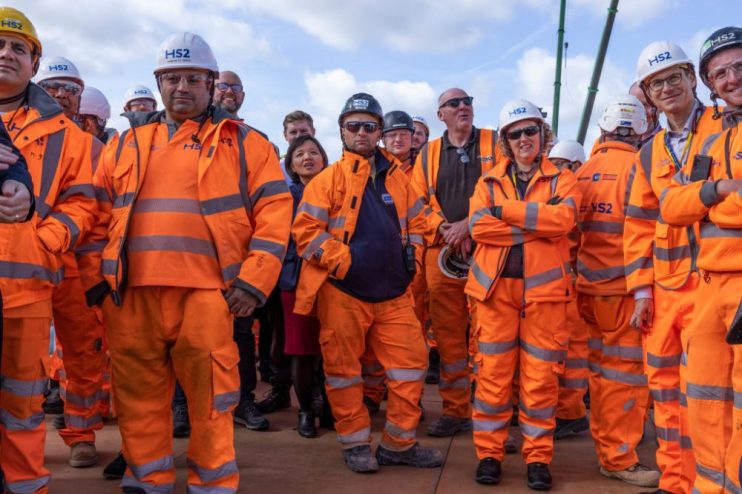
After all, the public sector isn’t always best suited to overseeing large scale investment projects like the disastrous HS2, writes Julian Jessop
Eight prominent economists have written a letter to the Financial Times arguing that the UK needs a step increase in public investment in order to boost growth and to fix social and environmental problems. There is clearly something in this, but many risks too.
As the writers correctly note, there is an emerging consensus that a lack of investment has been a central cause of the UK’s poor economic performance. Indeed, there are three points that most economists could probably sign up to.
First, investment spending should be viewed differently from current spending on day-to-day bills. In particular, it makes more sense to borrow for capital projects that yield long-term benefits both for the economy and for future taxpayers.
Second, there has been a long-term shortfall of investment in both the private and the public sectors. Worse still, the Labour government has inherited spending plans that imply substantial real-terms cuts in public investment over the current parliament too.
To put a few numbers on this, the Office for Budget Responsibility is projecting that public sector net investment will fall steadily year by year, from around £70bn in 2023-24 to less than £50bn in 2028-29 (all in 2023-24 prices). That would see public investment decline from 2.6 per cent of national income to just 1.7 per cent.
Third, the existing fiscal rules do not leave much room for additional public investment, without either offsetting cuts in current spending or substantial increases in tax. In particular, the main rule requires public sector net debt to be falling as a share of national income by the fifth year of the rolling forecast period. This is too short a horizon for the full benefits of investment to come through.
Moreover, the supplementary target that requires public sector net borrowing not to exceed three per cent of GDP, also by the fifth year, makes no distinction between borrowing for investment or current spending.
Nonetheless, there are some important caveats.
One is simply that the public finances are in a worse state now than during the ‘austerity’ years after the global financial crisis of 2008. It is still reasonable to argue that deep cuts in public spending would be counterproductive. But with public debt now much higher, interest rates no longer close to zero and private sector balance sheets in better shape, the risks of a further splurge in government spending are greater.
It is also debatable whether the public sector is competent enough at large-scale investment projects. There are some areas where the state has to lead, notably ‘public goods’ such as the criminal justice system and environmental protection. The previous government surely underinvested in prisons and flood defences.
But you only have to look at the problems with HS2, or numerous other big programmes, to see the issues here. Outside some obvious gaps in investment in public services, there is not a ‘good to go’ list of projects that the state could do best.
Finally, we do not actually need a huge change in order to boost public investment to decent levels. The new Chancellor, Rachel Reeves, has proposed reverting to a ‘Golden Rule’ which would balance day-to-day spending with current revenues. The existing target of three per cent for annual borrowing would then allow the government to borrow three per cent a year for additional investment.
That might also require some tweaks to the debt rule, either changing the definition of debt or extending the time horizon. But there should be room for a small increase in public investment without bankrupting the country.
Julian Jessop is an independent economist and fellow at the Institute of Economic Affairs