Skip to content
Wednesday 9 September 2026London --:--Frankfurt --:--Zurich --:--
NewslettersSearchEN · DE · FR
MorningWire

European business, markets and politics

FTSE 100
10,670.06
-1.31%
DAX
25,576.45
-1.66%
CAC 40
8,156.67
-1.94%
STOXX 50
6,311.56
-1.58%
  • Europe
  • Markets
  • Business
  • Economy
  • Regulation
  • Politics
  • Opinion
More
GermanyFranceEU InstitutionsCompetitionPublic AffairsBankingTechnologyEnergy
  • Germany
  • France
  • Europe
  • Markets
  • Business
  • Economy
  • Regulation
  • Politics
  • Opinion
  • DE
Tuesday 07 March 2023 5:15 am  |  Updated:  Monday 06 March 2023 5:21 pm

A tipple could help Hunt through his budget and investors through further inflation

By: Simon Aron

Add as a preferred source on Google
Scotch Whisky Producers Brace For Impending US Tariffs
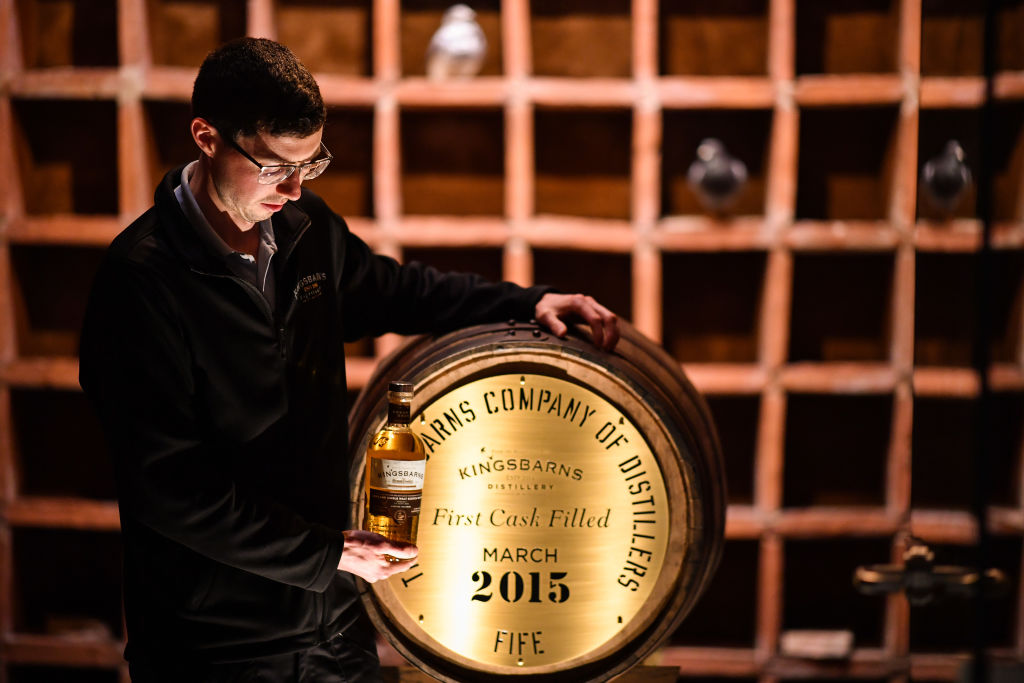
ST ANDREWS, SCOTLAND – OCTOBER 10: Peter Holroyd Kingsbarns distillery manager poses in the doocot beside the first cask filled on October 10, 2019 in St Andrews, Scotland. The United States is imposing a 25% tariff on imported scotch and a range of other European goods from October 18, as it escalates a trade dispute regarding EU subsidies for Airbus. (Photo by Jeff J Mitchell/Getty Images)

Whisky casks are quickly growing into one of the most popular “alternative assets”. The older the cask, the better it tastes, giving you a strong return that hedges against inflation, writes Simon Aron

Next week, Jeremy Hunt will be forced to deliver a budget while inflation is still at over 10 per cent. It is a tradition that the Chancellor is allowed to take a drink while delivering his fiscal plans for the next year; Hunt might be forgiven for reaching for a dram – or four. And savers and investors might also be tempted to cushion the blow of the impact on their savings and portfolios. But as we come to terms with the new economic normal, whisky aficionados and novices alike may find comfort in more than one way in Scotland’s biggest export.

While classic cars, fine art, and rare wine are usually the options that come to mind as “alternative assets”, another commodity is becoming increasingly popular: cask whisky.

Over the last decade, savers and investors have increasingly turned to the whisky sector as a safe haven from economic uncertainty. Anticipated to be worth $86.1bn globally by 2027, growing interest in the market has turned whisky casks into one of the market’s fastest-growing “alternative assets”.

It’s not just sales for the pure pleasure of it. Customers can invest in whisky by buying a “cask” or barrel, and, as the spirit matures, like wine in a bottle, the whisky develops flavour and complexities. This maturation, paired with the distillery’s reputation and the cask’s rarity, drives prices up, providing investors with a return on investment. When an investor wants to exit, they sell the cask to a bottler, hopefully for a profit, who, in turn, bottles the whisky to be drunk. Scotch and Japanese whiskies are becoming the most popular, with at least 20 more distilleries opening in Scotland in the last six years.

The competition between suppliers is stiff between Scotch whisky and its Irish counterpart. Sales at Jameson, the fastest growing Irish whiskey producer, were up 11 per cent in its first-half results, after a record 2021-22 as well.

Gold is often the asset many turn to in times of economic turmoil. But as inflation rises, casks offer a tangible asset-backed investment, offering a safe store for your wealth. Like other alternatives, whisky isn’t affected as much by headwinds or market trends in the way that traditional investments are. It is not tied to the success of financial or global markets but is driven by supply and demand dynamics and investor sentiment, making the wider economic situation somewhat irrelevant.

With more and more people investing in the industry, casks are becoming rarer, driving prices up. The average price of a 12 to 18-year-old cask has doubled, with some brands even quadrupling over the last five years.

Cask sales in 2022 performed better than the FTSE all-share index. If the government keeps the freeze on alcohol duty, it will help encourage this growth and ensure that the tax system nurtures whisky investment.

It’s an investment which requires a bit of homework, but one which can hold firm. A mix of unhelpful players – ranging from overly-exuberant salespeople to downright scammers – have been known to inflate the prices of casks to unreasonable heights. A recent report by Knight Frank highlighted a number of speculators coming onto the market hoping to flip a cask and make a quick buck.

Cask whisky isn’t something you should look at to make a quick return on. It hedges against inflation, but isn’t an investment which has short-term results. Investments take time and patience. The older the cask, the rarer it becomes and the better it tastes, giving you a stronger return.

Read more

American Express tees up golf’s St Andrews as it expands its sports portfolio

Golf course with the Old Course Hotel and town buildings in St Andrews, Scotland, under cloudy skies.

Share this article

  • Facebook
  • X
  • LinkedIn
  • WhatsApp
  • Email

Similarly tagged content:

Sections

  • Opinion

Categories

  • Opinion

Trending Articles

  • Hedge fund billionaire Chris Rokos joins UK wealth exodus 

  • Tesco and Boots lead 100,000 jobs pledge to tackle Neets crisis

  • Airport chaos latest: Heathrow, London City ‘starting to recover’ after air traffic control failure

  • Five lenders hike mortgage prices as interest rate threat looms

  • As it happened: FTSE 100 dives as oil prices surge past $100 in blow to inflation

More from Morning Wire

  • American Express tees up golf’s St Andrews as it expands its sports portfolio

    Sport Business
    Golf course with the Old Course Hotel and town buildings in St Andrews, Scotland, under cloudy skies.
  • Scotch Malt Whisky Society’s Caskmaster 2026 championship comes to London

    Whisky
    The Scotch Malt Whisky Society was established in Edinburgh in 1983
  • Bank of England’s Pill warns against ‘wait and see’ interest rates approach

    Economics
    Huw Pill, Bank of England Chief Economist, smiling in a suit and tie against a blue NABE banner.
  • House prices remain sluggish in ‘subdued’ property market 

    Property
    Real estate signs: a yellow SOLD sign and a blurred green FOR SALE sign, indicating house prices and market activity.
  • SNP slammed for ‘mind-boggling’ food price cap plans

    Retail
    Bald man in glasses and dark suit with a purple tie and Scottish flag pin, looking to the left.
  • The Highland tourist tax: Is Scotland pricing out whisky tourists?

    Whisky
    Red deer stag on a heather-covered hillside overlooking a loch and mountains in the Scottish Highlands
  • Trainees ‘exploiting’ aspiring lawyers by monetising advice on social media

    Legal
    Smartphone screen displaying Social Media folder with Facebook, WeChat, Telegram, Twitter, Instagram, and Snapchat app icons.
  • House prices fall for first time in three years as borrowing costs weigh on buyers

    Property
    Dense housing on a hillside with traditional brick and white stucco homes, some under construction, surrounded by trees.
MorningWire

Independent European business, markets and political news for decision-makers.

Morning Briefing

Europe

  • Germany
  • France
  • EU Institutions
  • Europe

Business

  • Markets
  • Business
  • Economy
  • Regulation
  • Competition
  • Public Affairs

Editorial

  • Opinion
  • Editorial Policy
  • Corrections
  • Contact

Company

  • About Morning Wire
  • Privacy Policy
  • Terms of Use
  • Cookie Policy
© 2026 Morning Wire Ltd · Published by Morning Wire Media, Bahnhofstrasse 65, 8001 Zürich, Switzerland
Privacy · Terms · Cookies · Facebook