Skip to content
Wednesday 9 September 2026London --:--Frankfurt --:--Zurich --:--
NewslettersSearchEN · DE · FR
MorningWire

European business, markets and politics

FTSE 100
10,670.06
-1.31%
DAX
25,554.28
-1.74%
CAC 40
8,156.67
-1.94%
STOXX 50
6,304.00
-1.70%
  • Europe
  • Markets
  • Business
  • Economy
  • Regulation
  • Politics
  • Opinion
More
GermanyFranceEU InstitutionsCompetitionPublic AffairsBankingTechnologyEnergy
  • Germany
  • France
  • Europe
  • Markets
  • Business
  • Economy
  • Regulation
  • Politics
  • Opinion
  • DE
Thursday 23 March 2023 2:08 pm  |  Updated:  Thursday 23 March 2023 2:09 pm

Central banks are right to raise rates, even with banking on the precipice of a crisis

By: Jumana Saleheen

Add as a preferred source on Google
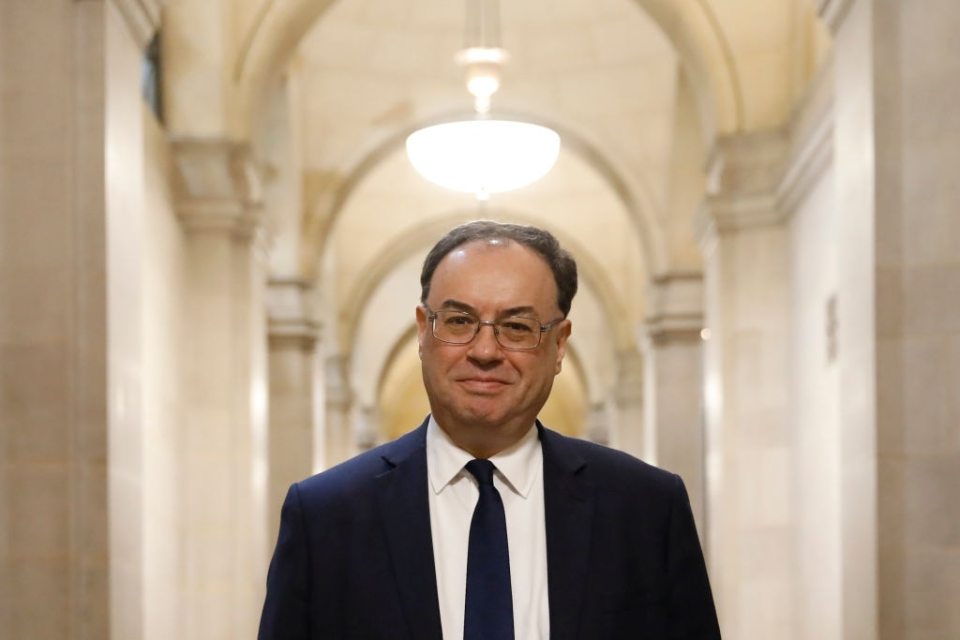
Andrew Bailey Takes Over As Bank Of England Governor
Andrew Bailey and the Monetary Policy Committee agreed to raise interest rates by another 25 basis points.

This morning Andrew Bailey and the Monetary Policy Committee at the Bank of England rose interest rates to 4.25 per cent, even after the shock merger between Credit Suisse and UBS, and the collapse of Silicon Valley Bank, writes Jumana Saleheen

Decisions from central banks over the last week demonstrate an ongoing effort to bring inflation back to target through interest rate rises. There had been some concern in markets that the recent banking sector stresses could result in central banks pausing their rate hikes. 

Just two short weeks ago, markets were pricing in major central bank hikes as a matter of certainty. This was on the back of stronger-than-expected inflation data and a resilient labour market.

Then came the concerns about the US banking system. It spilled over to European and global banks, leading to a sharp fall in banking stocks.

Last week many analysts were nervous that the European Central Bank (ECB) would not follow through with its pledge in February to hike by a further 50bps at its March meeting. Similarly, as markets opened this week, markets regarded the Federal Reserve (Fed) and Bank of England (BOE) decisions as a coin toss between no change and 25bps. Underpinning this change of heart was an assumption that central banks may use an interest rate pause to calm and reassure markets.

The Bank of England raised rate by 0.25 per cent today citing elevated price pressures. Last Thursday the ECB raised its key interest rates by 0.50 per cent, with the Fed following yesterday, with a 0.25 per cent increase.

There is a famous rule in economics – called the Tinbergen rule – that states that there should be one tool for one policy target. Trying to use one tool to achieve two targets risks achieving neither. Taken literally this rule would tell us that central banks should reserve their interest rate tool to address inflation and inflation alone.

Read more

Andrew Bailey: Populism a threat to global economy

Andrew Bailey, Bank of England governor, discusses economic policy during a press conference at the central bank headquart...

This is particularly so because following the Global Financial Crisis, central banks have an expanded mandate that includes financial stability – and a larger toolkit to handle financial stress, including liquidity provision and special bank funding programs.

That said, interest rate policy should take account of banking stress, to the extent that it affects the inflation outlook and the risks around it. For example, more conservative banks or banks with weaker balance sheets, may respond to the banking stress by reducing their provision of credit to lenders. Were this to happen, it would lower demand and weigh on inflation.

Indeed, this sentiment was reflected in comments by Fed Chair Powell who acknowledged that the potential restriction of credit can be thought of as “being the equivalent of a rate hike, or perhaps more than that”.

My view is that it is too early to have reliable data on how credit conditions have responded to the banking stress, and how durable any change might be. The MPC minutes released by the BOE this morning stated that “it was unclear how credit conditions and economic activity might be affected by recent banking sector stress”.

What is certain is that monetary policymakers would have discussed these issues at their policy meeting. They would have been mindful of policy mistakes. The possibility that central banks raise rates higher than they need to be remains a real one. At the same time, the opposite risk is also true: central banks could be too loose, and not raise rates high enough to combat persistent and stubborn inflation.

Major central banks raised rates despite the recent banking sector stress. They have all confirmed that they have alternative tools to deal with financial stability risks, and that they will not hesitate to use them. They all seem to be singing from the Tinbergen hymn sheet. The job for now has been well done.

Read more

Bank of England’s Pill warns against ‘wait and see’ interest rates approach

Huw Pill, Bank of England Chief Economist, smiling in a suit and tie against a blue NABE banner.

Share this article

  • Facebook
  • X
  • LinkedIn
  • WhatsApp
  • Email

Similarly tagged content:

Sections

  • Opinion

Categories

  • Opinion

Trending Articles

  • Hedge fund billionaire Chris Rokos joins UK wealth exodus 

  • Tesco and Boots lead 100,000 jobs pledge to tackle Neets crisis

  • Airport chaos latest: Heathrow, London City ‘starting to recover’ after air traffic control failure

  • Five lenders hike mortgage prices as interest rate threat looms

  • As it happened: FTSE 100 inche up as oil holds gains; Healey says UK paying ‘Truss penalty’

More from Morning Wire

  • Andrew Bailey: Populism a threat to global economy

    Economics
    Andrew Bailey, Bank of England governor, discusses economic policy during a press conference at the central bank headquart...
  • Bank of England’s Pill warns against ‘wait and see’ interest rates approach

    Economics
    Huw Pill, Bank of England Chief Economist, smiling in a suit and tie against a blue NABE banner.
  • Bailey warns on inflation risks as Iran war roils UK economy

    Economics
    Bank of England Governor Andrew Bailey addressing financial stability concerns at a press conference
  • Economists urge Bank of England to halt bond sales as borrowing costs climb

    Economics
    Bank of England headquarters with financial charts overlay, illustrating private credit stress test analysis
  • As it happened: FTSE 100 dives as oil prices surge past $100 in blow to inflation

    FTSE 100 Live
    Diversified Energy Company said it would pay for the sale with a $35m share issuance.
  • Oil hits $100 a barrel as Iran war escalates

    Economics
    Wellington statue in front of the Bank of England building with a British flag flying under a cloudy sky
  • Jenrick refuses to rule out bank tax 

    Politics
    Robert Jenrick speaking at a podium with British Workers First and Union Jack flags, discussing bank taxes.
  • Fed chair Kevin Warsh faces Jackson Hole D-Day

    Economics
    Kevin Warsh, former Fed Governor, in a suit and blue tie, attending Jackson Hole meeting.
MorningWire

Independent European business, markets and political news for decision-makers.

Morning Briefing

Europe

  • Germany
  • France
  • EU Institutions
  • Europe

Business

  • Markets
  • Business
  • Economy
  • Regulation
  • Competition
  • Public Affairs

Editorial

  • Opinion
  • Editorial Policy
  • Corrections
  • Contact

Company

  • About Morning Wire
  • Privacy Policy
  • Terms of Use
  • Cookie Policy
© 2026 Morning Wire Ltd · Published by Morning Wire Media, Bahnhofstrasse 65, 8001 Zürich, Switzerland
Privacy · Terms · Cookies · Facebook