Chuka Umunna: Why Labour’s former star politician wants a City seat for the Lib Dems

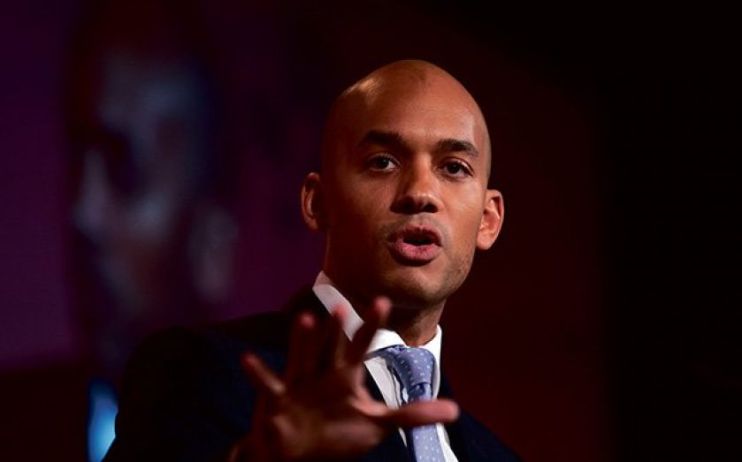
Not so long ago, Chuka Umunna looked like a Labour leader in waiting.
The Lambeth-born smooth-talking solicitor-turned-politician, who counts rapper Tinie Tempah as one of his friends, was the cool one in Ed Miliband’s shadow cabinet.
After the shock election result in 2015 prompted a Labour leadership campaign, the Streatham MP surprised no one by throwing his hat into the ring.
What did surprise many was the quick about-turn, standing down amid intense public scrutiny of his private life. Once Jeremy Corbyn took the helm and steered Labour on a hard-left route, Umunna looked and felt politically homeless.
Today, via a brief and unremarkable stint as a founding member of The Independent Group (see also Change UK and the Independent Group for Change), he is standing as the Liberal Democrat candidate for the Cities of London and Westminster.
But why should anyone vote for him as a Lib Dem when they weren’t even his first party of choice?
It turns out, conveniently enough, that they were.
“As a teenager I was a member of the Liberal Democrats for a year, then I was swept up by New Labour and saw that as the principal vehicle through which to advance social democracy and liberalism. The Liberal Democrats are clearly the party to do that in this day and age,” he explains. “The Labour party I joined 20 years ago doesn’t exist anymore.”
There is “not a paper” between him and his new party on policy, except perhaps when it comes to his new colleagues’ policy to legalise cannabis. Umunna favours decriminalisation instead, although even on this point he says he is “open-minded”.
Open-mindedness is not on display when it comes to Brexit. Umunna has been one of parliament’s most consistently vociferous opponents of leaving the European Union, and will use this as the major plank in his campaign.
The Cities constituency is staunchly anti-Brexit – voting 72 per cent to Remain – and Umunna rejects the idea that people have made their peace with the decision by now.
“If you offered people the opportunity of staying in the EU or leaving in any form of Brexit, staying would win by a country mile, even now,” he argues. “I know the constituency well… and these are global businesses, it’s a fundamental part of what they do. Just on a practical level it’s going to make their lives a nightmare.”
Umunna points to the 7.5 per cent decline in incumbent Conservative MP Mark Field’s majority during the 2017 election as proof that residents – who have “liberal, international, open values” are unhappy with being represented by “a party which is the antithesis of those values”.
It is Labour who has traditionally come second in the Cities constituency, not the Lib Dems, but Umunna points to recent gains, including winning June’s European elections with 40 per cent in Canada and 33 per cent in Westminster.
He also cites a Hanbury Strategy poll from July suggesting that 54 per cent of constituents would vote Liberal Democrat if Brexit is not solved by Hallowe’en.
But what if it is – does that not leave you without a campaign? He laughs. “I think it’s highly unlikely.” But if it is? “If you think Brexit is the cause of all our problems you are barking up the wrong tree. Brexit is symptomatic of a bigger problem, a bigger change, which is what is happening in our politics.”
Umunna believes the position people took in the 2016 referendum speaks to a certain perspective. Remainers, he argues, are liberal, global, “open to people of different cultures” and embracing of new technologies.
Leavers are “socially conservative, nationalistic and fearful of the future”. When I point out that several prominent Leavers would contest that description of themselves, he insists these are the minority and “in the bubble” – not reflective of the wider population’s reasons for voting to quit the EU.
Clearly, given his stance, Umunna is not looking to win over Leave voters. But is it realistic to expect Tory Remainers to pick his name on the ballot box, if that could result in higher taxes, more intervention?
“I didn’t go into politics to tax people, but we have to pay for infrastructure and things we need,” he says. “It’s right that those with the broadest shoulders should bear the heaviest burden – but that is the case already. We are not in the business of jacking up taxes.”
One of the Lib Dems’ main pledges is reforming the tax system, which includes ensuring “those on the highest incomes and wealth are making a fair contribution” by shutting off loopholes and “excessive reliefs”.
Capital Gains Tax, Dividend Tax Relief, Corporation Tax and Inheritance Tax all come under the microscope, with plans to raise some and reverse cuts to others.
Umunna insists the party is not “going to jack corporation tax up to 26 per cent like Labour”, or that individuals will feel the burden come down more heavily. But with party leader Jo Swinson in charge, he admits the country would see greater state intervention.
“Currently you have a chancellor and business secretary who do not believe in industrial activism, in the state working in an activist way to spur growth… Then you’ve got Labour who think the state is the answer to everything and want John McDonnell to run your business out of the Treasury. We don’t want to see the domination of the state or the market – we want an appropriate balance between the two,” he says.
We meet in the week that McDonnell puts forward the conspiracy theory that hedge funds are betting on a no deal Brexit with some kind of insider intelligence. There is also a wider backdrop of anti-elitist political rhetoric.
What does Umunna, the son of a QC and businessman, make of the return of banker-bashing within a wider populist movement?
While he rejects McDonnell’s apparent view that anyone who works in the City is “inherently bad”, Umunna believes the district should play a part in its own rehabilitation.
“The best antidote is to show that the different services sectors that make up the City are very much the solution to the challenges that the real economy faces. The principal challenge we have is making globalisation work more for middle income families in Britain. If the City can do that, then however people feel about the background of people who work in it, they are more likely to be amenable. “
An election is tipped for either 28 November or 12 December, and assuming Brexit isn’t resolved by then it will be a proxy for a second referendum.
On current polling the Lib Dems could secure around 40 seats. But Umunna says internal polling has that much higher – more than 100 seats if there is a five per cent swing – nearly double the number won under Nick Clegg, and a third more than its peak under Charles Kennedy.
But even this wildly optimistic projection still keeps the party from the outright majority which would result in automatically revoking Article 50. Swinson and co will not entertain entering a coalition with pro-Brexit Tories.
Could a vote for the Lib Dems, therefore, be an inadvertent vote for Labour? Umunna insists he is “going full throttle” for a majority, that both main parties are “broken, dysfunctional, and cannot agree with themselves, never mind build a consensus in the country”.
When pressed he says: “We will not be putting Jeremy Corbyn in Number 10” – but doesn’t rule out working with the party itself.
Either way, he believes, this is the end-game. Despite shying away from predictions (“we all thought President Hillary Clinton was going to prevail”) Umunna does have one forecast.
“I think we will see a resolution to Brexit in next 12 months,” he says. If it is up to the Lib Dems, the last three-plus years will be overturned and the UK will remain in the EU. “In some way, shape or form this issue will be resolved – and it will be by the people.”