Skip to content
Wednesday 19 August 2026London --:--Frankfurt --:--Zurich --:--
NewslettersSearchEN · DE · FR
MorningWire

European business, markets and politics

FTSE 100
10,728.04
+0.07%
DAX
26,128.36
0.00%
CAC 40
8,509.36
0.00%
STOXX 50
6,468.17
0.00%
  • Europe
  • Markets
  • Business
  • Economy
  • Regulation
  • Politics
  • Opinion
More
GermanyFranceEU InstitutionsCompetitionPublic AffairsBankingTechnologyEnergy
  • Germany
  • France
  • Europe
  • Markets
  • Business
  • Economy
  • Regulation
  • Politics
  • Opinion
  • DE
Wednesday 07 August 2024 5:45 am  |  Updated:  Tuesday 06 August 2024 1:01 pm

Don’t be so quick to dismiss the ‘doped Olympics’ – at least they’re honest

By: Paul Ormerod

Add as a preferred source on Google
PARIS, FRANCE - AUGUST 04: Noah Lyles of Team United States crosses the finish line to win gold during the Men's 100m Final on day nine of the Olympic Games Paris 2024 at Stade de France on August 04, 2024 in Paris, France. (Photo by Richard Heathcote/Getty Images)

The Enhanced Games have faced a lot of criticism, but are they really any less fair than the Olympics, asks Paul Ormerod

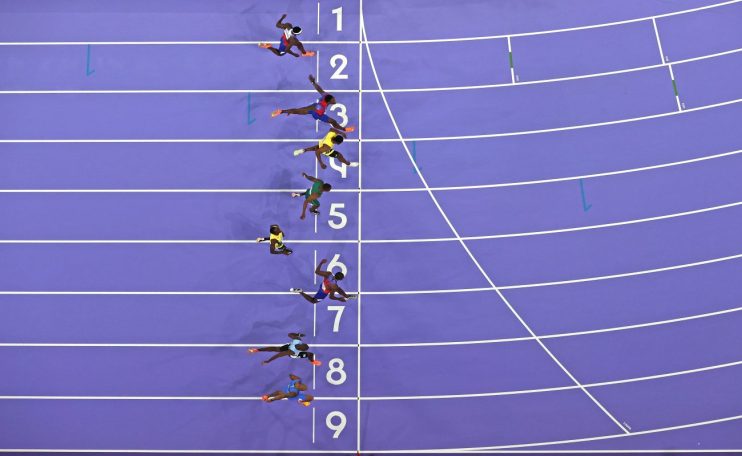
Despite all the glitches and the controversies, the Olympics have provided a great spectacle of skill and prowess. Not least was the dramatic men’s 100 metres final, won by America’s Noah Lyles by five thousandths of a second in a time of 9.79 seconds.

Wildly hailed as the greatest ever 100 metres final, seven of the eight finalists were within less than 0.1 of second of each other.  

Of course, in terms of absolute prowess, Lyles would have been two metres behind Usain Bolt when Bolt ran his world record 9.57 seconds in 2009.

But, despite all the razzamatazz around the Olympics, we might reasonably reflect on how much progress has been made in this prestige event over the years.  

At the 1968 Olympics, the American sprinter Jim Hines became the first man to break 10 seconds for the event and would have been just a metre behind Lyles.

Hines’s near-contemporary Bob Hayes registered even more dramatic times.

In the Tokyo Olympics of 1964, the athletics events were still held on a cinder track. One has to be of a certain age even to recall this type of track.  But it is safe to say that as a running surface it was markedly inferior to today’s tracks, designed at the cutting edge of technology.

In the final, Hayes was drawn in the inside lane, where the cinder track still showed signs of wear from the men’s 20 kilometre walk final which had taken place the day before.  He ran 10.06 seconds – in shoes he had had to borrow at the last minute from a teammate running the 800 metres because of a mix-up with his coach.

Read more

Crystal Palace stadium set for £130m revamp with 25,000 seats

Outdoor athletic stadium with red running track, green field, blue spectator seating, and large scoreboards.

His real triumph was in the 4×100 metres final, where his leg was timed at an incredible 8.60 seconds,  the fastest time ever recorded. Immediately after the Olympics, Hayes signed to play American football for the Dallas Cowboys, so we will never know what he might have gone on to achieve.

It is clear that in the 1960s, sprinters were putting in performances comparable to those of the great Usain Bolt.

In other events, progress in reducing the world record has been slow. In the men’s 1,500 metres, for example, another prestige event, the record was set in 1998. In the 5,000 metres, the record is only marginally under the times being set in the 1990s.

Both shoe and track technology influence speed. Released in 2017, Nike’s new Vaporfly shoes were so successful that some people claimed that they amounted to “shoe doping”.  Prior to the 2020 event in Tokyo, the Olympics Committee had to introduce detailed new guidelines about what kinds of shoes are permitted.

Of course, Nike’s shoes are perfectly legitimate. But throughout elite sport, suspicions of actual doping are widespread, while at the current games in Paris the performances of some of the Chinese entrants have been described as “super-human”.

It is a rather curious world in which developments in things like shoes, track and diets which boost performance are permitted but others are frowned on.

We can in fact look forward to the Enhanced Games in 2025, an event in which performance-enhancing drugs, and even prosthetic limbs, will be permitted. The organisation running the event claims to have secured the necessary financial backing, including the support of billionaire tech investor Peter Thiel.

The general reaction, including that of the International Olympic Committee, in the world of sport has been very negative. But at least the Enhanced Games are being open and honest.  And if someone does manage to break 9 seconds for the 100 metres, who knows which the fans will eventually prefer?

Paul Ormerod is an economist at Volterra Partners LLP, an Honorary Professor at the Alliance Business School at the University of Manchester and author of Against the Grain: Insights of an Economic Contrarian, published by the IEA in conjunction with Morning Wire

Read more

Josh Kerr took the mile record. But how much further can we go?

Josh Kerr celebrates new mile record 3:42.66 on Omega scoreboard, Union Jack visible, track stadium background.

Share this article

  • Facebook
  • X
  • LinkedIn
  • WhatsApp
  • Email

Similarly tagged content:

Sections

  • Opinion

Categories

  • Opinion

People & Organisations

  • athletics
  • Olympics
  • paris 2024 olympics
  • Paris Olympics
  • Usain Bolt

Related Topics

  • Olympic Sport
  • Paris 2024 Olympics and Paralympics

Trending Articles

  • As it happened: FTSE 100 drops as oil prices rise after Trump makes Hormuz threat

  • Jobless Banquet: Youth unemployment surge ‘sends Neets to KFC’

  • US bond market jitters spark UK economy recession warning

  • Monzo chair makes early exit after boardroom rift

  • New Premier League rules could see £11bn invested into new stadiums

More from Morning Wire

  • Crystal Palace stadium set for £130m revamp with 25,000 seats

    Sport Business
    Outdoor athletic stadium with red running track, green field, blue spectator seating, and large scoreboards.
  • Josh Kerr took the mile record. But how much further can we go?

    Opinion
    Josh Kerr celebrates new mile record 3:42.66 on Omega scoreboard, Union Jack visible, track stadium background.
  • Tour de France Femmes: World famous cycling race plunged into bra row

    Sport Business
    Tour de France Femmes avec Zwift banners promoting the Grand Départ in Great Britain 2027
  • South Africa sport minister on Olympics bid, Formula 1, Springboks and LIV Golf

    Sport Business
    Rugby player in green jersey with Pic n Pay 13 shaking hands with a smiling man in a suit and tie
  • How sevens and Olympics can be commercial rugby lifeline

    Sport Business
    Smiling athlete in white jacket holding a gold medal, reaching out to cheering fans in a stadium.
  • Ex-UK minister Robertson rubbishes Ukrainian claims he aided Russia’s Olympic return

    Sport Business
    Sir Hugh Robertson, British Olympic Association, wearing a poppy and name tag, at an event
  • India’s £300m Commonwealth Games dress rehearsal for 2036 Olympics

    Sport Business
    Indian athlete in blue tracksuit receives a white scroll from a woman in a green traditional dress, flanked by two men in ...
  • Cristiano Ronaldo on Mars: Where will sport take us in the next five years?

    Sport Business
    Cristiano Ronaldo smiling in his white and yellow Al Nassr football jersey during a match
MorningWire

Independent European business, markets and political news for decision-makers.

Morning Briefing

Europe

  • Germany
  • France
  • EU Institutions
  • Europe

Business

  • Markets
  • Business
  • Economy
  • Regulation
  • Competition
  • Public Affairs

Editorial

  • Opinion
  • Editorial Policy
  • Corrections
  • Contact

Company

  • About Morning Wire
  • Privacy Policy
  • Terms of Use
  • Cookie Policy
© 2026 Morning Wire Ltd · Published by Morning Wire Media, Bahnhofstrasse 65, 8001 Zürich, Switzerland
Privacy · Terms · Cookies · Facebook