Labour party conference 2015: How Jeremy Corbyn will impact market sentiment

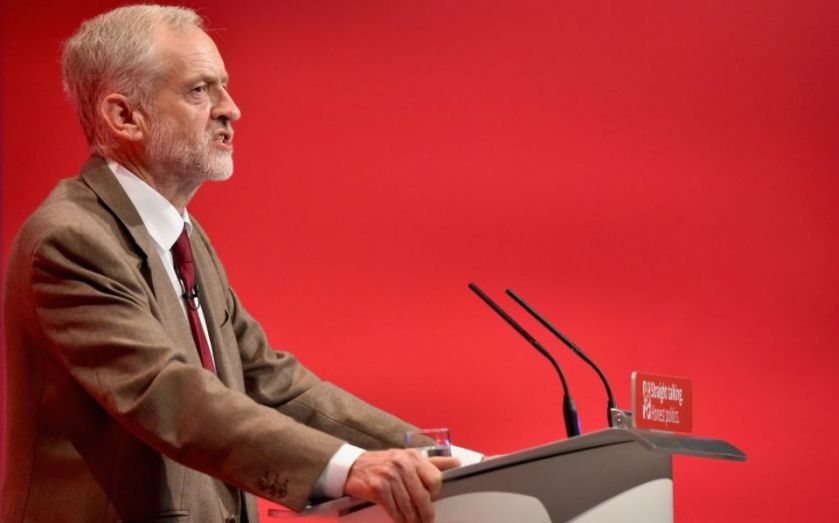
The election of Jeremy Corbyn as the new Labour leader was one of the biggest surprises in the UK political arena in recent memory. It signalled a shift to the left that hasn’t been seen in a major opposition party in 30 years.
In his keynote speech at the Labour Party conference in Brighton this week, Corbyn confirmed the extent of the shift, effectively abandoning the centre ground so hard fought for during the New Labour years.
He promised new, kinder politics. But will Corbyn be nice to the economy? Will the markets take kindly to someone who openly challenges economic and political consensus?
Overall, Corbyn offered little in the way of a clear economic roadmap. He reasserted that he will challenge austerity, and promised that he would be unapologetic about his plans to reform the economy.
These elements of Corbyn’s economic thinking, and those laid out in greater detail by shadow chancellor John McDonnell, are unlikely to have a major bearing on the economy.
Read more: Jeremy Corbyn says he backs growth firms
Suggestions around the nationalisation of key industries, a lesser role for the private sector, and redefining the role of the Bank of England and HM Treasury, do not reflect the current preference of the electorate. At least if the last election is any guide.
Furthermore, sweeping changes to economic policy are rarely achieved from the opposition benches. Some markets and specific sectors may show some nervousness, but they are likely to take Labour’s economic rhetoric in their stride in the near term.
The anti-austerity voice will undoubtedly be louder, but we believe it will have a limited impact on the government’s current path towards deficit reduction. For a start, the Labour party will want to try to retain some element of economic credibility – so much so, that McDonnell was at pains to emphasise that Labour are not deficit deniers.
Nevertheless, even though the voice from the opposition benches will be louder, the current government has already eased its path of deficit reduction at the last Budget. Thus, it is unlikely that we will see further ground given up anytime soon.
There is an increasing sense that any short-term economic and the market impact of Corbyn’s leadership victory will be seen through the lens of the EU referendum. Since being declared leader, he has tried to provide clarity around what are perceived as his Eurosceptic views. He may have a lot more convincing to do.
Read more: Corbyn must embrace the forces of the future
Up until now, we have assumed that all the major political parties, excluding Ukip, would be enthusiastic campaigners to maintain EU membership, irrespective of what kind of “new deal” was negotiated. Corbyn’s election potentially changes this.
If Corbyn does not agree with the contents of the new settlement, his heart may not be in the campaign. If so, this could arguably weaken the pro-European effort.
As we see it, Corbyn is supportive of the labour market protections that EU membership affords. Thus any watering-down of these, as is likely to be sought by the Prime Minister, may be a source of angst.
Additionally, the new Labour leader is openly sceptical of measures that promote market liberalisation. Protecting the free market in goods and expanding the market in services is probably something that David Cameron will be keen to promote further during the negations.
More economic liberalism, not less, is his likely objective. If he is successful in his endeavours of achieving what he thinks is a better deal for the UK in Europe, there is a fair chance that Corbyn will not agree with him.
The Conservatives’ reaction to Corbyn’s election could influence proceedings too. Cameron only holds a slim working majority in Parliament. Following Corbyn’s triumph, the Eurosceptic wing of his party may look to take advantage of a fractured and divided opposition – especially if the Labour party slips in the polls.
The subsequent potential for the Prime Minister to suffer a defeat on key votes is, therefore, high. Not only will this make his negotiations with the EU tougher, but it may send negative signals to the markets about the stability of the government.
But as we know, markets don’t take kindly to uncertainty or instability. And over the long term, they could react to Corbyn’s new left Labour with an increase in the risk premia on gilts and sterling.