Mark Carney’s policy has amplified political opportunity for the Tories

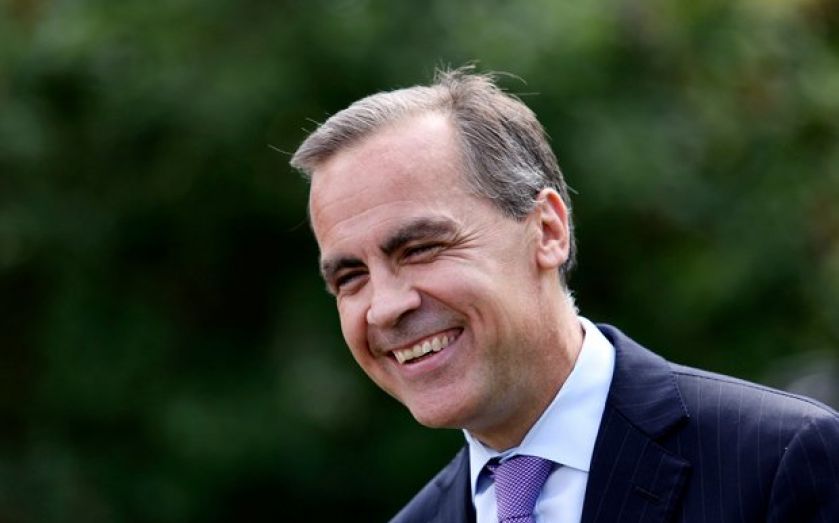
NO REAL rock star has ever received such rave reviews for promising to do nothing for three years. But Mark Carney breaks the mould.
The new Bank of England governor has pledged to keep interest rates at 0.5 per cent until 2016, unless the economy is threatened by “knockout” conditions. Keeping the taps of cheap money flowing, with such high levels of debt, narrows the range of political options to fire up the recovery. It strengthens the case for deeper structural reforms to boost UK competitiveness. Carney has re-defined monetary policy, balancing the focus on inflation with at least one eye on jobs, and vowing not to raise interest rates until unemployment reaches 7 per cent.
The short-term winners are job-seekers, businesses, homeowners and others reliant on debt. The losers, with inflation inching up, are consumers, savers and pensioners. By offering forward guidance, Carney also highlighted the medium- term pitfalls our economy must navigate. By refraining from weaning the economy off rock-bottom interest rates, despite inflation edging up, Carney risks a much sharper rate rise in a few years’ time. What would that mean in real terms?
UK household debt rocketed from 70 per cent to 109 per cent of GDP under Labour. It has now ebbed to 98 per cent, but is vulnerable to changing economic conditions. According to the Money Advice Service, 26m people are struggling to pay their bills. And research by the Resolution Foundation found that, even with strong and even income growth, a 1 per cent interest rate rise would send almost 900,000 people into “debt peril” (spending at least half of disposable income paying off debt).
Business debt is also high, but Carney’s bet is that an improving economy will boost incomes, allowing homes and companies to pay down their debts without the kind of dramatic belt-tightening that would hurt the recovery right now. If he’s wrong, and rates spike later, many will lose their businesses and homes.
The other mid-term risk for the UK economy is a crisis in the Eurozone. The European Central Bank’s pledge to rescue members from default, buying unlimited quantities of bonds, has not yet been tested. The Eurozone cannot camp out in the no-man’s land between reform and crisis forever, and the implications for Britain are sobering. UK banking liabilities rose from 326 per cent of GDP in 2000 to 563 per cent in 2009, and are 496 per cent today. And default in Spain, Ireland, Italy or France would hit us hard.
With the 2015 election beckoning, the political ramification of Carney’s gambit is to narrow the options. With UK gross government debt at 94 per cent of GDP (up from 49 per cent in 1997), more public spending is not a credible option. After three years of virulent critique, even Labour has belatedly accepted our spending plans for 2016.
While Labour and the Liberal Democrats may be tempted by “wealth taxes,” they would clobber the middle-classes and wound the recovery. Nor, for all the fuss over the 50p rate, is the left’s obsession with tax fairness an Achilles heel for the Tories. The government has taken 2m low earners out of income tax altogether. Those earning £10,000 to £15,000 a year now pay a quarter less tax than in Labour’s last year, while those earning £1m to £2m pay a quarter more.
Likewise, there is little scope to further ease the taps of cheap credit, with household and corporate debt so high. Ed Miliband may be tempted by talk of “pre-distribution” of wealth, but yanking regulatory levers – to introduce a living wage, or outlaw zero-hours contracts – risks undermining Carney’s focus on job creation. Carney’s conundrum is to demand government prioritises growth and jobs, without spending more. The nation’s credit-card is already trashed. So what does that leave?
Deeper cuts in public spending could allow further tax cuts. Reducing the welter of red-tape on small businesses would encourage employers to hire. A drive to expand competition could deliver gains in productivity and empower consumers. Shifting further towards an energy policy that makes economic as well as environmental sense – more reliant on nuclear and shale, less on arbitrary green subsidies – would reduce business costs and cut energy bills. Delivering further educational reform would help plug the skills gap.
And revising the terms of EU membership could ease the regulatory burden on business, protect UK financial services, and expand bilateral free trade. Yet, none of these plausible options are palatable to Labour or the Lib Dems.
For all its risks, Carney’s approach leaves little alternative to the structural reform necessary to boost British competitiveness. By narrowing the economic options, he has expanded the political opportunity for the Tories – if we can seize it.
Dominic Raab is Conservative MP for Esher & Walton.