Skip to content
Wednesday 9 September 2026London --:--Frankfurt --:--Zurich --:--
NewslettersSearchEN · DE · FR
MorningWire

European business, markets and politics

FTSE 100
10,670.06
-1.31%
DAX
25,576.45
-1.66%
CAC 40
8,156.67
-1.94%
STOXX 50
6,311.56
-1.58%
  • Europe
  • Markets
  • Business
  • Economy
  • Regulation
  • Politics
  • Opinion
More
GermanyFranceEU InstitutionsCompetitionPublic AffairsBankingTechnologyEnergy
  • Germany
  • France
  • Europe
  • Markets
  • Business
  • Economy
  • Regulation
  • Politics
  • Opinion
  • DE
Wednesday 01 March 2023 5:15 am  |  Updated:  Tuesday 28 February 2023 4:25 pm

Our regulators are too close to those they should be regulating – and this is a problem

By: Paul Ormerod

Add as a preferred source on Google
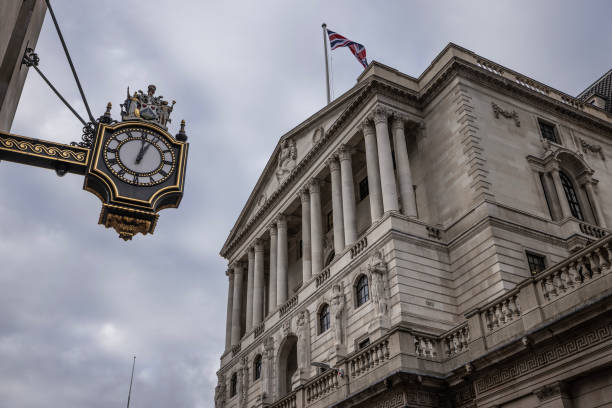
General view of the Bank of England on November 11, 2022 in London, England. New government figures show the British economy shrank by 0.2% between...
The Monetary Policy Committee of the Bank of England underestimated inflation. (Photo by Dan Kitwood/Getty Images)

Political parties of all colours have been lauding our regulators as “world class”. Unfortunately, our regulatory bodies actually have a quite problematic record of failures, writes Paul Ormerod

Late last week, news slipped out that the Treasury had asked Parliament to authorise up to £200bn to cover losses from the Bank of England’s quantitative easing (QE) scheme.  

To help the economy get over the financial crisis of the late 2000s, the government agreed to cover any losses the Bank made on bonds bought as part of the QE programme. The huge potential losses essentially arose because of the dramatic rise in interest rates from the near-zero levels which prevailed for years – until recently.

Ironically, the Monetary Policy Committee of the Bank is meant to set interest rates to try and control inflation. But the Committee seriously underestimated inflation even before events in Ukraine sent it soaring. They failed to anticipate that high interest rates would be needed – a failure which could cost taxpayers an arm and a leg.

Choosing a good policy response in the face of difficult and complicated problems is never easy. Yet it’s hard to shake off the perception that the Bank fell victim to the self-congratulatory rhetoric of central banks all around the world. Until recently, inflation had been low for 20 years. The Bank was given its independence just over 20 years ago and so can take the credit. Unfortunately, correlation is not causation.

More generally, under both New Labour and the Conservatives, the regulatory bodies in the UK have regularly been lauded in ministerial statements and governmental documents as being “world class”. The reality is rather different. Indeed, it is hard to think of a single regulator which has not been involved in some piece of gross incompetence.

In the case of the Financial Conduct Authority (FCA, formerly the FSA), the struggle is to find examples of what they got right. Last year, for example, the National Audit Office savaged the FCA for its failures in the steelworkers’ pension scandal. The British Steel pension scheme was a highly desirable defined benefit scheme. Opportunist advisors, pocketing huge fees, persuaded many to ditch the scheme, resulting in an average loss per individual of nearly £100,000. The FCA was, in the words of Meg Hillier MP, chair of the powerful public accounts committee, “asleep at the wheel”.

Over the past couple of years, there have been over a million sewage discharges into rivers.  The regulator, Ofwat, simply gives the water companies a light tap on the knuckles and lets the executives pocket millions in bonuses. Even the Liberal Democrats have called for Ofwat to be scrapped and replaced with something that actually works.

Environmental regulations on the storage of slurry, silage and agricultural fuel oil seem to be breached almost as often as they are observed. Yet the Environmental Agency acts in a timid and hesitant way.

An important reason for the poor performance of many regulators is what is known in economics as “regulatory capture”. The Chicago economist George Stigler won the Nobel Prize forty years ago for his work on this.

Regulators run the risk of getting too close to the producers in the industry they are meant to be regulating. Their interests become more closely aligned to the ones of these  producers rather than to the ones of the consumers.

It is a comfortable world in which to live. Effort can be easily expended devising endless tick-box forms rather than trying to deal with real challenges. It’s a world into which many of our regulatory outfits have slipped. A root and branch review is needed, starting first and foremost with the Bank of England.

Read more

Josh Kerr took the mile record. But how much further can we go?

Josh Kerr celebrates new mile record 3:42.66 on Omega scoreboard, Union Jack visible, track stadium background.

Share this article

  • Facebook
  • X
  • LinkedIn
  • WhatsApp
  • Email

Similarly tagged content:

Sections

  • Opinion

Categories

  • Opinion

Trending Articles

  • Hedge fund billionaire Chris Rokos joins UK wealth exodus 

  • Tesco and Boots lead 100,000 jobs pledge to tackle Neets crisis

  • Airport chaos latest: Heathrow, London City ‘starting to recover’ after air traffic control failure

  • Five lenders hike mortgage prices as interest rate threat looms

  • As it happened: FTSE 100 dives as oil prices surge past $100 in blow to inflation

More from Morning Wire

  • Josh Kerr took the mile record. But how much further can we go?

    Opinion
    Josh Kerr celebrates new mile record 3:42.66 on Omega scoreboard, Union Jack visible, track stadium background.
  • Burnham bounce? Business confidence tells a different story

    Opinion
    Andy Burnham, John Healey, and Louise Haigh by a doorway, discussing tax policy for a news article.
  • The only answers to over-tourism are prices or queues

    Opinion
    Tourists photograph the ornate white marble Trevi Fountain in Rome, Italy.
  • It’s not just Jason Arday, most of sociology is a scam

    Opinion
    Jason Arday smiling, wearing academic regalia with a blue cap and gown with red accents.
  • The answer to regional inequality isn’t public money, it’s productivity

    Opinion
    Two men setting up a black banner with 10 NORTH in white text on a grey patterned carpet.
  • The UK can still lead in tokenisation – but only if we move fast enough 

    Opinion
    Bank of England facade with classical columns, intricate carvings, and a statue on horseback against a modern glass building.
  • Revolut lands fresh banking licence after wrestling with Europe friction

    Fintech
    Revolut Banque Française ad on a Morris column in Paris, with the July Column and blurred traffic in the background.
  • ‘Vibrant colours and sexy scents’: Steph McGovern-owned Gootopia back in profit

    Business
    Blonde woman smiling with green slime background, children playing with goo, Gootopia online experience
MorningWire

Independent European business, markets and political news for decision-makers.

Morning Briefing

Europe

  • Germany
  • France
  • EU Institutions
  • Europe

Business

  • Markets
  • Business
  • Economy
  • Regulation
  • Competition
  • Public Affairs

Editorial

  • Opinion
  • Editorial Policy
  • Corrections
  • Contact

Company

  • About Morning Wire
  • Privacy Policy
  • Terms of Use
  • Cookie Policy
© 2026 Morning Wire Ltd · Published by Morning Wire Media, Bahnhofstrasse 65, 8001 Zürich, Switzerland
Privacy · Terms · Cookies · Facebook