Reform is rising rapidly, but voter frustration can only carry Farage so far

Reform UK has become a seismic force in British politics. For a party that barely existed a few years ago, they have managed to win over 650 council seats, take control of 10 councils, win mayoral elections and, to top it all off, the Runcorn and Helsby by-election.
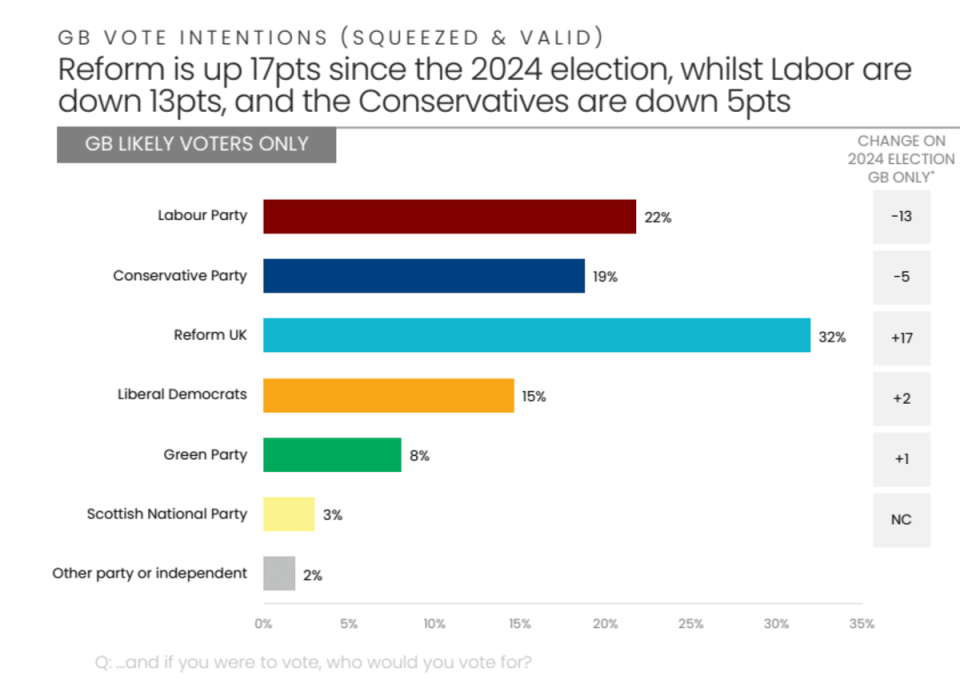
This electoral success has translated into a commanding national lead. According to the latest Morning Wire / Freshwater Strategy Poll, Reform (32 per cent, up four percentage points since last month) now has a ten-point lead over Labour (22 per cent), and far surpasses the Conservatives (19 per cent), Liberal Democrats (15 per cent) and Green Party (8 per cent). We are now truly in a multiparty system.
These results put Nigel Farage in pole position to enter Number 10 following the next general election. This would mark the first time a Prime Minister has not been from Labour or the Conservatives since the Liberals’ David Lloyd George, who left office over a century ago.
This is all far from certain. A week, let alone the more than four years until Keir Starmer must call the next election, is a long time in politics. The Brexit Party, a forerunner to Reform, won the most seats in the European Parliament elections in May 2019, only for Boris Johnson to take leadership of the Tories and win a majority in December of that year.
British politics has become highly volatile and unpredictable. The historic class-based allegiances to the two major parties have significantly declined. The public is fickler than it was in the past, resulting in fragmentation, including support for the Green Party and the Liberal Democrats.
Desire for change drives voters to Reform
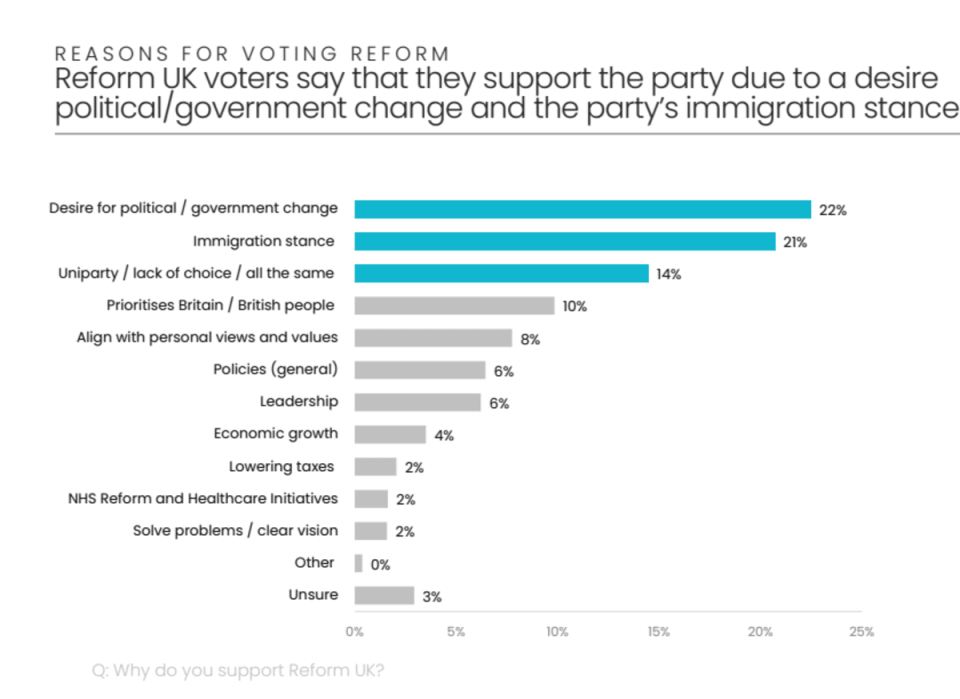
Reform is proving the biggest beneficiary of public frustrations. We asked Reform voters why they support the party, giving them an open text box. The most common reasons were a desire for change (22 per cent), followed by the party’s stance on immigration (21 per cent) and the feeling that the two main parties are essentially the same (14 per cent). Few mentioned alignment with their values (eight per cent) or policies more generally (six per cent).
The widespread feeling that the country is going in the wrong direction (at 70 per cent in our poll) is accompanied by a desire for something new. The major parties have had their chance to govern, and consensus is that they have failed to improve our quality of life while taxes are high and the public services have declined. This dynamic helps explain why many past Labour voters are drawn to a right-wing party – they want something, anything different, rather than a particular alternative.
Immigration now a key issue
Reform has also tapped into frustrations about immigration. It’s no coincidence that Keir Starmer announced this week, shortly after the local election results, a new set of tighter rules to get down the numbers. However, with thousands still arriving by boat, and hundreds of thousands arriving through legal routes, it’s difficult to see this issue going away.
Relatively little has been made of Reform’s economic policies. It’s not a primary driver of support (just four per cent of Reform voters say economic growth is a reason they back the party). But it could in some ways be make-or-break. The Morning Wire / Freshwater Strategy Poll has found many of Reform’s economic policies are individually popular, such as cutting income tax (+50 net support), stamp duty (+47), inheritance tax (+45) and corporate tax (+23).
These policies, however, are all very costly to the Treasury. As Jeremy Corbyn found in 2019, merely promising a collection of individually popular (or populist) ideas is not necessarily an effective strategy. Free (taxpayer-funded) broadband may have polled well, but voters perceived it as a somewhat ridiculous bribe.
As Reform continues to soar in the polls, scrutiny of its agenda will rightly intensify. How can they promise to significantly cut taxes, eliminate NHS waiting lists, maintain welfare payments and nationalise the steel industry, all while funding it solely through efficiency savings?
As Reform transitions from protest to proposition, the challenge is no longer just to channel anger but to demonstrate credibility.
Matthew Lesh is country manager at Freshwater Strategy