Skip to content
Thursday 10 September 2026London --:--Frankfurt --:--Zurich --:--
NewslettersSearchEN · DE · FR
MorningWire

European business, markets and politics

FTSE 100
10,670.06
-1.31%
DAX
25,576.45
-1.66%
CAC 40
8,156.67
0.00%
STOXX 50
6,311.56
-1.58%
  • Europe
  • Markets
  • Business
  • Economy
  • Regulation
  • Politics
  • Opinion
More
GermanyFranceEU InstitutionsCompetitionPublic AffairsBankingTechnologyEnergy
  • Germany
  • France
  • Europe
  • Markets
  • Business
  • Economy
  • Regulation
  • Politics
  • Opinion
  • DE
Wednesday 25 January 2023 5:00 am  |  Updated:  Tuesday 24 January 2023 5:04 pm

Rishi Sunak’s strategy of quiet governance won’t deliver an election victory

By: Paul Ormerod

Add as a preferred source on Google
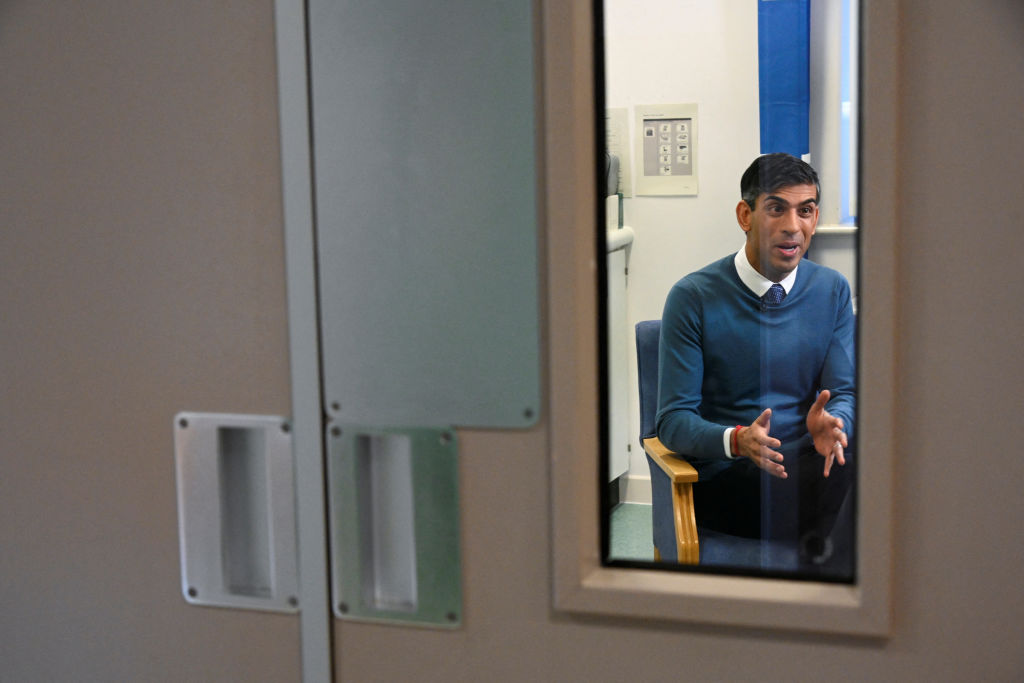
PM Rishi Sunak Visits Hospital In Northamptonshire
Rishi Sunak has attempted to keep a low profile since being made Prime Minister. (Photo by Toby Melville – WPA Pool/Getty Images)

To balance out Liz Truss’ short-lived premiership, Rishi Sunak is trying to govern like a grown-up. But being this quiet won’t win him the next election, writes Paul Ormerod

One of the prayers in the 1662 Anglican Prayer Book entreats that we be “godly and quietly governed”. In other words, government should not just be reasonable and morally upright, there should also not be too much of it.  

Rishi Sunak appears to have taken this to heart, or at least the “quiet” bit, given the scandals which keep emerging around leading members of the Conservative Party.

After the frenzy of the short-lived Liz Truss regime, this is perfectly understandable. But does it actually enhance the prospects of the Tories at the next general election?

At first sight the answer would seem to be “yes”. Almost anything would be better, in terms of winning votes, than the chaos under Liz Truss.

But when examined under the lens of the so-called “peak-end rule”, Sunak’s quiet strategy looks much less promising.

Thirty years ago, the Nobel prize winning economist and top psychologist Daniel Kahneman theorised that people judge an experience not by some average over its entire length. Rather, their view is formed much more by how they felt at its most intense point – the peak – and at its end.

Kahneman and colleagues produced an impressive series of experiments in support of his proposition, and it always seemed to hold regardless of whether the experience was good or bad.

Read more

Andrew Griffith: My FTSE 100 experience means I know how to balance the books

Shadow Chancellor Andrew Griffith in a suit and patterned blue tie, against a blue background with white text.

Like virtually everything in psychology, the theory has attracted criticism. But over the years, a substantial number of studies have come out with further evidence in its favour.

If the choices of the electorate are influenced by this rule, then a period of quiescence is not what is needed. The Truss interregnum was such an unpleasant peak that something really positive towards the end of the government’s term of office will be needed to even try to offset it.

Going way back, in 1956 the then Conservative government caused what was widely perceived as national humiliation at Suez. British and French forces had invaded Egypt to secure access to the Suez canal, which was being threatened by a new Egypt government. Within days, the United States gave both countries a dressing down, and they were compelled to withdraw.

But the economy flourished at the end of the 1950s, with Prime Minister Harold Macmillan coming up with his famous phrase “you’ve never had it so good”. At the 1959 election, the Tories won an increased majority.

In 1992, John Major secured what was an unexpected albeit narrow Conservative majority, despite the mild recession of 1991 and 1992. However, the huge economic boom, created by Chancellor Nigel Lawson in the late 1980s, with tax cuts galore, influenced the voters even more.

Things didn’t work out so well either for Labour in the 1960s or the Tories in the 1990s. At the end of their terms, the economy was growing strongly and living standards soared. But both governments were severely tainted by previous very negative experiences.

In 1967, Labour had been forced to devalue the pound – fixed exchange rates then existed. Prime Minister Harold Wilson attracted widespread ridicule for the phrase “the pound in your pocket has not been devalued” in a televised address to the nation. And in late 1992 the UK was summarily ejected from the precursor of the Euro, the ERM. The Conservative reputation for economic competence was thoroughly trashed.

In short, Sunak needs to be doing something rather than just hanging on hoping the voters will forget, because history says they won’t. 

Read more

The answer to regional inequality isn’t public money, it’s productivity

Two men setting up a black banner with 10 NORTH in white text on a grey patterned carpet.

Share this article

  • Facebook
  • X
  • LinkedIn
  • WhatsApp
  • Email

Similarly tagged content:

Sections

  • Opinion

Categories

  • Opinion

Trending Articles

  • Tesco and Boots lead 100,000 jobs pledge to tackle Neets crisis

  • Airport chaos latest: Heathrow, London City ‘starting to recover’ after air traffic control failure

  • Hedge fund billionaire Chris Rokos joins UK wealth exodus 

  • Five lenders hike mortgage prices as interest rate threat looms

  • As it happened: FTSE 100 dives as oil prices surge past $100 in blow to inflation

More from Morning Wire

  • Andrew Griffith: My FTSE 100 experience means I know how to balance the books

    Politics
    Shadow Chancellor Andrew Griffith in a suit and patterned blue tie, against a blue background with white text.
  • The answer to regional inequality isn’t public money, it’s productivity

    Opinion
    Two men setting up a black banner with 10 NORTH in white text on a grey patterned carpet.
  • Are Labour Chancellors really still blaming Liz Truss?

    Opinion
    John Healey speaking at a podium with the UK Royal Coat of Arms, gesturing with his left hand during his speech.
  • Andrew Griffith: Burnham ‘making up stories’ about my role in Truss Budget

    Politics
    Andrew Griffith speaking passionately, pointing his finger, in a formal parliamentary setting.
  • Burnham bounce? Business confidence tells a different story

    Opinion
    Andy Burnham, John Healey, and Louise Haigh by a doorway, discussing tax policy for a news article.
  • Josh Kerr took the mile record. But how much further can we go?

    Opinion
    Josh Kerr celebrates new mile record 3:42.66 on Omega scoreboard, Union Jack visible, track stadium background.
  • Watch out, Burnham

    watches
    Man in The Passage apron slicing food in a commercial kitchen, with a food allergens chart visible.
  • The only answers to over-tourism are prices or queues

    Opinion
    Tourists photograph the ornate white marble Trevi Fountain in Rome, Italy.
MorningWire

Independent European business, markets and political news for decision-makers.

Morning Briefing

Europe

  • Germany
  • France
  • EU Institutions
  • Europe

Business

  • Markets
  • Business
  • Economy
  • Regulation
  • Competition
  • Public Affairs

Editorial

  • Opinion
  • Editorial Policy
  • Corrections
  • Contact

Company

  • About Morning Wire
  • Privacy Policy
  • Terms of Use
  • Cookie Policy
© 2026 Morning Wire Ltd · Published by Morning Wire Media, Bahnhofstrasse 65, 8001 Zürich, Switzerland
Privacy · Terms · Cookies · Facebook