Sainsbury’s Bank sale marks end of an era for supermarkets

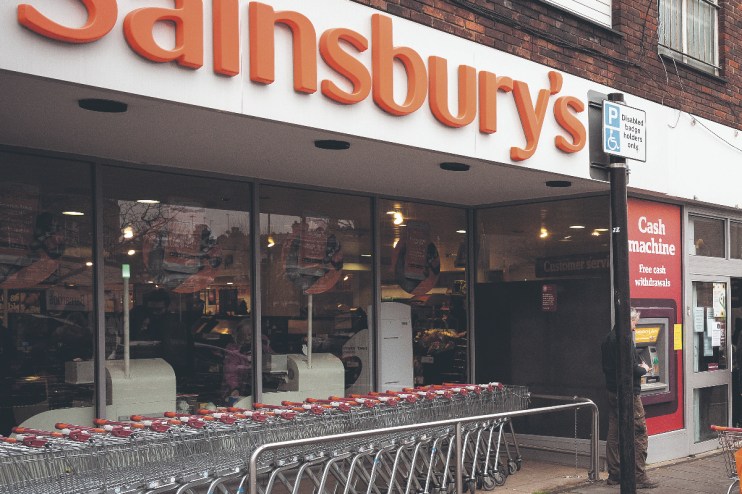
This year has seen a barrage of big-ticket acquisitions in UK banking. The Co-operative Bank, Virgin Money and Tesco Bank have all struck deals with bigger rivals in the last few months alone. Now, Sainsbury’s has joined the club.
Natwest has agreed to buy most of its challenger bank in a deal that would see Sainsbury’s pay the lender £125m. The supermarket expects Sainsbury’s Bank to return at least £250m of excess capital for distribution among shareholders.
Natwest is following in the footsteps of rival Barclays, which picked up Tesco’s core banking business for £600m in February. The two deals, only four months apart, are set to leave Marks & Spencer as the only UK supermarket with a challenger bank.
Although competition regulators are unlikely to oppose the acquisition – Sainsbury’s Bank’s £2.5bn of assets compare to Natwest’s roughly £700bn – it underscores how the UK’s mid-sized challenger banks have failed to unseat the dominant Big Four lenders. Even M&S Bank has been a wholly-owned subsidiary of HSBC since 2004.
Over the last two decades, supermarkets have sought new ways to earn money from their customers beyond food and drink. These ventures have included telecommunications, broadband, restaurants, energy and more.
Banks were considered a good fit for supermarkets as they could cross-sell financial services to loyal shoppers and enjoy lower overheads by operating in-store kiosks instead of costly brick-and-mortar branch networks.
Still, scaling a bank requires significant capital and human resources, and the mid-sized banking sector has grown ever more crowded since the financial crisis.
“Some initiatives worked, others didn’t, but we are now in an age where companies have a preference to focus on what they do best and retreat from the rest,” said Russ Mould, investment director at AJ Bell.
M&S fired the starting gun on supermarket challenger banks, with its financial services arm founded in 1985 as a joint venture with HSBC.
Sainsbury’s Bank and Tesco Bank both launched in 1997, also as joint ventures with established lenders. Tesco bought out Royal Bank of Scotland’s – now Natwest – share of what was then known as Tesco Personal Finance for £950m in 2008.
The supermarket declared business lines like financial services and telecoms could rake in £1bn of annual profit. Some ways away, Tesco’s banking arm generated £69m in adjusted operating profit in its last financial year, although this jumped from £22m the year prior.
In comparison, Sainsbury’s financial services arm made £29m in underlying operating profit last year, down from £46m the year before – which it blamed on higher funding costs from interest rate hikes.
In 2014, Sainsbury’s took full ownership of the business from Bank of Scotland – part of Lloyds – for £248m. However, six years later, new (and remaining) chief executive Simon Roberts announced the supermarket would embark on a “food first” strategy to refocus on its core retail offering and improve returns.
“Competition in the supermarket space is fierce, and remaining competitive is a very expensive undertaking,” said Sophie Lund-Yates, lead equity analyst at Hargreaves Lansdown.
“It’s no surprise the market has given the thumbs-up to Sainsbury’s disposal,” Mould added. “The supermarket has been on a roll over the past few years with its strategy of focusing primarily on food, and removing any distractions elsewhere in the business could help to oil the wheels.”
In recent years, Sainsbury’s has scaled back its financial services presence, including selling its mortgage portfolio for £464m to Co-op Bank last August.
The supermarket tried to sell Sainsbury’s Bank in 2021, reportedly attracting interest from US private equity giant Centerbridge Partners and Natwest itself. Talks ended after Sainsbury’s decided a sale would not offer good value for shareholders.
Although Barclays paid much more for Tesco Bank than what Natwest agreed to pay Sainsbury’s, the latter’s business is smaller. Barclays bought £6.7bn in customer deposits from Tesco, while Natwest’s deal involves £2.6bn in deposits.
“We see retail banking as a scale game,” said Will Howlett, an analyst at Quilter Cheviot. “It is clear that Tesco Bank built a much larger banking operation versus Sainsbury’s.
“We would attribute at least some of this difference in scale to Tesco’s greater market share in retail, which is almost twice as large as Sainsbury’s – 28 per cent versus 15 per cent, according to the latest Kantar data.”
Barring the much smaller Asda Money, which does not have a banking licence, Thursday’s announcement leaves M&S as the last man standing in supermarket financial services.
It is unlikely that M&S Bank will be sold anytime soon, though. In April, the business signed a new seven-year agreement with HSBC to transform its banking division into a financial services and loyalty superapp.
Just two weeks ago, none other than Natwest boss Paul Thwaite forecasted more consolidation in UK banking. Whether or not he was teasing his own agenda, analysts predict further M&A as mid-sized lenders and fintechs struggle with cost pressures and a lack of scale compared to the biggest players.
“This move is indicative of the ongoing consolidation trend within the banking sector, which we have been anticipating,” Howlett said.