Sturgeon’s resignation is an admission she would never lead an independent Scotland

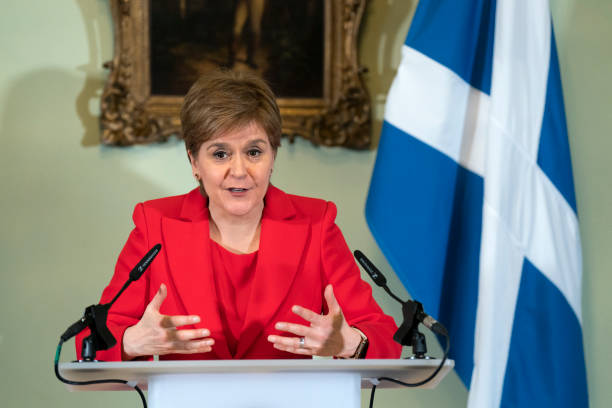
Nicola Sturgeon, like many SNP politicians before her, succumbed to fundamentalism when it came to Scottish independence. This marked her end as first minister, writes Will Cooling
It’s always a mistake to treat the Scottish National Party like just another political party. Whereas Tories and Labour attract people with a wide range of motivations and preoccupations, anyone who joins the SNP wants one simple thing; Scotland’s departure from its 315 year union with England.
Where the divides in the other parties tend to be ideological, the fault line in the SNP has always been tactical. Ever since its emergence as a genuine parliamentary force in the 1970s, the party has been defined by the ongoing battle between gradualists and fundamentalists. The former sees the road to independence as an attritional struggle to both persuade Scotland’s risk adverse middle class that independence is practically possible, and to win consent from a hostile Westminster government.
The latter dismisses the compromises and caution that gradualism requires, instead dreaming of some great gambit to finally break away from the UK.
This argument, curiously, has had the same dynamics since the 1970s. Gradualists have consistently led the SNP and grown their popularity, but at the cost of compromise which have kept independence out of reach.
In this time the SNP has exploited devolution after previously dismissing it as a poor substitute to independence, embraced international organisations such as the European Union and NATO, and accepted the use of referendums as the best way to check that Scottish people want to leave the UK.
What has also been true, is that since the 1970s, the party’s leaders have become more disenchanted with gradualism the longer it takes them to reach the promised land.
Labour MP turned SNP Deputy Leader Jim Sillars went from a strong advocate for “Home Rule” in the 1970s to calling on nationalists to boycott the 1997 Referendum on creating a Scottish Parliament. He would be an outspoken critic of his former friend and ally Alex Salmond, accusing him of having no real strategy to achieve independence. If that sounds familiar, it’s because you’ve heard him say much the same about his former friend and ally, Sturgeon herself. The degeneration of Salmond from the avuncular father of the nation to a peculiar conspiracy theorist and founder of hard-line nationalist party Alba is staggering.
And for all her personal charm, the same is beginning to happen to Nicola Sturgeon. A woman who once praised the cooperation between London and Edinburgh to hold the 2014 referendum as the “gold standard” for separatist referendums worldwide, leaves as her party is in revolt over her proposal to make the next Westminster election a de facto referendum.
It is not appreciated enough what a deranged suggestion this is – if it is to mean anything, it is nothing less than a threat to unilaterally declare independence in the face of Westminster’s opposition. It would be a one-way ticket to the type of violence and chaos that exploded in the streets of Catalonia in 2017 as the Spanish struggled with similarly irresponsible tactics from that region’s separatists.
We should all be thankful that Nicola Sturgeon was stopped by her party’s MPs. While motivated more by the understandable fear that Scottish voters would punish the SNP for flirting with lawlessness by voting them out of office, their anger was real. A party once renowned for its iron discipline, they forced Sturgeon’s ally Ian Blackford to resign as party leader, and refused to replace him with someone similarly loyal. It is now highly likely that the party’s forthcoming special conference will either reject or water down Sturgeon’s dangerous policy.
Of course, she won’t be there to determine what is put in its place. She’s quitting not because politics is too irrational or she wants to spend more time with her teenage nieces and nephews, but because she’s tired of living in reality. How else can you explain her rants about how “the overwhelming majority” of Scottish people support independence, something clearly contradicted by recent opinion polls, and any election since 2014.
The party’s gradualists are right: if the SNP is ever to achieve its dream of independence, it must win a majority in Scotland and consent from Westminster. That requires election results or opinion polls to demonstrate a clear increase in support for independence, thereby forcing Westminster to grant another referendum. Sturgeon failed to do this, and so succumbed to the temptation of fundamentalism: hoping that dangerous gambits would break the deadlock.
Before long she will just be another embittered SNP grandee demanding the SNP be more radical and daring. For all they’ll miss her skills and poise, her successors would be best advised to ignore her.