Tomorrow, vote for change

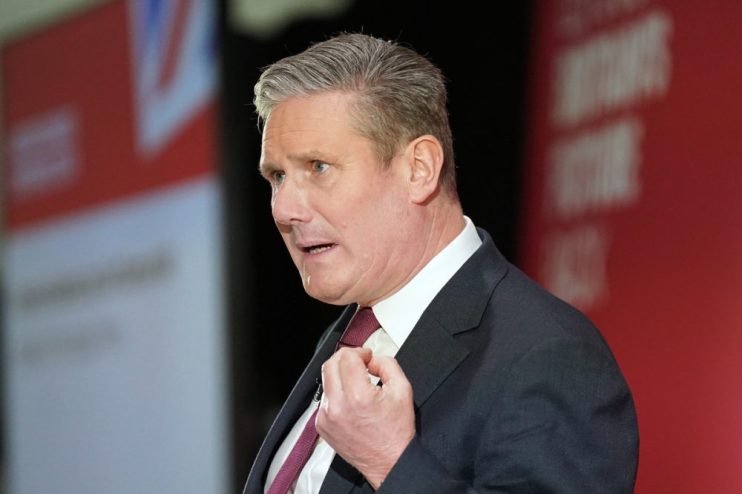
This election is not a choice between higher taxes and higher spending, but a chance for a break from instability and neo-liberal governance, says John McTernan
Change. That’s the proposition. Labour promise a break from instability. Instead of five Prime Ministers in six years they offer just one – Keir Starmer. A man with a plan for a decade of renewal. On the face of it, stability should be attractive. What some call a “moronic risk premium” hits all of us – from home-buyers to businesses – who have to borrow money.
In one very obvious way, the argument has been made and won – and for a considerable time. Opinion polls since October 2022 have given Labour a commanding lead of around 20 points. And though polls traditionally close in an election year, and an election campaign, this time they have only narrowed between the Conservative party and Nigel Farage’s Reform who are fighting them from the right.
The cliché about the election is that Keir Starmer has been carrying this poll lead as carefully as if it were a precious Ming vase. And when Labour’s manifesto for government was launched it received a lukewarm reception from journalists. The professionalism of the launch was praised but where, rose the cry from journalists covering it, where the “rabbits from the hat”. The point, of course, is that if your offer is stability you are committed to no surprises. All Labour’s policies had already been socialised, but what Keir Starmer offers is radical.
It is a break from neo-liberal governance. In place of the extension of the market into every sphere of economic, public, and social life, Labour offers “mission-driven government”. Their five missions focus on growth, crime, health, decarbonisation, and social mobility. In each of these areas, the party says “We have a problem! What are we going to do about that?” That is both a liberating and a mobilising question. Every individual, community and business in the UK can play their role.
There are some small, carefully costed investments in public services such as the imposition of VAT on private school fees to pay for investment in state education. Similarly, a windfall tax on oil and gas profits will build a National Wealth Fund to invest in modern industries such as “green hydrogen” and “green steel”. There is a clear offer for young people. Votes at 16. Expanding childcare. Tackling youth mental health. Halving violence against women and girls, including challenging its root cause – misogyny, and vetting police officers properly. An immediate pay rise for 300,000 adults by removing the National Living Wage discriminatory age bands above 18. Ending zero hours contracts. Reforming the private rented sector by ending Section 21 and no fault evictions.
The most radical break with the recent past is Labour’s central commitment to grow the UK economy faster. The strategy for this has two main pillars. First, accelerating the decarbonisation of the UK economy with the creation of a nationally owned energy company, GB Energy, with £8bn of capital to derisk investment in innovation in the renewable energy sector. Second, to radically reform the planning legislation that holds back the building of the national infrastructure needed for the green economy. A change in planning laws will also allow the building of 1.5m homes giving an opportunity for ownership to those currently locked out.
This industrial strategy is backed by a restoration and extension of employment rights. Creating a fairer balance between capital and labour. With an extension of devolution to cover the whole of England and responsibility for employment services to local mayors, Labour offers huge and progressive change in the labour market.
This radicalism was missed because of the myopic debate that is caught in the contours of the past. The right call for tax cuts and spending cuts. The left counter with demands for higher spending and higher taxes.
Starmer’s Labour reject that stark choice. There is a third way – growth. It cannot be delivered solely by government but the right conditions can be created. Stability, both in policy and in political leadership is a fundamental requirement for business investment and consumer confidence.
Max Weber famously said they “Politics is a strong and slow boring of hard boards. It takes both passion and perspective.” Keir Starmer embodies that approach. He reformed his party. He tore down two Tory Prime Ministers – a record unmatched by any other Labour leader. Now he is offering real and sustained change to voters.
The reward is not simply growth but a restoration of trust, both in public institutions and in the business of politics itself. Boris Johnson gave us ‘Partygate’, Liz Truss gave us a disastrous Budget and a premiership that was shorter than Harriet Harman’s time acting as Labour Leader. Rishi Sunak’s campaign has seen him soaked in the rain, scuttling back early from the D Day 80th anniversary commemoration, and unable to condemn the sordid spectacle of his staff and close aides gambling on the election date with insider knowledge. The case for change could not be more forcefully made than this.
John McTernan is a political strategist and commentator and former adviser to Tony Blair