Skip to content
Saturday 5 September 2026London --:--Frankfurt --:--Zurich --:--
NewslettersSearchEN · DE · FR
MorningWire

European business, markets and politics

FTSE 100
10,831.09
0.00%
DAX
26,046.40
+0.17%
CAC 40
8,278.77
-0.09%
STOXX 50
6,392.93
+0.16%
  • Europe
  • Markets
  • Business
  • Economy
  • Regulation
  • Politics
  • Opinion
More
GermanyFranceEU InstitutionsCompetitionPublic AffairsBankingTechnologyEnergy
  • Germany
  • France
  • Europe
  • Markets
  • Business
  • Economy
  • Regulation
  • Politics
  • Opinion
  • DE
Monday 16 September 2013 8:32 pm

We should replace Fed monetary superheroes with rules-based policy

By: Express KCS

Add as a preferred source on Google

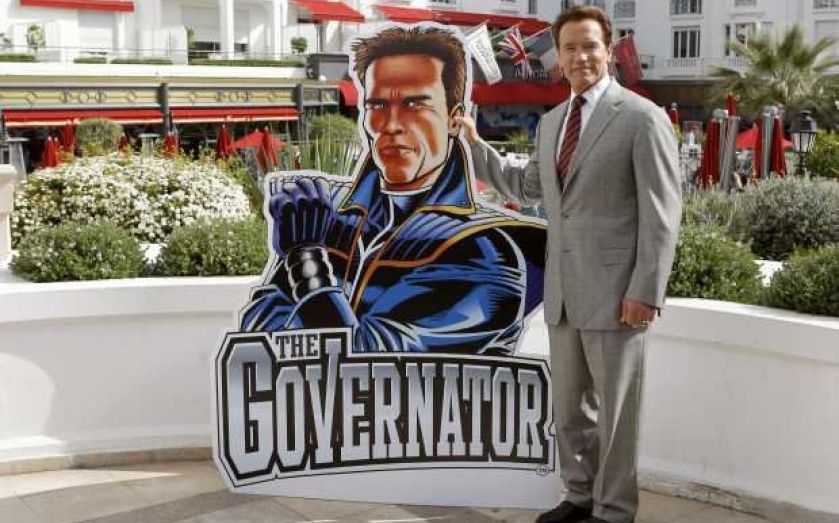
LARRY Summers is out of the race to succeed Ben Bernanke as Fed chair. After months of debate, with politicians and media picking over Summers’s personality and background, the spotlight has returned to Janet Yellen, deputy Fed chairwoman. Is she now a certainty? Or is another monetary superhero about to emerge?

All of this recalls the moment when George Osborne announced that Mark Carney would be governor of the Bank of England. Carney was described by both the chancellor and the media as a superstar. It’s hard to miss the parallel with the hubbub around Gareth Bale’s £85.3m switch to Real Madrid.

But it’s a problem when monetary policy becomes viewed as uniquely dependent on a single “personality”. Central bankers should not be seen as star footballers. At best, they are referees. This is partly a problem of job description. What should the governor do? Should he or she fly about, putting out fires as they erupt in the economy? Or should he or she follow clearly defined monetary policy rules?

Over the past five years, we have grown increasingly used to the idea of the fire-fighting central banker. Even in 1999, Time magazine described Alan Greenspan, Robert Rubin and Summers as “The Committee to Save the World” for their role in the Asian crisis, the Russian crisis and the collapse of long-term capital management. Summers’s reputation nearly landed him the top job at the Fed.

But it is an illusion to think of central bankers as superhumans. They may be particularly intelligent, and they may have a strong theoretical grasp of the mechanics of the macroeconomy. But no individual can accurately guess what extremely complex variables such as productivity growth and demand growth will be in the future. This is especially true when prediction markets are marginalised, ignored, or banned (as Intrade was in the US).

Who is the best central banker – one who is busy with their job or one who spends most of their time on the golf course? The answer is the golfer.

A central banker’s job is to stabilise the demand side of the economy, by implementing a policy regime based on clear, transparent and automatic rules. If a central banker has to step in to deal with a crisis, it means he or she has allowed that crisis to evolve.

Bernanke admitted that the Fed allowed the Great Depression to turn from a correction to world-changing depression when the money supply collapsed. But the framework of the Fed in 2008 relied on policymakers noticing a dive in market inflation and growth expectations and responding to the crisis. They failed to do so.

A rules-based system may never have even seen such a crisis of confidence. If markets (credibly) expect the Fed to respond to a plunge in demand, markets will stabilise demand themselves. Look at Japan: markets eased policy months before Shinzo Abe was elected premier and Haruhiko Kuroda was appointed Bank of Japan governor.

Kuroda, Bernanke’s successor and Carney should set up a stable rule-based monetary policy. They can spend less time putting out economic fires and more time playing golf.

Lars Christensen is chief analyst at Danske Bank and senior fellow at the Adam Smith Institute. Twitter: @MaMoMVPY

Share this article

  • Facebook
  • X
  • LinkedIn
  • WhatsApp
  • Email

Similarly tagged content:

Sections

  • Opinion

Categories

  • Opinion

Trending Articles

  • Victoria Beckham owed £350,000 by Harvey Nichols

  • M&G: FTSE 100 giant hits out at Rayner’s ground rent cap as it suffers loss

  • John Lewis boss: UK economy facing a ‘permacrisis’ 

  • Fulham owner Khan sees his £1bn stadium construction project take next steps

  • Labour calls for Mayor to explore London Stadium sale to West Ham

More from Morning Wire

  • Fed chair Kevin Warsh faces Jackson Hole D-Day

    Economics
    Kevin Warsh, former Fed Governor, in a suit and blue tie, attending Jackson Hole meeting.
  • Bank of England’s Pill warns against ‘wait and see’ interest rates approach

    Economics
    Huw Pill, Bank of England Chief Economist, smiling in a suit and tie against a blue NABE banner.
  • Rupert Lowe axes pensions triple lock and pledges tax cuts in economic plan

    Politics
    Rupert Lowe, former Southampton FC chairman, smiles while holding files on a city street, wearing a suit and pink tie
  • How the Treasury got ‘fed up’ with the Bank of England’s payments plan

    Fintech
    The Bank of England's Breeden argued the recent inflation bump was transitory (Photo by Chris Ratcliffe/Bloomberg via Getty Images)
  • IMF sounds alarm on borrowing costs surge as bond rout deepens

    Economics
    Chancellor John Healey smiling, wearing a navy suit, white shirt, and red tie.
  • Economists urge Bank of England to halt bond sales as borrowing costs climb

    Economics
    Bank of England headquarters with financial charts overlay, illustrating private credit stress test analysis
  • Andrew Bailey: Populism a threat to global economy

    Economics
    Andrew Bailey, Bank of England governor, discusses economic policy during a press conference at the central bank headquart...
  • How patient can the Bank of England be?

    AD
    Historic Royal Exchange building in London with modern skyscrapers behind, clear blue sky.
MorningWire

Independent European business, markets and political news for decision-makers.

Morning Briefing

Europe

  • Germany
  • France
  • EU Institutions
  • Europe

Business

  • Markets
  • Business
  • Economy
  • Regulation
  • Competition
  • Public Affairs

Editorial

  • Opinion
  • Editorial Policy
  • Corrections
  • Contact

Company

  • About Morning Wire
  • Privacy Policy
  • Terms of Use
  • Cookie Policy
© 2026 Morning Wire Ltd · Published by Morning Wire Media, Bahnhofstrasse 65, 8001 Zürich, Switzerland
Privacy · Terms · Cookies · Facebook