Skip to content
Monday 7 September 2026London --:--Frankfurt --:--Zurich --:--
NewslettersSearchEN · DE · FR
MorningWire

European business, markets and politics

FTSE 100
10,862.13
+0.29%
DAX
25,991.16
-0.21%
CAC 40
8,311.55
+0.40%
STOXX 50
6,401.45
+0.13%
  • Europe
  • Markets
  • Business
  • Economy
  • Regulation
  • Politics
  • Opinion
More
GermanyFranceEU InstitutionsCompetitionPublic AffairsBankingTechnologyEnergy
  • Germany
  • France
  • Europe
  • Markets
  • Business
  • Economy
  • Regulation
  • Politics
  • Opinion
  • DE
Wednesday 18 October 2023 5:23 am  |  Updated:  Tuesday 17 October 2023 5:07 pm

Without a recession, Bailey won’t wrest back control over inflation

By: Paul Ormerod

Add as a preferred source on Google

Andrew Bailey’s hopes of bringing inflation back to the 2 per cent target will be wishful thinking without a recession, writes Paul Ormerod

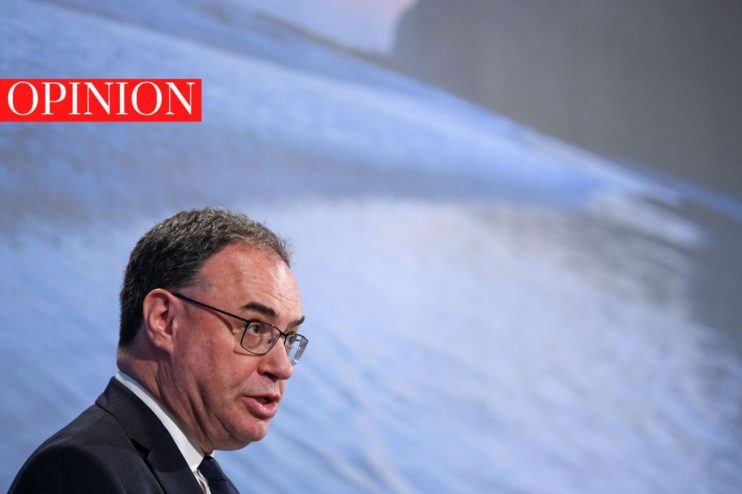
Andrew Bailey, Governor of the Bank of England, admitted last week that interest rates will remain higher for some time to come. 

The boss of the Old Lady said he stood by the target inflation rate of 2 per cent, but to get there, higher interest rates were necessary in the arsenal for the “last mile” of the fight against rising prices. Currently, inflation is at 6.7 per cent, with fresh figures out this morning. 

But there is something missing from this particular jigsaw. Although interest rates have slowed down the economy and created what Bailey calls a “subdued outlook”, the Bank is not forecasting a recession. 

Historically, once embedded in the system, inflation has proved to be stubborn. 

A key reason for this is that, following an upward shock to inflation, the labour force seeks compensating increases in wages. But wages are the main component of costs for many companies, and become embedded in subsequent price rises.

According to the Office for National Statistics, annual average regular pay growth for the private sector was 8.1 per cent  in May to July 2023, one of the largest annual growth rates seen outside of the coronavirus pandemic period, at least since the current definition of the data was adopted in 2001. There are signs that the increase is abating, but it makes inflation difficult to eradicate.

The traditional way inflation is brought under control is through a recession and a resulting rise in unemployment. The slack in the labour market makes it harder for workers to obtain wage increases, and the slack in the markets for goods and services makes it harder for companies to raise prices.

Read more

How patient can the Bank of England be?

Historic Royal Exchange building in London with modern skyscrapers behind, clear blue sky.

The combination of full employment, militant trade unionism and the quadrupling of oil prices in the winter of 1973/74 saw inflation to soar to 21 per cent in 1975.  However, by the end of the decade it had halved to some 10 per cent. The economy struggled and unemployment rose sharply to around 6 per cent, a level not seen since before the Second World War.

But inflation became locked in around the double digit mark, even rising again in 1980.  

The dramatic tightening of monetary policy in the early years of the Thatcher government after the election of 1979 created a deep recession. Unemployment almost doubled to some 3 million people.

As a consequence, inflation more than halved, being just 5 per cent in 1983. However, it remained stubbornly around this level through the decade, even rising again in 1990 to 7 per cent.

The recession of the early 1990s was comparatively shallow, but recession it was.  This proved sufficient to push inflation down to just 2.5 per cent in 1993, a rate which was exceeded only a couple of times over the next two decades.

The exception in post-war history is the early 1950s. The Korean war sent global commodity prices soaring and inflation jumped to almost 10 per cent.  It then fell back almost as sharply without a recession. But, by then, it was a different world. The workforce, conditioned by the national solidarity of the Second World War, was much more accommodating.

So if the Bank is correct and a recession is avoided, history suggests that their view that inflation will fall to 2 per cent by 2025 is merely a pious aspiration.

Read more

Andrew Bailey: Populism a threat to global economy

Andrew Bailey, Bank of England governor, discusses economic policy during a press conference at the central bank headquart...

Share this article

  • Facebook
  • X
  • LinkedIn
  • WhatsApp
  • Email

Similarly tagged content:

Sections

  • Opinion

Categories

  • Opinion

Trending Articles

  • Iceland boss Richard Walker vows to set up shop on Falkland Islands

  • Britain ‘taxing itself to death,’ Burnham warned

  • £74m for branded condoms? UK must stop spaffing cash on foreign aid

  • Don’t underestimate the free trade agreement Britain just joined

  • Victoria Beckham owed £350,000 by Harvey Nichols

More from Morning Wire

  • How patient can the Bank of England be?

    AD
    Historic Royal Exchange building in London with modern skyscrapers behind, clear blue sky.
  • Andrew Bailey: Populism a threat to global economy

    Economics
    Andrew Bailey, Bank of England governor, discusses economic policy during a press conference at the central bank headquart...
  • Mortgage nightmare as investors price in three interest rate hikes 

    Economics
    Bank of England building on Threadneedle Street, London, showcasing its historic architecture and financial significance
  • Inflation expectations softer than predicted ahead of interest rate decision

    Economics
    The Bank of England is expected to hold interest rates at four per cent due to stubbornly high inflation.
  • How the Treasury got ‘fed up’ with the Bank of England’s payments plan

    Fintech
    The Bank of England's Breeden argued the recent inflation bump was transitory (Photo by Chris Ratcliffe/Bloomberg via Getty Images)
  • Bank of England’s Pill warns against ‘wait and see’ interest rates approach

    Economics
    Huw Pill, Bank of England Chief Economist, smiling in a suit and tie against a blue NABE banner.
  • Inflation leaps to 2.9 per cent in blow to Burnham 

    Economics
    Burnham cityscape showcasing modern architecture, bustling streets, and vibrant community life in a thriving urban setting
  • House prices remain sluggish in ‘subdued’ property market 

    Property
    Real estate signs: a yellow SOLD sign and a blurred green FOR SALE sign, indicating house prices and market activity.
MorningWire

Independent European business, markets and political news for decision-makers.

Morning Briefing

Europe

  • Germany
  • France
  • EU Institutions
  • Europe

Business

  • Markets
  • Business
  • Economy
  • Regulation
  • Competition
  • Public Affairs

Editorial

  • Opinion
  • Editorial Policy
  • Corrections
  • Contact

Company

  • About Morning Wire
  • Privacy Policy
  • Terms of Use
  • Cookie Policy
© 2026 Morning Wire Ltd · Published by Morning Wire Media, Bahnhofstrasse 65, 8001 Zürich, Switzerland
Privacy · Terms · Cookies · Facebook